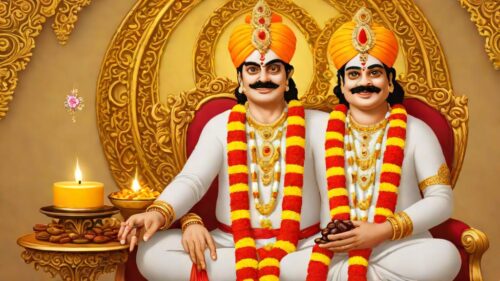
Exploring Sanatana Dharma: The Eternal Path of Indian Spirituality

Understanding Sanatana Dharma: An Eternal Way of Life
For millions across the globe, Sanatana Dharma represents far more than a religion; it is viewed as a timeless way of life, a universal set of moral, ethical, and spiritual principles. Literally translating to the ‘eternal law’ or ‘eternal order,’ Sanatana Dharma is the foundational spiritual ethos of the subcontinent. Unlike religions that often originate from a single historical figure or time period, this tradition claims an unbroken continuity, suggesting that the underlying principles have remained constant since the dawn of time.
To understand this concept is to move beyond dogma and grasp a vast, intricate tapestry of philosophy, spirituality, and culture. It is a holistic framework that guides individuals on how to live ethically, achieve self-realization, and reconnect with the ultimate reality. Far from being static, Sanatana Dharma is described by its adherents as a living science—a subject of perpetual study and personal realization.
The Pillars of Sanatana Dharma Philosophy
The teachings within Sanatana Dharma are profoundly philosophical, resting on several core pillars that guide ethical action and understanding the nature of existence. These concepts provide a roadmap for the soul’s journey toward liberation.
Dharma: Duty, Righteousness, and Cosmic Law
Perhaps the most critical concept is ‘Dharma.’ However, translating it as merely ‘duty’ fails to capture its depth. Dharma encompasses one’s intrinsic moral obligation, one’s correct conduct, the universal law that upholds cosmic order, and the righteous path for every individual. A person’s Dharma changes according to their stage of life, social role, and personal capacity. Following one’s Dharma is considered the primary means of earning positive karma and living a life in harmony with the cosmos.
Karma: The Law of Action and Consequence
The Law of Karma is one of the most universally understood yet profound concepts. Simply put, every action—physical, mental, or verbal—creates an imprint or residue (karma) that will inevitably return to the actor. This is not a system of divine reward or punishment; rather, it is a natural, impersonal law of cause and effect. Positive actions lead to positive experiences; negative actions breed suffering. Understanding Karma empowers the practitioner to become mindful, choosing actions rooted in wisdom rather than momentary impulse.
Moksha and the Ultimate Goal
The ultimate goal within the framework of Sanatana Dharma is Moksha, or liberation. Moksha is not simply attaining heaven, but realizing one’s true, eternal nature (Atman) and understanding its identity with the absolute reality (Brahman). It is the cessation of the cycle of rebirth (Samsara) driven by ignorance. This realization brings profound inner peace and freedom from the attachments that bind the soul to the cycle of action and reaction.
Exploring the Metaphysics: Atman and Brahman
At the heart of the philosophy lies the relationship between the individual soul and the ultimate reality. The doctrine posits that the individual soul (Atman) is not separate from the universal spirit (Brahman). The perceived separation is merely an illusion (Maya). Wisdom through spiritual discipline helps pierce through Maya, revealing the inherent oneness that underlies all existence. This realization—the understanding that ‘Atman is Brahman’—is the grand culmination of the spiritual journey.
The Path of Practice: Yoga and Spiritual Disciplines
How does one bridge the gap between mundane existence and ultimate liberation? Sanatana Dharma offers multifaceted paths, collectively known as Yogas. These paths are highly personalized, allowing practitioners to choose the method that best suits their temperament and intellectual capacity.
Karma Yoga: The Path of Selfless Action
This path emphasizes performing one’s duties (Dharma) without attachment to the results. It teaches action purely for the sake of duty, dedicating the fruits of one’s labor to a higher purpose. It is the practice of detachment while remaining actively engaged in the world.
Bhakti Yoga: The Path of Devotion
Bhakti Yoga involves intense, personal devotion to a chosen deity or principle. This path nourishes the heart, using devotion, prayer, chanting (bhakti), and ritual worship to purify the mind and direct focus toward the divine. It is often considered the most accessible entry point for many people.
Jnana Yoga: The Path of Knowledge
This is the path of deep philosophical inquiry. Jnana Yoga requires rigorous study, deep contemplation, and intense self-analysis to dismantle the ego and understand the true nature of the Self. It is the intellectual realization that leads to experiential knowledge.
The Enduring Relevance of Sanatana Dharma
In a rapidly changing, complex modern world, the tenets of Sanatana Dharma offer timeless resilience. It does not demand adherence to outdated customs for the sake of tradition. Instead, it emphasizes the perennial principles of ethical conduct, compassion (Ahimsa), truthfulness, and self-awareness. It challenges the modern inclination toward quick fixes, urging instead a commitment to deep, continuous self-inquiry.
By weaving philosophical depth with actionable ethical guidelines, Sanatana Dharma provides a comprehensive framework for navigating the complexities of human life—from the deepest moments of personal grief to the highest aspirations of cosmic understanding. It remains a vibrant, living tradition, inviting seekers from all walks of life to explore the eternal journey back to the Self.
About The Author