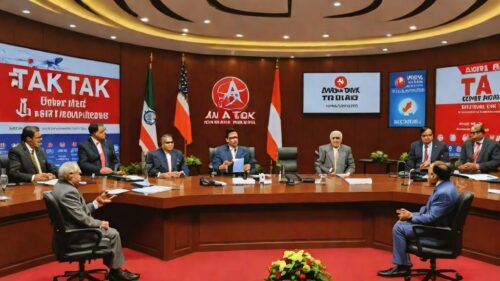
The Ascent of New India: Navigating Economic Transformation and Global Power

The Renaissance: Understanding the Promise of New India
The narrative surrounding New India is one of unprecedented dynamism, rapid structural change, and immense global promise. It represents more than just economic metrics; it embodies a profound societal shift, repositioning the nation as a central pillar in the 21st-century global order. Historically characterized by complex challenges, modern India is aggressively embracing technological leaps, regulatory reforms, and a vast demographic dividend that few nations can match. This transformation is not linear, but rather a powerful confluence of ambition, investment, and grassroots innovation.
At its core, the story of New India is one of massive scale meeting meticulous modernization. From Tier-2 cities blooming into major commercial hubs to rural economies integrating seamlessly with global digital supply chains, the country is fundamentally rewriting its economic blueprint. This comprehensive overhaul requires understanding the key engines driving this monumental shift.
Economic Transformation and Growth Engines
The Indian economy has successfully navigated several global headwinds by pivoting towards resilient, domestically driven growth models. This transformation is powered by three interconnected pillars: the digital sector, manufacturing revival, and deepening consumer markets. The integration of these components is what distinguishes the current phase of development.
The Digital Revolution: Connecting Every Corner
Perhaps the most visible aspect of this transformation is the leap in digital public infrastructure. India has become a global exemplar in utilizing technology for governance and commerce. The Unified Payments Interface (UPI) revolutionized payment methods, making digital transactions accessible to millions previously underserved by formal banking systems. This seamless digitalization has fostered an ecosystem where fintech startups thrive, connecting small vendors to global supply chains overnight. This digital backbone is the nervous system of the modern Indian economy.
Manufacturing Renaissance: Embracing Global Value Chains
Recognizing the necessity of moving beyond services-led growth, the government has heavily championed initiatives like ‘Make in India.’ The goal is to position India not merely as a market for goods, but as a manufacturing powerhouse. By offering incentives and streamlining regulatory environments, India is actively courted by multinational corporations looking to diversify their supply chains away from single points of failure. The focus here is moving up the value chain—from simple assembly to sophisticated design and high-tech production.
World-Class Infrastructure: Building the Physical Backbone
A booming economy requires roads, reliable power, and connectivity that can keep pace with the population. The government’s sustained investment in infrastructure is crucial to realizing the full potential of New India. Modern expressways are drastically cutting down logistics times, port development is enhancing trade throughput, and the rollout of 5G technology promises to connect even the most remote villages to high-speed digital commerce. This physical upgrade minimizes the ‘last mile’ problem, unlocking untapped economic potential across vast geographical stretches.
Powering Progress: Renewable Energy Commitments
Furthermore, the commitment to clean energy is integral to the narrative. India’s aggressive targets for renewable energy sources—solar, wind, and green hydrogen—are not just environmental imperatives, but economic opportunities. Tapping into clean energy reserves is critical for attracting sustainable foreign investment and ensuring that the growth of the next generation is inherently sustainable.
Social Capital: Harnessing the Demographic Dividend
The greatest untapped resource in New India remains its people. With one of the world’s youngest populations, India possesses a demographic dividend—a massive workforce entering its prime earning years. However, realizing this potential requires intensive focus on human capital development.
Skill Development and Education Reform
Addressing the skill gap is paramount. Modern educational initiatives are shifting focus from rote learning to practical, job-ready skills. Partnerships between academic institutions and industry leaders are ensuring that the millions entering the workforce are equipped with the competencies required by the digitized, globalized industries. This synergy between academia and industry is key to sustaining the upward trajectory.
Governance and Ease of Doing Business
The bureaucratic friction that once slowed progress has been systematically addressed through digital governance models. The drive for ‘Ease of Doing Business’ has instilled greater predictability and transparency. For global investors, this means a clearer, more reliable operational framework, making India an increasingly appealing destination for long-term capital deployment.
Global Integration and Future Outlook
The culmination of these efforts positions India powerfully on the world stage. As a key member of global forums like the G20, it is expected to play a crucial role in shaping international norms, particularly those related to digital governance, climate change, and trade equity. The narrative arc is clear: a nation leveraging its democratic energy, digital prowess, and demographic muscle to become a dominant global economic force.
The journey of New India is iterative—marked by successes and necessary adjustments. But the momentum is undeniable. By meticulously blending ancient cultural depth with cutting-edge technology, India is not just participating in the global economy; it is actively reshaping its rules, promising a period of unprecedented growth and transformation for its citizens and the world.
Cultural Resilience and Inclusive Growth: The Socio-Economic Fabric
While the headlines often focus on fintech booms and expressways, the true sustainability of New India lies in its ability to weave economic progress into the social fabric. This section explores how systemic reforms are attempting to address historical disparities, ensuring that growth is not confined to metropolitan tech corridors but permeates the entire demographic spectrum. Inclusive growth is the defining challenge and opportunity of this era.
Bridging the Urban-Rural Divide through Digital Inclusion
The success of digital infrastructure cannot be measured solely by the density of fiber optic cables in cities. The penetration of digital services into rural India—the true vastness of its economy—is a monumental task. Initiatives focusing on telemedicine, digital agricultural advisory services, and direct benefit transfers (DBT) via Aadhaar-linked accounts are transforming governance at the village level. This digital linkage ensures that market pricing, educational resources, and governmental subsidies reach the farmer or artisan with unprecedented efficiency, thereby mitigating the historical gap between agricultural wealth and industrial opportunity.
The Synergy of Sustainability and Economy
The global pivot towards Net Zero emissions has created an entirely new, multi-trillion-dollar market segment. For India, this presents a dual benefit: meeting critical climate goals while simultaneously spurring domestic industrial growth. Beyond just setting renewable energy targets, the focus is shifting to creating specialized industrial clusters around green technologies—battery storage manufacturing, electric vehicle component sourcing, and decentralized microgrids. This ‘Green India’ strategy positions domestic manufacturers to capture global climate finance, turning an existential challenge into an unparalleled economic advantage.
Investment Landscape: Making India an Indispensable Destination
For global investors, India’s proposition is evolving from a high-growth market to a resilient, diversified operational base. Several macro-factors are attracting massive inflows of Foreign Direct Investment (FDI).
The De-risking Effect and Supply Chain Diversification
Geopolitical volatility has forced global corporations to re-evaluate their ‘China-plus-one’ sourcing strategies. India, with its diverse manufacturing base, skilled labor pool, and favorable policy stance, is the prime beneficiary of this global restructuring. Multinational firms are viewing India not as a single-source market, but as an entire, diversified ecosystem capable of absorbing complex, multi-tiered manufacturing requirements, particularly in electronics, pharmaceuticals, and automotive sectors.
Beyond Unicorns: Building the Startup Middle Layer
While the ‘Unicorn’ narrative captures headlines, the true maturation of the Indian startup ecosystem lies in its robust ‘Decacorn’ and specialized B2B service layers. Venture capital funding is increasingly flowing into deep-tech areas—Artificial Intelligence, Quantum Computing applications for finance, and advanced material science. Moreover, the maturing ecosystem is becoming more capable of nurturing mid-sized, profitable enterprises that form the backbone of stable job creation, rather than relying solely on venture-backed hyper-growth ventures.
Conclusion: Charting the Course of a Global Powerhouse
New India’s story is one of purposeful acceleration. It is a nation that is systematically confronting the inertia of legacy challenges—be they logistical bottlenecks, skill gaps, or regulatory complexity—by deploying technology and sheer political will. The synthesis of its ancient cultural bedrock, its democratic vibrancy, and its modern digital adoption curve creates a unique developmental trajectory. The coming decade promises to solidify India’s role as a decisive anchor in the geopolitical and economic reorganization of the 21st century. This profound metamorphosis promises not just wealth creation, but the establishment of a model for how emerging economies can achieve sustainable, equitable, and technologically empowered global leadership.
About The Author