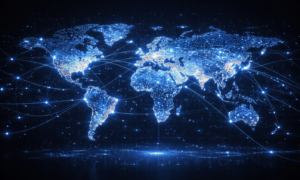

The Unseen Map: Understanding Why Terror Has No Borders
In an increasingly interconnected world, the notion of secure national boundaries has become a dangerously outdated concept. The grim reality remains that terror has no borders. Whether fueled by extremist ideologies, geopolitical disputes, or simple grievances, threats today do not respect sovereign lines drawn on a map. They flow through digital networks, utilize global supply chains, and inspire radicalization in disparate corners of the globe. Understanding this fundamental truth is the first, crucial step in building effective modern defense strategies.
The architecture of terror—its recruitment, financing, and operational planning—is inherently globalized. A small cell radicalized online in one nation can coordinate an attack using funding moved through cryptocurrency, targeting civilians thousands of miles away. This fluid, borderless nature necessitates an equally fluid and multinational response.
The Engines of Globalization: How Threats Cross Borders
The very forces that drive global commerce and cultural exchange—the internet, rapid travel, and open financial markets—are the same vectors that extremists exploit. We must look at the mechanisms that allow threats to become transnational phenomena.
Digital Echo Chambers and Ideological Diffusion
The internet is perhaps the most potent tool both for commerce and for ideological dissemination. Extremist groups have mastered the art of using encrypted messaging, social media platforms, and fringe websites to move propaganda, recruit vulnerable individuals, and issue operational directives. These digital echo chambers allow radical ideas to find purchase anywhere, creating virtual networks that are far harder to monitor or contain than traditional physical cells.
Financial Flows and Modern Financing
Terrorism is an industry that requires money. While traditional banking systems can be targeted through sanctions, modern financiers adapt swiftly. From hawala networks—informal money transfers—to the anonymity of decentralized digital currencies, tracking terrorist financing has become a perpetual game of catch-up for international financial intelligence units. The speed of money movement today matches the speed of ideological contagion.
The Blurring Lines of Conflict
Modern conflict zones are rarely neat, black-and-white struggles. They often involve non-state actors whose allegiances are purely transactional, adapting to whoever provides the best resources or the clearest ideological platform. This malleability means that interventionism, state collapse, or economic desperation in one region can create a vacuum that extremist groups are quick to fill, pulling the threat outward.
Building a Shield: International Cooperation as the Only Defense
Since the threat defies borders, the solution must likewise reject the concept of singular national defense. The response to terrorism must be multi-layered, encompassing diplomatic, intelligence, financial, and grassroots efforts.
Intelligence Sharing: The Lifeblood of Defense
No single nation possesses the complete picture of global threats. Therefore, real-time, trustworthy intelligence sharing between allied services—intelligence fusion centers, multilateral watch groups, and bilateral agreements—is not optional; it is existential. Success relies on protocols that overcome national secrecy concerns in favor of collective security.
Legal Frameworks and Soft Power Diplomacy
Beyond intelligence, international law must evolve to keep pace. This includes harmonizing counter-extremism legislation while simultaneously avoiding the overreach that erodes civil liberties. Diplomacy plays a critical role in pre-empting conflict by addressing the root causes—poverty, political marginalization, and lack of representation—that make populations susceptible to extremist narratives. Building ‘soft power’ stability is often the most durable form of defense.
Community Resilience: The Local Front Line
Ultimately, the most effective defense against the ideology that fuels terrorism starts at the community level. Education, promoting inclusive narratives, and supporting civil society organizations help build resilience from within. When communities are economically stable, politically informed, and emotionally connected, the appeal of nihilistic, destructive ideologies fades.
A Unified Global Commitment
To truly combat a foe that knows no geographic limits, humanity must commit to an unprecedented level of collaboration. This requires a shared global understanding that terror has no borders, and consequently, that neither can its opposition. It demands that nations view security not as a collection of individual national interests, but as a shared, collective human endeavor. The vigilance must be constant, the cooperation unwavering, ensuring that the pursuit of peace remains a truly global mandate.
The Human Factor and the Necessity of Counter-Narratives
While focusing on intelligence, finance, and law is crucial, the most persistent and dangerous aspect of modern terrorism is the human belief system that fuels it. These ideologies are not merely political; they are deeply rooted narratives, often repackaged versions of grievances, historical trauma, or profound feelings of alienation. Therefore, any comprehensive defense strategy must pivot from purely kinetic or punitive responses to proactive ideological engagement.
Understanding Radicalization Beyond the Digital Screen
The narrative of radicalization is complex, rarely following a linear path. It is often a confluence of personal crisis, perceived injustice, social isolation, and exposure to extremist messaging. Experts increasingly emphasize the need to look for ‘pre-radicalization’ signs—the underlying vulnerabilities—rather than waiting for overt signs of affiliation. This requires integrating mental health services, community outreach programs, and social workers into the early warning system, treating societal vulnerability with the same urgency as physical threats.
The Power of Resilient Counter-Narratives
Counter-terrorism efforts that merely debunk propaganda are often insufficient. The counter-narrative must be more compelling, more emotionally resonant, and more accessible than the extremist one. This requires empowering respected community leaders, religious scholars, and cultural influencers to speak out. These voices must articulate alternative, positive visions of identity, belonging, and purpose—a robust vision of global citizenship that transcends narrow sectarian or ethnic loyalties. The goal is not just to deny the threat, but to actively cultivate the alternatives.
Adapting to the Future of Threats: Proactive Governance
The threat landscape is not static; it evolves with technology and global instability. Future preparedness requires more than just reacting to today’s methodologies. Governments, NGOs, and international bodies must adopt a posture of ‘anticipatory governance.’
Cybersecurity and Information Warfare
As digital infrastructure becomes the new frontier, state-sponsored hacking, disinformation campaigns (or ‘deepfakes’), and infrastructure sabotage represent massive, transnational threats. Protecting critical national infrastructure—from power grids to healthcare systems—requires military-grade cyber defenses coupled with international treaties establishing clear rules of engagement in cyberspace. The battlefield is increasingly operating in the intangible realm of information.
Climate Change and the Conflict Nexus
A critical emerging dimension is the intersection of environmental collapse and conflict. Resource scarcity—particularly water, arable land, and stable food supplies—is projected to exacerbate existing ethnic and political tensions. Future stability planning must integrate climate modeling into security assessments. Where climate refugees become a reality, cross-border management, humanitarian aid, and preemptive conflict mediation based on resource sharing become paramount global tasks.
A Call for Holistic Global Security
Combating transnational terror requires fundamentally redefining ‘security.’ It cannot be limited to patrolling physical borders or monitoring financial transactions alone. True security in the 21st century is holistic: it is socio-economic stability, digital resilience, robust adherence to international human rights law, and the consistent, empathetic engagement of civil society. Only through this comprehensive, interconnected lens can the global community begin to address the root causes of violence—the unmet needs, the ignored voices, and the systemic instabilities—that extremist ideologies so ruthlessly exploit.