Brazil: Geography, Culture, Economy, and Travel Essentials
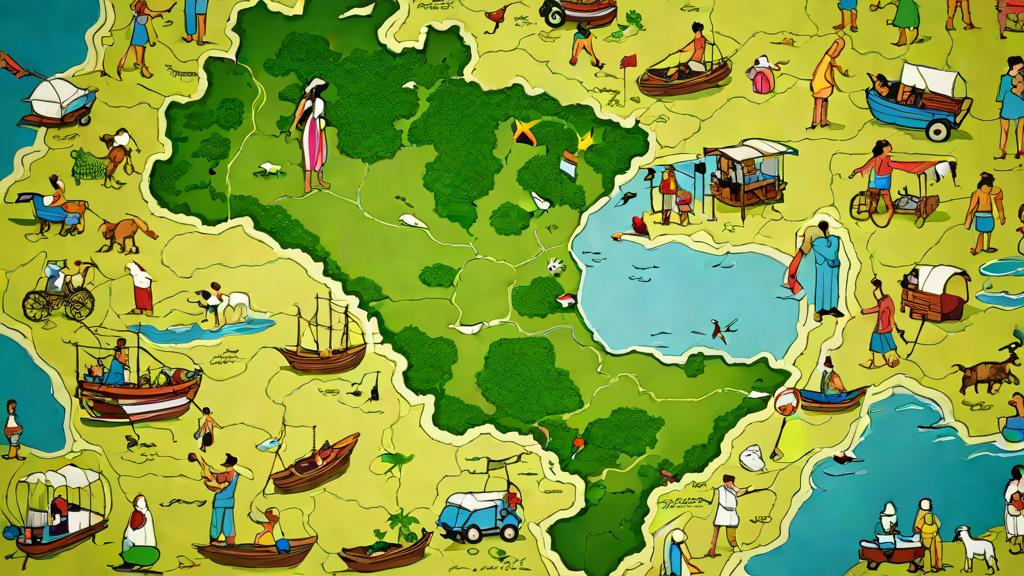
- Brazil is the fifth‑largest country in the world by area and population, with over 213 million residents.
- The Amazon Basin holds roughly 60 % of the planet’s rainforest and is a major focus of Brazil’s environmental policy.
- Brazil’s economy is the largest in Latin America, driven by agriculture, mining, manufacturing, and services.
- Portuguese is the official language, and Brazil’s cultural calendar is highlighted by the globally famous Carnival.
- Travelers should consider the dry season (May‑October) for wildlife and the summer months (Dec‑Mar) for beach vacations.
Brazil is the largest country in South America, covering 8.5 million km² and home to over 213 million people. It ranks fifth globally by both area and population, and its economy is the largest in Latin America.
What is Brazil’s geography and climate?
Brazil stretches from the equator in the north to the subtropical zones near Uruguay, giving it a wide range of climates. The Amazon Basin, which holds about 60 % of the world’s rainforest, dominates the north, while the southeast features mountainous terrain and the coastal Atlantic Forest.
- Equatorial (Amazon): Hot and humid, average temperature 27 °C, rainfall >2,000 mm annually.
- Tropical savanna (Cerrado): Distinct wet and dry seasons, temperature 20-30 °C.
- Subtropical (Southern Brazil): Cooler winters, occasional frost, rainfall 1,200-1,800 mm.
How many people live in Brazil and where are they concentrated?
Brazil’s 2023 census recorded 213.3 million residents. Over 85 % live in urban areas, with the majority clustered along the Atlantic coast.
| Region | Population (2023) | Major Cities |
|---|---|---|
| Southeast | 89 million | São Paulo, Rio de Janeiro, Belo Horizonte |
| South | 30 million | Porto Alegre, Curitiba, Florianópolis |
| North | 18 million | Manaus, Belém, Macapá |
| Northeast | 57 million | Salvador, Recife, Fortaleza |
| Central-West | 16 million | Brasília, Goiânia, Cuiabá |
What are Brazil’s major economic sectors?
Brazil’s Gross Domestic Product (GDP) was US$1.9 trillion in 2022, making it the world’s ninth-largest economy. The country’s economic strength comes from four main sectors:
- Agriculture: Brazil leads global production of soybeans (≈140 million t), coffee (≈3 million t), and beef (≈10 million t).
- Mining: It is the top exporter of iron ore, supplying roughly 20 % of global demand.
- Manufacturing: Automotive, aircraft (Embraer), and petrochemicals are concentrated in São Paulo and Rio de Janeiro.
- Services: Finance, tourism, and telecommunications account for about 65 % of GDP.
What cultural traditions define Brazil?
Brazilian culture blends Indigenous, Portuguese, African, and immigrant influences. Key expressions include:
- Carnival: Held each February, it features samba parades with up to 100,000 participants in Rio de Janeiro.
- Music: Genres such as samba, bossa nova, and funk carioca have worldwide follow-ups.
- Food: Typical dishes include feijoada (black-bean stew), pão de queijo (cheese bread), and regional fruits like açaí.
- Sports: Football is a national passion; Brazil has won five FIFA World Cups, the most of any country.
What are essential travel tips for visiting Brazil?
Travelers should plan ahead to make the most of Brazil’s diverse attractions. Below are practical guidelines:
When is the best time to visit?
The dry season (May-October) is ideal for the Amazon and Pantanal wildlife, while December-March offers beach weather on the northeast coast.
Do I need a visa?
Citizens of the United States, Canada, the European Union, and many other countries can enter Brazil visa-free for tourism stays up to 90 days. Check the latest consular requirements before you travel.
How to stay safe?
Use reputable transportation, avoid displaying valuables, and stay in well-reviewed accommodations. The Brazilian Federal Police publishes a “Safe Zones” map for major cities.
What currency and payment methods are accepted?
The Brazilian real (BRL) is the official currency. Credit cards are widely accepted in urban areas, but carry cash for small towns and market purchases.
What are Brazil’s environmental challenges and initiatives?
Deforestation in the Amazon remains a critical issue; between 2019 and 2022, the region lost an estimated 7 million hectares of forest. In response, Brazil has launched the “Amazon Fund,” aiming to invest US$1 billion by 2030 in conservation, sustainable agriculture, and indigenous land rights.
Quick facts at a glance
- Capital: Brasília (planned city inaugurated in 1960).
- Official language: Portuguese.
- National anthem: “Hino Nacional Brasileiro”.
- Time zones: Four, ranging from UTC-2 to UTC-5.
- Internet country code: .br.
How does Brazil’s education system work?
Brazil provides free public education from primary (ensino fundamental) through secondary (ensino médio) levels, overseen by the Ministry of Education. In 2023, the literacy rate for adults aged 15+ reached 93.2 %, up from 86 % in 2000.
- Early Childhood (Educação Infantil): ages 0-5, optional but widely attended.
- Fundamental I (1-5): basic literacy and numeracy.
- Fundamental II (6-9): expanded subjects including science and history.
- Médio (10-12): prepares students for university or vocational training.
What are Brazil’s major tourism attractions?
Brazil’s size creates a wide array of destinations, from natural wonders to vibrant cities. Below are the most visited sites, each offering a distinct experience.
- Rio de Janeiro – Christ the Redeemer statue, Sugarloaf Mountain, and world-renowned beaches such as Copacabana.
- Iguazu Falls – 275 waterfalls straddling the Brazil-Argentina border, a UNESCO World Heritage site.
- Amazon Rainforest – River cruises from Manaus to explore biodiversity hotspots.
- Salvador’s Pelourinho – Historic colonial quarter with Afro-Brazilian music and cuisine.
- Pantanal – The world’s largest tropical wetland, ideal for wildlife safaris.
What are Brazil’s health indicators?
Brazil operates a universal health system (SUS) that provides free care to all residents. In 2022, life expectancy reached 78.8 years and infant mortality fell to 12.4 deaths per 1,000 live births, among the best in Latin America.
- Doctors per 1,000 people: 2.2 (2021).
- Hospital beds per 1,000 people: 2.5 (2021).
- Public health expenditure: 9.2 % of GDP (2022).
Frequently Asked Questions
What is the capital of Brazil and when was it founded?
The capital of Brazil is Brasília. It was officially inaugurated on April 21, 1960, as a planned city to promote development in the interior of the country.
Do I need a visa to travel to Brazil as a U.S. citizen?
U.S. citizens can enter Brazil for tourism without a visa for stays up to 90 days. The visa‑free period can be extended once, but travelers should verify entry requirements before departure.
What are the main languages spoken in Brazil?
Portuguese is the official and most widely spoken language. In border regions, Spanish and indigenous languages are also used, while English is common in major tourist hubs.
How safe is it to travel to Brazil?
Safety varies by city. Major tourist areas have police presence and "Safe Zones" maps. Visitors should use reputable transport, avoid displaying valuables, and stay in well‑reviewed accommodations.
About The Author