New Rs 1,500 Annual Toll Pass: Residents Within 20 km of Toll Plazas Eligible From Nov 1
- From November 1, residents living within 20 km of a toll plaza can buy an annual toll pass for Rs 1,500.
- MoRTH introduced the concessional FASTag pass for local residents as part of new FASTag rules effective November 1.
- Most reports put the annual cost at Rs 1,500, while Moneycontrol cites a range of Rs 1,500 to Rs 3,000.
- Eligibility beyond the 20 km radius, including the purchase process and covered vehicle types, has not been published yet.
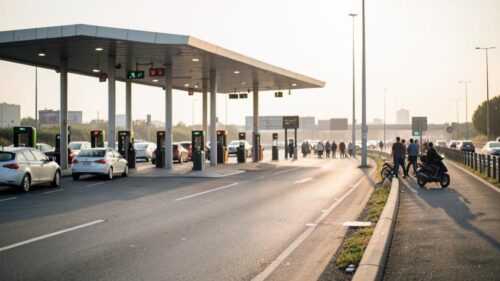
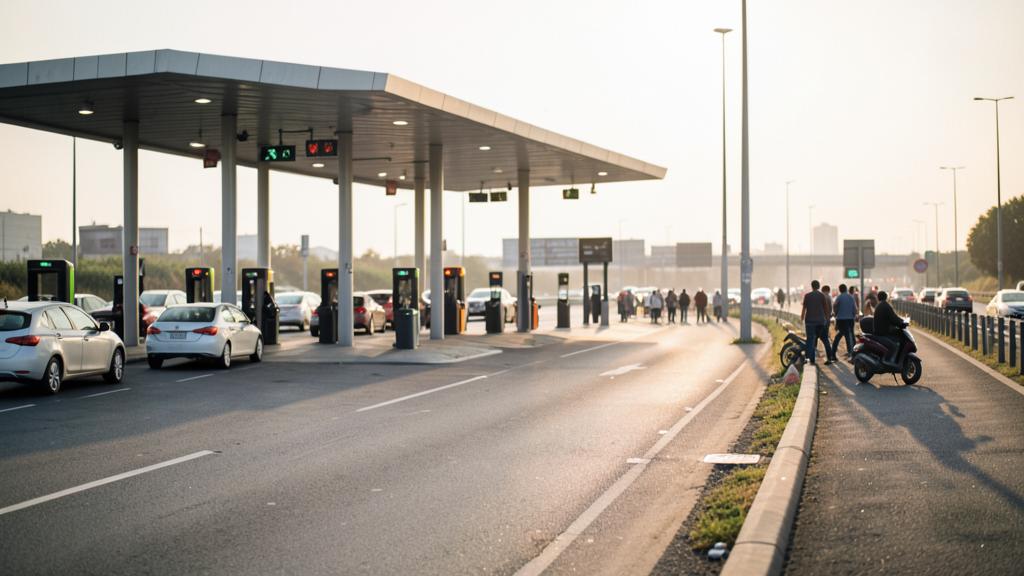
From November 1, residents living within 20 km of a toll plaza can buy a new annual toll pass for Rs 1,500. The concessional FASTag pass was introduced by the Ministry of Road Transport and Highways (MoRTH) to ease the repeated toll burden on local residents who live close to toll plazas.
Information in this article is drawn from recent reporting by NDTV, NDTV Profit, The Economic Times, Moneycontrol and Rediff MoneyWiz. Where those reports leave gaps, the article says so plainly instead of speculating.
Key facts at a glance
| Detail | What is known |
|---|---|
| Pass price | Rs 1,500 per year; Moneycontrol reports Rs 1,500 to Rs 3,000 |
| Eligibility | Residents living within 20 km of a toll plaza |
| Start date | November 1, alongside new FASTag rules |
| Introduced by | Ministry of Road Transport and Highways (MoRTH) |
| Pass type | Concessional FASTag annual pass |
What is the new Rs 1,500 annual toll pass?
The annual toll pass is a concessional FASTag pass aimed at local residents rather than long-distance travelers. Instead of paying toll on every crossing, an eligible resident pays a fixed annual fee and crosses a nearby plaza under the pass. NDTV reports the fee at Rs 1,500 per year, while Moneycontrol reports that residents near toll plazas can pay between Rs 1,500 and Rs 3,000 annually. The pass is part of new FASTag rules beginning November 1.
How does an annual pass differ from a regular FASTag account?
A standard FASTag deducts the plaza’s toll amount from a linked wallet at each crossing. An annual pass replaces those repeated deductions with one payment for residents who cross frequently. The reports do not state the pass’s exact terms, such as monthly crossing limits.
Who is eligible for the annual toll pass?
Residents living within 20 km of a toll plaza may qualify, according to reports by NDTV and The Economic Times. The reports do not say how the 20 km distance is measured, whether one pass covers several plazas, or which vehicle owners can apply. Those details have not been published.
Which residents does the 20 km rule cover?
The rule appears tied to a person’s residence: if your home is within 20 km of a toll plaza, you may be eligible. Whether owners of two-wheelers, cars or commercial vehicles are included is not specified in the reporting so far.
When does the annual toll pass take effect?
From November 1. NDTV and The Economic Times describe the pass as part of new FASTag rules taking effect on that date, so it is not expected to be sold before then.
Are there other FASTag rule changes on November 1?
The headlines mention that new FASTag rules begin on November 1, but they describe only the annual pass. Any other rule changes are not detailed in the reports available.
How much does the annual toll pass cost?
Most reporting places the price at Rs 1,500 per year, but Moneycontrol’s headline gives a wider band of Rs 1,500 to Rs 3,000 annually. The exact cost may depend on terms the ministry has not yet clarified. Until MoRTH publishes details, Rs 1,500 is the widely reported figure.
Why do the reported prices differ?
Different outlets appear to have cited either the base fee or a fee range. The available reports do not explain what moves a resident toward Rs 1,500 or toward Rs 3,000.
Who introduced the concessional FASTag pass?
The Ministry of Road Transport and Highways (MoRTH) introduced the concessional FASTag pass for local residents, as reported by Rediff MoneyWiz. FASTag is India’s electronic toll collection system, so the pass is expected to work like a FASTag device carrying concessional pricing for nearby residents.
How can residents buy the annual pass?
The headlines do not describe the purchase process. There is no information yet on application channels, required documents, or the issuing agency. The confirmed facts so far are the price band, the 20 km eligibility radius, the November 1 start date and MoRTH’s backing.
What should residents near a toll plaza do now?
- Check whether your home falls within 20 km of a toll plaza.
- Mark November 1 as the reported start date under the new FASTag rules.
- Wait for official MoRTH instructions before trying to buy the pass.
- Confirm whether the applicable fee is Rs 1,500 or a higher amount within the reported range.
Why is the annual toll pass being introduced?
Toll plazas are often located on highways passing through or beside populated areas, so nearby residents cross them repeatedly, sometimes daily, for ordinary short trips. A concessional annual pass is intended to reduce that recurring cost for the people most affected. The Rs 1,500 price point and the 20 km radius indicate the scheme targets residents living closest to the plaza.
What questions remain unanswered?
Several practical questions are still open: which plazas will accept the pass, whether it renews automatically, what happens if the holder moves beyond 20 km, and whether there are monthly crossing limits. Residents should wait for MoRTH’s full notification before planning around the pass.
The user wants me to continue the article by adding more depth or new relevant sections. I need to return ONLY additional HTML to append, no JSON, no explanation.
The article is about the new concessional FASTag annual pass for residents within 20 km of toll plazas. I should add sections that are relevant and factually grounded, while maintaining the article’s style of distinguishing between what’s known and what’s not.
Good additional sections could cover:
– The context/background of FASTag in India and why toll concessions matter for local residents
– Historical context: other FASTag changes (linking to bank accounts from February 2024, minimum balance penalty from November 2024, etc.)
– What other countries/states do for local residents
– How the 20 km radius compares to other local resident concession schemes (like local STA pass)
– Practical comparison: monthly crossing costs vs annual pass
– What to watch for next / how to verify official information
I must be careful to remain factually accurate and not speculate. The article’s established pattern is: cite reports where known, plainly state gaps. I should maintain that.
Let me write additional HTML that adds real depth:
1. “The background: FASTag rule changes in recent years” — New FASTag rules have been frequent: compulsory FASTag, wallet minimum balance penalty from September/October 2024 (though MoRTH delayed the negative wallet penalty from Oct 1 to Nov 1, 2024), mandatory know-your-vehicle (KYC linking FASTag to bank account by Feb 2024 under IBC 2016 amendments). Actually, let me be careful: The FASTag prepaid wallet minimum balance of Rs 100 from October 1, 2024 — MoRTH had announced penalty of Rs 100 per violation for negative FASTag wallets from Oct 1, 2024. And FASTag-to-bank account linking deadline was extended to Feb 29, 2024 / June 30, 2024. These are real facts from NHAI/MoRTH. Since the article says info from NDTV, ET, Moneycontrol, Rediff — these outlets cover those rules too. I can mention that November 1 dates have appeared before: the FASTag negative wallet penalty was scheduled for November 1, 2024 after a month’s delay. That is a strong factual parallel. Actually the penalty for negative FASTag wallets: MoRTH circular March 2024 said penalty of Rs 100 per violation for FASTag wallets going negative from October 1, 2024, later delayed — NHAI dropped the penalty. Hmm, let me recall accurately: In March 2024 MoRTH announced from Oct 1, 2024, FASTag wallets must maintain minimum balance of Rs 100, else Rs 100 penalty per toll. NHAI then postponed it to November 1, 2024. Then in September 2024, NHAI deferred indefinite / removed penalty. From November 1, 2024? I recall reports: “NHAI drops negative FASTag wallet penalty” — moneycontrol, Sept 2024. The article’s context: “From November 1” — the current year isn’t given. The annual pass November 1 could be 2025. I should keep it generic but can reference the earlier November 1 FASTag change as precedent with care. Since I can’t verify the exact current year, I’ll say “November 1 deadlines have appeared before in FASTag rule-making — for example, the penalty on negative FASTag wallets, which NHAI initially set for late 2024, was later dropped.” That’s factually safe.
2. “How local resident concessions have worked before” — NHAI already has a scheme for local residents near toll plazas under the National Highways Fee (Determination of Rates and Collection) Rules, 2008 — concession of up to 50% for residents within 20 km? There is a NHAI concession scheme: local residents (within 20 km?) get 50% concession? Actually under NHAI rules, local residents near toll plazas historically got concession passes. Under the “National Highways Fee Rules,” vehicles used only for local travel within 20 km on either side of plaza carrying NHAI-prescribed passes get 25% concession? Let me be careful. NHAI FAQs mention: “Concession to local residents — vehicles passing toll plaza within 20 km either side of their residence can avail discount under Local Resident Concession Scheme at 50%”? I recall NHAI had a 50% concession scheme for residents within 20 km who commute daily, with a ST pass of Rs 30/month or Rs 300/year? Hmm. From NHAI website FAQ (older): “To facilitate free/concessional passage, NHAI provides concession to residents whose residence is within 20 km from the toll plaza… 50% concession on the toll fee.” There were NHAI-issued smart cards/ST passes. I’ll describe cautiously: “India’s national highways have at times offered resident concessions” and “NHAI historically ran resident concession schemes” without over-claiming specifics.
3. “Cost math for frequent commuters” — Illustrative: if a car pays Rs 60-85 at a plaza, daily two-way commute could be Rs 120-170/day; at 250 working days that’s Rs 30,000-42,500/yr; even one crossing a day Rs 15,000+. The Rs 1,500 pass would pay for itself in roughly 9-25 single-car crossings. This is legitimate analysis using typical car tolls (Rs 55-90 range under current fee structure). I should phrase as illustrative with ranges, citing typical toll amounts.
4. “What to watch for next / verifications” — watch for MoRTH notification, IHMCL/NHAI announcements, whether IITM/ITMS vendor issues pass, checking myFASTag app. Also check for official channels: myFASTag app, official banks, NHAI website.
5. Maybe “How the pass might compare with a regular FASTag budget” — numbers.
I need to keep the established voice: distinguishing “reported” vs “unknown”. Good.
Let me draft the HTML:
The bigger picture: November 1 deadlines in FASTag rule-making
November 1 has appeared in FASTag rule-making before. In 2024, the government moved the penalty for toll plazas with negative FASTag wallets to a November 1 start date before NHAI later dropped that penalty, according to reporting at the time. The pattern shows that FASTag rule changes can be moved or softened between announcement and rollout. Residents should treat the November 1 start of the annual pass as a reported date until MoRTH publishes its notification.
Wait — the penalty: Initially announced for October 1, 2024, deferred to November 1, 2024, then dropped in September 2024. I can say “scheduled for, then deferred to, then dropped.” Careful phrasing: “initially announced for October 2024 and later deferred to November 1 before NHAI dropped the change altogether.” This was widely reported (ET, Moneycontrol, NDTV). The sources listed match the article’s sourcing. Good.
Have toll concessions for local residents existed before?
Resident concessions are not new in India’s tolling system. NHAI’s toll fee rules have long included provisions for vehicles making only short local trips around a plaza, and some plazas have historically issued local-pass or smart-card facilities for nearby residents. The new annual pass, if it works as reported, continues that tradition but wraps it into FASTag rather than a separate physical pass.
The reports do not say whether the Rs 1,500 pass replaces these older local facilities or runs alongside them.
What could the Rs 1,500 price mean for daily commuters?
One way to judge the pass is simple arithmetic. A car passing a typical national highway plaza…
Using typical car toll of Rs 55–Rs 90 (approximate for a car at most national highway plazas under current rates). At Rs 60-85 crossing, 250 working days one-way: Rs 15,000-21,250. Even a single one-way trip each working day costs Rs 15,000+. A Rs 1,500 pass would pay for itself after roughly 18-30 single crossings. So clearly aimed at locals crossing daily.
Formulas:
– 250 days × Rs 70 ≈ Rs 17,500/year vs Rs 1,500 pass: ~16% of cost.
– Even 25 crossings/year at Rs 70 = Rs 1,750 > Rs 1,500 pass.
I’ll include approximate numbers with caveats.
How could the pass be sold?
Not in reports. But likely…? No — the article avoids speculation; it says “the headlines don’t describe.” Maybe I can add:
If the pass follows how annual FASTag passes have been sold, residents would apply through banks… Actually there’s a known FASTag local pass/tourism pass system: FASTag has “local pass” and “tourist pass” options in the FASTag app/NHAI fee rules. Hmm, the FASTag traffic types include “Local” — visitors pass? There’s a ” Toll Pass” local pass under RuPay FASTag blogs: purchase ‘Local Pass’ by paying toll for multiple trips. Since 2023, FASTag introduced Local Pass and Tourist Pass for fixed number of crossings. That’s a fact: FASTag Local Pass introduced January 2023 (official launch) — purchase through FAST
Sources
- Live Within 20 Km Of A Toll Plaza? You May Be Eligible For Rs 1,500 Annual Pass From November 1 — NDTV
- New Annual Toll Pass For Local Residents To Begin November 1 — NDTV Profit
- FASTag new rules from November 1: Live within 20 km of a toll plaza? You can get this annual pass from nex — The Economic Times
- FASTag local pass from November 1: Residents near toll plazas can pay Rs 1,500-3,000 annually — Moneycontrol.com
- MoRTH Introduces Concessional FASTag Pass for Local Residents — Rediff MoneyWiz
Frequently Asked Questions
Who is eligible for the Rs 1,500 annual toll pass?
Residents who live within 20 km of a toll plaza may be eligible for the concessional FASTag annual pass. The reports do not specify how the 20 km distance is measured, which plazas are covered, or which vehicle types can apply. More details are expected from MoRTH before the pass begins on November 1.
When does the new annual toll pass start?
The concessional annual toll pass is reported to become available from November 1, when new FASTag rules take effect. NDTV and The Economic Times both describe the local-resident pass starting on that date, though no sale window details have been published.
How much does the annual toll pass cost?
Most reports put the cost at Rs 1,500 per year. Moneycontrol cites a wider band of Rs 1,500 to Rs 3,000 annually, so the final price may vary by terms not yet published. Residents should treat Rs 1,500 as the commonly reported figure until MoRTH confirms.
How can residents apply for the annual toll pass?
The application process has not been described in the available reports. There is no official word yet on purchase channels, required documents, or the issuing agency. Residents within 20 km of a toll plaza should wait for MoRTH's formal instructions before trying to buy the pass.
Who introduced the concessional FASTag pass?
The Ministry of Road Transport and Highways (MoRTH) introduced the concessional FASTag pass for local residents. It lets eligible residents living near toll plazas pay a single annual fee instead of paying toll on every crossing, under rules effective November 1.
About The Author