Hormuz burns while negotiators talk: the split signal in US-Iran war pressure
The sharpest feature of the current US-Iran news is not the explosions on Qeshm Island. It is that Washington can run limited strikes and peace talks on the same day and present both as defence.
- US officials described Monday's Qeshm Island strikes as limited, defensive strikes meant to protect US assets.
- News18 reported daytime US airstrikes after several night attacks, and a US strike on an oil tanker it said was breaking Iran's naval blockade.
- Reuters reported Iran says contacts over ending the war continue even after talks ended without a breakthrough.
- Trump claimed oil prices fell $10 in one day and said a deal with Tehran could happen, while Vance expressed optimism about settlement.
- The immediate marker to watch is Iran's stated plan to reopen the Strait of Hormuz within two days amid this strike-and-talk cycle.
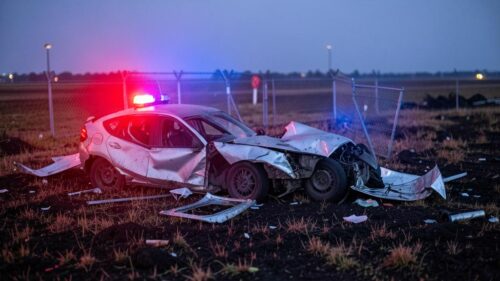
The US carried out what it called defensive strikes in the Strait of Hormuz on Monday. Three US officials described the Qeshm Island action to CNN as limited and defensive, aimed at protecting US assets in the region. IRNA reported several explosions on Qeshm without stating the cause.
A shift from night raids to daylight pressure
The attack pattern matters. News18 reported a new round of US airstrikes during daylight hours after several consecutive nights of attacks, a change of tempo in a war that had settled into after-dark strikes. The Indian Express reported the Qeshm strike as landing even as President Donald Trump said a deal with Tehran could happen and that a deal was coming together. India Today reported the same pairing: the attack on Qeshm after Trump’s remark.
Trump also warned that the US may drop “the hammer” on the Iranian regime even as the two sides picked up peace talks on Monday, Fox News reported. That juxtaposition is the point. The US is not pausing the military option while talking; it is talking while keeping a visible, nameable option in reserve.
The strait is becoming the bargaining table
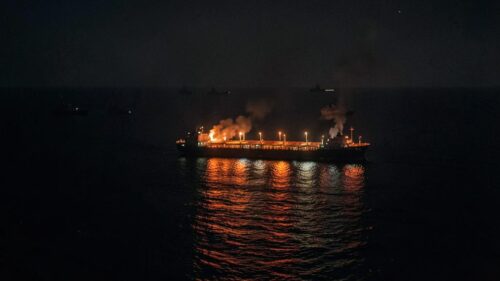
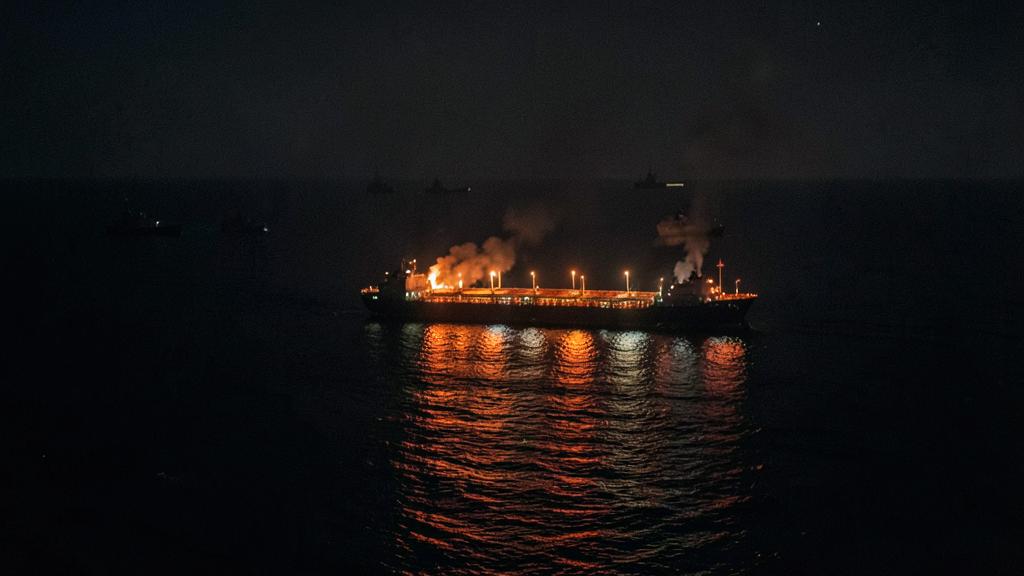
The pressure is concentrated where it hurts most. The Times of India reported an oil tanker catching fire after hitting a mine in the Strait of Hormuz. News18 reported the US striking an oil tanker it said was trying to break Iran’s naval blockade. The same US-Iran news cycle therefore contains a mined waterway, a burning tanker, a blockade, and a US decision to interdict that blockade by force.
Tehran has a built-in relief valve. The Indian Express reported Iran saying its plan to reopen the Strait of Hormuz could start within two days. If reopening begins, the blockade logic weakens and Washington loses one of its best behavioural levers. If it does not begin, the burned tanker and mined waters give the US a ready script for more daylight strikes.
Diplomacy is alive, but the breakthrough is missing
The counter-case deserves respect. Reuters reported Iran saying contacts over ending the war continue after talks finished with no breakthrough. JD Vance expressed optimism about a negotiated settlement with Tehran, News18 reported. Trump claimed oil prices fell by $10 in a single day in what he called the biggest drop in history and said Iran wants to reach a settlement as pressure mounts. Those are not small signals. A $10 one-day oil price plunge is the kind of economic print a US president can show as evidence that sanctions and strikes are working.
At the same time, Tehran is adding its own pressure. The Times of India reported Iran warning employees of three firms over alleged Israeli military links, with the blood-on-hands phrasing directed at those companies. Diplomacy is active on both sides, but the only concrete reported outcome from the latest round is that there was no breakthrough.
Pressure is the negotiating position
Read together, the facts point to a strategy rather than a contradiction. Limited Qeshm strikes protect US assets while showing Iran that Washington will absorb risk in the Hormuz corridor. The daylight timing removes the deniability of night raids without escalating into a declared war campaign. The tanker strike enforces the blockade at sea, and Trump’s oil-price claim argues that the pressure is already changing Iran’s incentives.
The fair counterpoint is that Trump and Vance are publicly investing in a deal, Iran is keeping contacts open, and the Hormuz reopening plan could start within two days. That is a real off-ramp. But an off-ramp is not an exit while the corridor still produces a mined tanker and a destroyed interdictor-target in the same news set.
The concrete test now is simple: whether Tehran begins the reopening it says can start within two days, and whether Washington answers that step with restraint or with another daylight strike in the Strait of Hormuz.
Based on reports from
- Iran war live: US carries out ‘defensive’ strikes in Strait of Hormuz — Al Jazeera
- Iran says contacts over ending war continue after talks finish with no breakthrough — Reuters
- U.S. strikes Iran's Qeshm Island: report — The Hindu
- U.S., Iran Threaten Escalation as Diplomacy Stalls — Arms Control Association
- 2026 Iran war | Oil, Explained, United States, Israel, Strait of Hormuz, Map, & Conflict — Britannica
About The Author