Command Discipline Takes Precedence as Home Ministry Suspends Delhi ACP Manasvi Vashishta
The real threat to institutional stability in police administration isn’t the initial flashpoint of a local conflict, but the breakdown of central authority when officers organise collective demonstrations against administrative decisions. The decision enforcing the Manasvi Vashishta Delhi Police suspension demonstrates that the Ministry of Home Affairs prioritises strict service discipline above individual officer profiles or political sensitivities. When uniformed personnel gather to protest executive transfers, the administrative response must focus on preserving the chain of command.
ACP Manasvi Vashishta, a 2019-batch Delhi, Andaman and Nicobar Islands Police Service (DANIPS) officer and an IIT Kharagpur graduate who previously served as Personal Security Officer to Vice President Jagdeep Dhankhar, found himself at the center of the dispute. His background highlights how rapidly operational disagreements can escalate into major administrative crises within municipal policing.
- MHA suspended 2019-batch DANIPS officer ACP Manasvi Vashishta on November 2 following a 10-hour protest outside Delhi Police HQ.
- The demonstration protested administrative transfers stemming from an East Delhi parking dispute between Shahdara police and lawyers.
- Delhi High Court is scheduled to hear a PIL on Friday seeking action against Vashishta over alleged threats.
The Home Ministry’s Crackdown Prioritises Command Discipline Over Rank-and-File Grievances
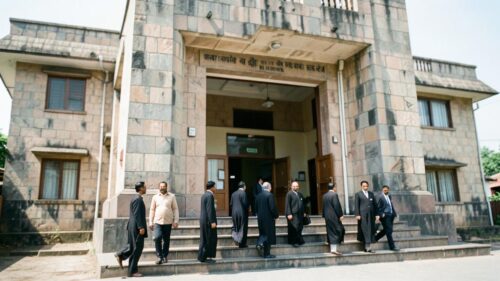
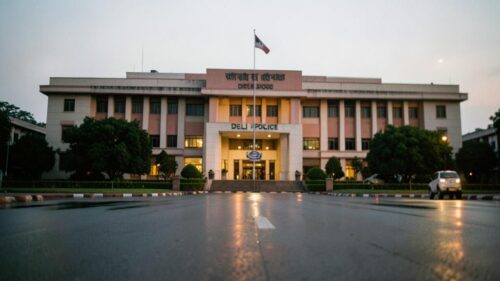
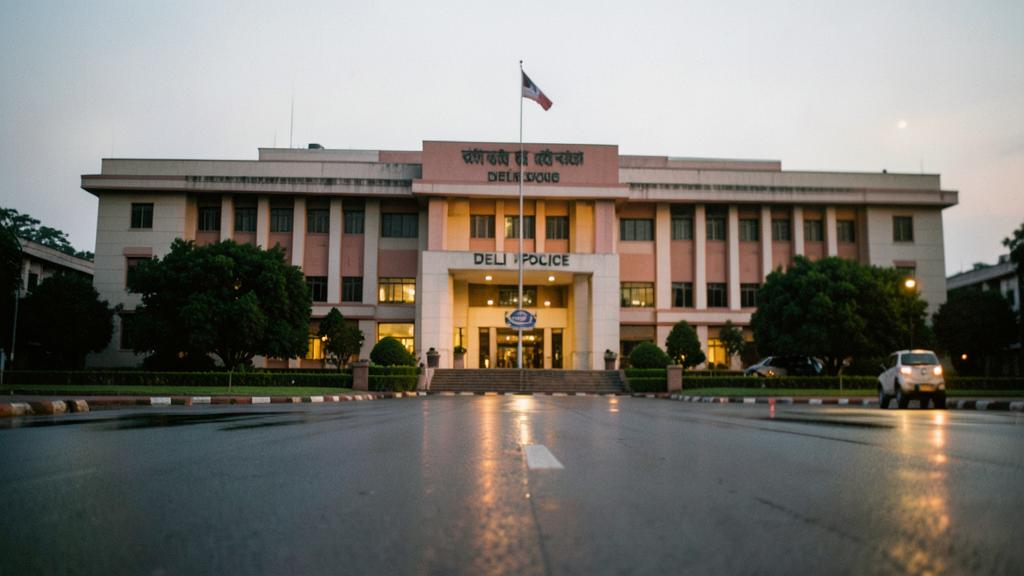
The Ministry of Home Affairs suspended Vashishta on November 2 with immediate effect, explicitly stating that departmental proceedings were contemplated against him for a breach of discipline. The action followed a 10-hour demonstration on Monday outside the Delhi Police Headquarters, where Vashishta delivered a speech addressing assembled personnel protesting recent transfers.
For the central government, allowing uniformed officers to mount public demonstrations outside headquarters sets a precedent that threatens internal hierarchy. The Ministry of Home Affairs moved swiftly, issuing the suspension order to signal that public rallies by serving officers will not be tolerated regardless of the underlying provocation.
Vashishta responded publicly after the order, describing the move as routine administrative procedure. He stated that the suspension is a departmental action that has not weakened his resolve, adding that he remains confident of a fair inquiry while thanking fellow personnel for their support.
A Parking Clash in Shahdara Exposed Deep Police-Lawyer Friction
The immediate catalyst for the demonstration was an East Delhi parking dispute that rapidly escalated into a physical face-off between police personnel and lawyers in Shahdara. Such confrontations between law enforcement and the legal community frequently produce intense institutional pressure, often ending in swift administrative reassignments to defuse local tensions.
Following the Shahdara scuffle, senior leadership ordered the transfer of key officers involved, including Vashishta and Inspector Kumar, the Station House Officer of Shahdara police station. Inspector Kumar was initially moved from Shahdara to the security unit. Days after Vashishta’s suspension, Kumar received a second transfer order moving him from the security unit to the Delhi Police’s Intelligence Fusion and Strategic Operations branch, demonstrating how fluid the administrative adjustments remain.
Rank Morale Conflicts With the Zero-Tolerance Stance on Public Protests
A fair assessment of the situation requires acknowledging the perspective of the lower ranks within the force. Field officers frequently argue that routine transfers issued immediately after clashes with lawyers project institutional weakness, leaving field personnel feeling unsupported when handling volatile street-level disputes. The Monday demonstration was driven by this widespread perception that administrative actions systematically favor legal professionals over frontline police officers during inter-institutional disputes.
However, from a governance perspective, allowing police officers to publicly challenge transfer orders through street demonstrations threatens the core foundation of a disciplined force. While lower-level personnel view public protests as their only effective leverage against sudden transfers, senior leadership regards collective action by armed forces as an unacceptable breach of conduct. The Home Ministry’s decision to execute the ACP Manasvi Vashishta suspension reinforces the position that internal grievances must be routed strictly through departmental channels rather than public demonstrations.
Legal Proceedings and Inquiries Shift the Conflict to the Delhi High Court
The fallout from the Shahdara clash and the subsequent headquarters demonstration has moved beyond internal departmental scrutiny into the judicial sphere. The Delhi High Court is set to hear a Public Interest Litigation seeking action against ACP Vashishta over alleged threats tied to the dispute.
This parallel legal track complicates the ongoing departmental inquiry initiated by the Ministry of Home Affairs. With a High Court bench reviewing the PIL on Friday, the administration faces simultaneous scrutiny over both the conduct of the initial police-lawyer confrontation and the subsequent demonstration outside police headquarters.
Sources
- Manasvi Vashishta: From IIT Kharagpur graduate, former VP Dhankhar’s PSO and ACP at centre of Delhi Police protest — The Hindu
- Delhi High Court To Hear On Friday PIL Seeking Action Against ACP Manasvi Vashistha Over Alleged Threats… — Live Law
- Cop who led 10-hour protest suspended by Union home ministry over discipline breach — Telegraph India
About The Author