Commerce Ministry relaxes Export Promotion Mission rules to widen MSME reach
Eased EPM norms for smaller exporters
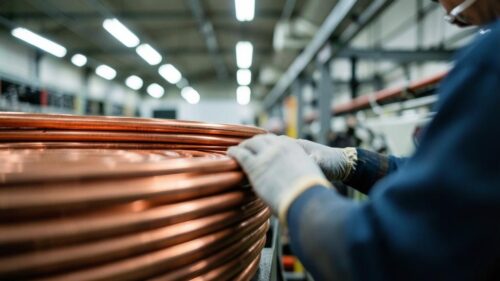
The Commerce Ministry has amended certain rules of the Export Promotion Mission, broadening the guidelines to help MSME exporters reach new markets. The relaxed framework expands support on market access, standards compliance and logistics, easing two practical barriers that smaller exporters face when moving goods abroad.
- The Commerce Ministry amended Export Promotion Mission rules to expand market access, standards compliance and logistics support for MSME exporters.
- RBI eased MFI portfolio restrictions, allowing microfinance lenders into MSME and gold loan segments.
- MSME festive financing rose 33% to ₹20,000 crore in 2026, led by e-commerce, consumer durables, FMCG and paints.
- Uttarakhand reported over 29,000 new MSME units, while Delhi said it reached 19,000+ entrepreneurs through 450 trainings.
- IFC data shows MSME lending lagged credit demand from 2019 to 2023, even as SIDBI records stronger manufacturing confidence.
The change comes as the industry body FISME seeks sectoral export studies across 10 priority sectors and an overhaul of testing facilities. FISME’s argument is concrete: smaller exporters need market-specific research and upgrades to testing infrastructure to clear compliance requirements and benefit from existing free trade agreements. The EPM amendments address part of that burden directly by relaxing the rules under which exporters get support, while the testing and study requests remain separate industry asks.
Credit flows, festive demand and a lending gap
Government action on the credit side is also moving through different channels. The Reserve Bank of India has eased portfolio restrictions for microfinance institutions, allowing lenders to move beyond core microfinance into MSME lending, gold loans and other segments to reduce concentration risk. That shift matters for the smallest borrowers because it expands the institutions permitted to fund them.
Festive-season demand already shows up in the data. MSME festive financing rose 33% to ₹20,000 crore in 2026, with e-commerce, consumer durables, FMCG and paints among the sectors reporting stronger liquidity requirements during the festive period. The increase is a demand signal, while SIDBI’s Round 8 outlook for October-December 2026 and beyond records improving MSME business confidence despite rising input costs. Manufacturing sentiment is the strongest part of that survey, suggesting the optimism is rooted in factory and export-facing activity rather than services alone.
That confidence sits alongside a documented financing gap. The International Finance Corporation has said MSME lending growth between 2019 and 2023 lagged the growth in demand for credit as economies came out of the pandemic. In other words, the appetite to borrow was larger than the supply of loans in those years, a gap that RBI’s MFI rule change and festival-level credit flows are now working through.
State-level pushes and Delhi’s training numbers
States are reporting results in unit creation and skill outreach. Uttarakhand Chief Minister Pushkar Singh Dhami said more than 29,000 new MSME units have been established in the state. His government attributes the growth to an investment ecosystem built on online services, startup funding and industrial infrastructure.
Delhi is emphasising the training pipeline. The Delhi government said more than 19,000 entrepreneurs were reached, 450 trainings were conducted, and 5 months of work were reviewed by Industries Minister Manjinder Singh Sirsa at a meeting on the key works of the Delhi State Industrial and Infrastructure Development Corporation. The Indian Express reported the figures as part of the capital’s MSME focus.
At the Centre, industry bodies have laid out a wish list ahead of the Union Budget 2027-28. The asks include a dedicated manufacturing finance institution, incentives for advanced technologies and an MSME graduation mission, three proposals aimed at moving small units from survival to scale. Whether they get funding or incentives will be clear only when the budget papers arrive.
Digital readiness and ASEAN’s AI push
Digital readiness is becoming part of the MSME policy conversation. At the 49th ASEAN Summit, leaders adopted a declaration to boost artificial intelligence adoption among MSMEs. The declaration focuses on improving digital infrastructure, digital literacy and cross-border cooperation, with the stated aim of driving productivity in the small-business sector.
That regional push connects to the export problem on the ground. Indian MSME exporters need help meeting standards in new markets, and the EPM amendment is the immediate instrument for that. The ASEAN framework addresses the same issue from a digital and regulatory angle, using infrastructure, literacy and cooperation rather than export incentives.
The combined picture is uneven. Some constraints are easing: EPM rules have been relaxed, MFI portfolios are opening up, festive credit has jumped a third, and state governments report thousands of new units or trained entrepreneurs. At the same time, IFC data warns that supply of MSME credit has historically fallen short of demand, and industry says testing facilities and market studies still trail what smaller exporters need to use FTAs. The next concrete checkpoint is the Union Budget 2027-28, where the manufacturing finance institution, technology incentives and graduation mission are expected to be tested.
Sources
About The Author