Cyclone Akvan Grounds 20 Flights at Ranchi Airport as Visibility Drops to 1,000 Metres
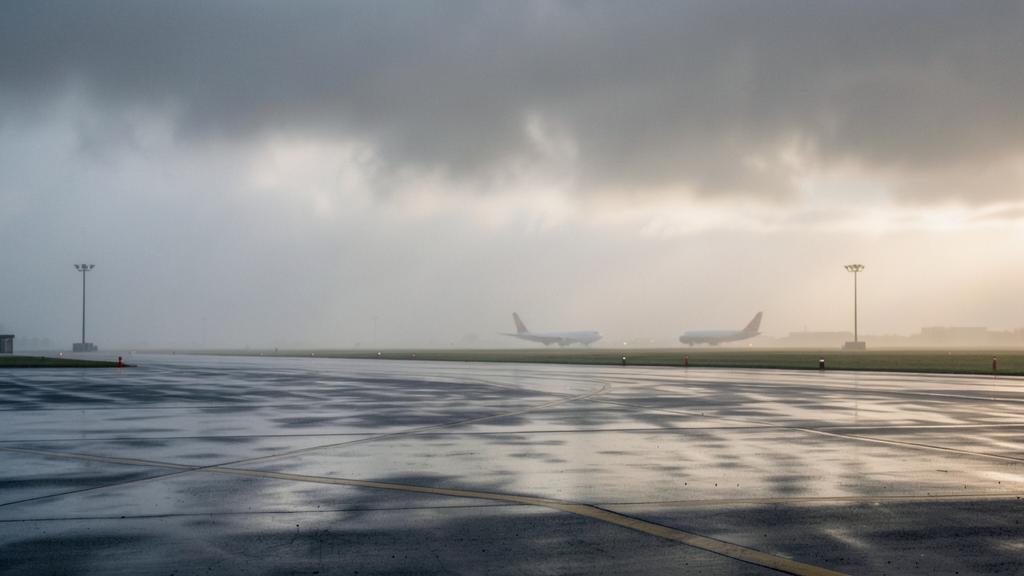
Cyclone Akvan grounded air travel across Jharkhand on Saturday after severe visibility drops forced Birsa Munda Airport to cancel 20 flights and divert four others. The sudden degradation in Ranchi weather began on Friday with persistent light rain and overcast skies, leaving flight schedules in disarray through Saturday afternoon.
An official at Birsa Munda Airport confirmed that visibility hovered around 1,000 metres until 1 pm on Saturday. That reading fell significantly short of the 1,200 to 1,500 metres required for safe take-offs and landings, leaving inbound and outbound aircraft unable to operate safely.
- Cyclone Akvan forced 20 flight cancellations and four diversions at Ranchi's Birsa Munda Airport on Saturday.
- Horizontal visibility stayed around 1,000 metres until 1 pm, below the mandatory 1,200-1,500 metre landing threshold.
- Flight services connecting Ranchi to Delhi, Kolkata, and Mumbai experienced major disruptions.
- Weather conditions are expected to improve from Sunday, though early morning fog may cause brief delays.
Why visibility dropped at Birsa Munda Airport
The primary driver behind the air traffic suspension was Cyclone Akvan, which brought widespread cloud cover, atmospheric moisture, and rain bands across eastern India. Jharkhand began experiencing cloudy weather coupled with light rain on Friday under the influence of the cyclone. By Saturday morning, mist and moisture bound to the low cloud layers pulled horizontal sightlines down well below safe operational parameters.
Aircraft rely on strict meteorological minimums to execute approaches and departures. For instance, while flight safety protocols at Birsa Munda Airport demand a minimum visibility threshold between 1,200 and 1,500 metres for standard commercial take-offs and landings, airport observers recorded visibility stuck at roughly 1,000 metres through the entire morning up to 1 pm. That gap of a few hundred metres made visual runway identification impossible for landing aircraft.
With cloud bases sitting low over the runway, four incoming flights made instrument approaches but could not establish the visual contact required to land. Air traffic controllers redirected all four aircraft to diversion airports outside Jharkhand, while ground crews held departing planes at their gates.
Metros hit as schedules collapsed
The air traffic ground stop at Birsa Munda Airport disrupted connections across India’s national aviation network. Outbound and inbound services connecting Ranchi to major metropolises—including Delhi, Kolkata, and Mumbai—were cancelled as visibility failed to lift.
Flight disruptions escalated through the day as bad weather persisted. While early morning official counts highlighted 14 flight cancellations, the total rose to 20 cancelled flights by afternoon as airlines scrapped subsequent legs. Services linking Ranchi with Kolkata and Mumbai were particularly hard hit, alongside multiple daily flights to Indira Gandhi International Airport in Delhi.
Because aircraft operating out of Ranchi are part of tightly scheduled regional networks, the groundings caused secondary delays at destination airports. Planes scheduled to perform immediate turnaround flights from Delhi or Kolkata were unable to depart Ranchi, leaving passengers stranded inside Birsa Munda Airport’s terminal building.
Regional rain and what happens next
The storm system responsible for the air travel disruption created widespread wet weather across eastern states. In West Bengal, Chief Minister Mamata Banerjee reviewed state administrative preparedness to deal with Cyclone Akvan’s impact. Calcutta spent Saturday completely sunless and rain-soaked as the cyclone crossed the coast, though weather monitoring reports noted the wet spell was expected to lose steam shortly after landfall.
In Jharkhand, rain activity began subsiding late Saturday as the cyclone moved further inland and weakened. Forecasts indicate that conditions around the airport will improve from Sunday, allowing airlines to resume standard flight operations once visual clearances return to normal levels.
However, airport officials warned that dense morning fog may persist over Ranchi in the early hours of Sunday, which could cause temporary morning delays before full operational capacity is restored. Passengers travelling through Birsa Munda Airport have been advised to monitor flight status updates and check the shifting weather in Ranchi before heading to the terminal.
Based on reports from
About The Author