India’s Shipbuilding Push Meets Choke-Point Warfare on the High Seas
The real gamble in India’s maritime push isn’t whether foreign navies will dock at its yards, but whether expanding domestic infrastructure can withstand an increasingly hostile global ocean.
The Indian government has launched an $8 billion investment package alongside a potential $24 billion domestic vessel demand pipeline, setting an explicit target to place India among the top five global maritime manufacturing hubs by 2047. Under this plan, the state is establishing five integrated shipbuilding clusters and hosting events like the India Shipbuilding Investment Conclave 2026 to draw international capital. Yet while policymakers focus on building domestic capacity, the operational risks facing every merchant ship at sea are compounding far faster than dry docks can be built.
- India targets a top-five global shipbuilding rank by 2047 backed by an $8 billion investment package and $24 billion vessel demand pipeline.
- DP World arm Dubai Drydocks World and Cochin Shipyard are planning a ₹1,570-crore repair facility in Vadinar, Gujarat.
- Security threats in the Strait of Hormuz and drone strikes off Libya highlight rising physical dangers for commercial and defense vessels.
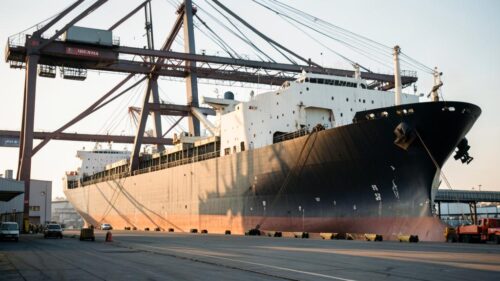
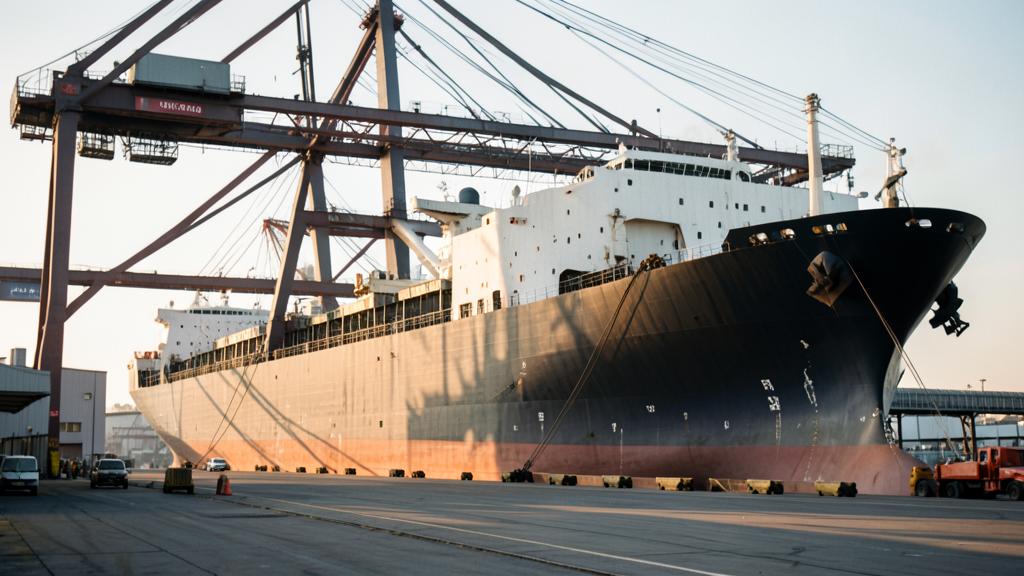
At home, the government is relaxing registration rules to allow older vessels above 20 years into the national fleet following committee approval, aimed at shrinking India’s reliance on foreign carriers. Simultaneously, foreign commercial titans are moving in. Dubai Drydocks World, a subsidiary of DP World, is exploring a joint venture with Cochin Shipyard to construct a ₹1,570-crore ship repair unit at Vadinar in Gujarat. At the same time, the US Navy supply ship USNS Wally Schirra recently docked at L&T’s Kattupalli shipyard near Chennai for maintenance under the India–US Master Ship Repair Agreement (MSRA), demonstrating how existing yards are already absorbing strategic military traffic.
Naval Drones and Blockades Upend Traditional Sea Lanes
While dockyards expand, physical security across international waters is deteriorating. Ukraine’s recent naval drone strike on Russian vessels off the coast of Benghazi in Libya demonstrated how unmanned warfare has expanded beyond the Black Sea into the Mediterranean. The strike drew immediate condemnation from Libya’s UN-backed government, while Moscow issued warnings to Kyiv over what it termed a dangerous trend following parallel incidents in the Baltic Sea.
Further east, choke points are becoming equally perilous. The shipping ministry is actively tracking nine Indian vessels in the Strait of Hormuz following serious security threats that put Indian seafarers at grave physical risk. These incidents demonstrate that industrial policy alone cannot insulate maritime trade from regional flare-ups. A commercial vessel can be built or registered under new Indian committee approvals, but once it passes through the Strait of Hormuz or the Mediterranean, it enters zones where low-cost asymmetric weapons can disrupt high-value maritime commerce.
Expanding Capacity Through Aging Fleets and Military Repairs
The government’s domestic strategy centers heavily on retaining revenues that currently flow to overseas repair yards. The arrival of the USNS Wally Schirra at Kattupalli shows how Indian shipyards are converting bilateral pacts like the MSRA into concrete maintenance contracts. Expanding repair infrastructure to Vadinar through the ₹1,570-crore DP World and Cochin Shipyard joint venture is designed to handle heavier industrial loads along the western coast.
To quickly scale up capacity, the revised registration framework allows domestic firms to buy and register older commercial vessels that previously failed age cutoffs. By granting committee-level exemptions for ships older than 20 years, the shipping ministry hopes to build fleet volume fast. This approach aims to reduce India’s reliance on foreign chartering, keeping freight charges within domestic banking channels while new yards under the five planned clusters come online.
The Limits of Hard Infrastructure Against Maritime Hazards
Skeptics of this rapid expansion argue that accumulating older hulls and expanding shipyard capacity does not solve the fundamental vulnerability of maritime operations: basic environmental hazards and emergency response limitations. That vulnerability was laid bare when a Panama-flagged cargo ship carrying iron ore from Odisha to Singapore sank in the Bay of Bengal, roughly 240 nautical miles off the Paradip coast. The vessel, crewed mostly by Chinese sailors, showed how routine cargo transit remains subject to sudden disaster regardless of broad industrial targets.
Naval capabilities are also tied up in ceremonial and defensive presence rather than pure commercial escort. The Indian Navy’s frontline Naval Offshore Patrol Vessel, INS Sumedha, is scheduled to arrive in Kolkata on November 20, 2026, to participate in Navy Day 2026 celebrations and open for public viewing. As public vessels perform ceremonial duties and military repair yards take on foreign defense contracts, commercial shipping lines still face bare-knuckle logistics. The real measure of India’s 2047 vision won’t be the number of clusters announced, but whether its expanding fleet can operate safely across waters that are growing more violent by the month.
Based on reports from
About The Author