How the November Beaver Supermoon Split Science and Astrology
The real tension surrounding the Beaver Moon supermoon in November is not whether it will light up the night sky, but how a routine lunar perigee has become a battleground between astronomical physics and online astrological anxiety. For skywatchers, the event represents a predictable orbital alignment; for wellness commentary, it has turned into a high-stakes moment for behavioral caution.
When the lunar disk reached peak illumination at 8:23 pm IST on November 24, 2026, viewers saw a full moon that appeared larger and brighter as it rose in the eastern sky shortly after sunset. Yet alongside the physical event, digital platforms were flooded with instructions on Gemini rituals, crystal selections, and explicit warnings against making major life decisions. This split highlights how coverage of the November Beaver Moon supermoon has fractured into two distinct narratives: one grounded in visible perigee mechanics, and another anchored in social anxiety and digital self-help culture.
- The November 2026 Beaver Supermoon reached peak illumination at 8:23 pm IST on November 24.
- The event is the first of three consecutive supermoons, with the next taking place on Christmas Eve.
- Supermoons occur at perigee, when the Moon reaches its closest orbital approach to Earth.
Orbital mechanics behind the perigee spectacle
At its core, a supermoon is a simple matter of celestial geometry. A supermoon occurs when a full moon coincides with perigee, the exact point in the Moon’s elliptical orbit where it makes its closest approach to Earth. That physical proximity causes the lunar disk to present a larger apparent diameter and increased brightness compared to average full moons throughout the year.
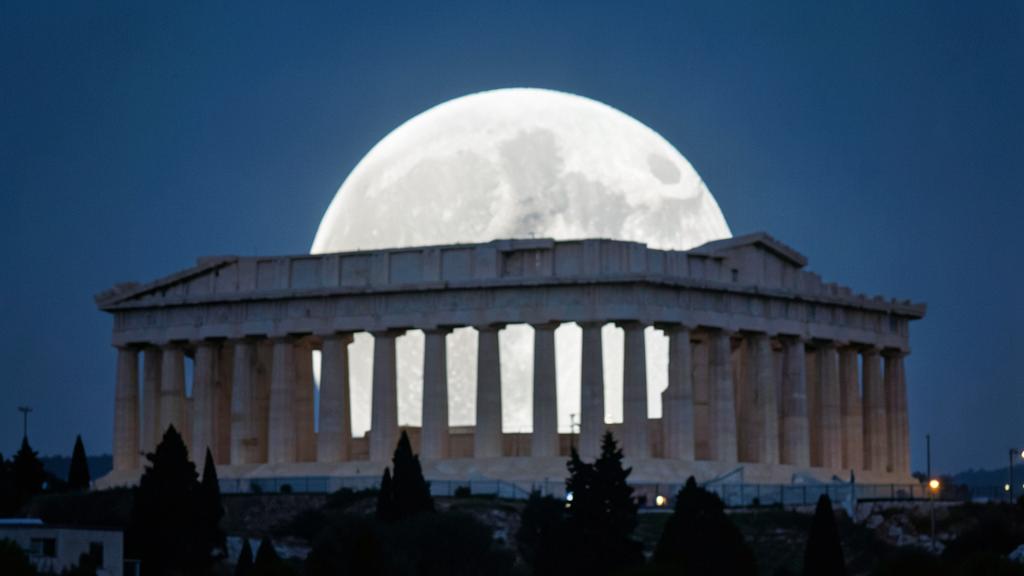
Yet for millions of observers worldwide, the event remains a straightforward physical phenomenon of visual grandeur. From the skyscrapers of New York to the ancient Parthenon in Athens, photographers captured the oversized illuminated disk rising over urban and historic horizons. The sight delivered precisely what perigee promises: a striking, natural spectacle visible to anyone looking toward the eastern horizon after dusk.
Astrological warnings compete with astronomical realities
The counter-argument to viewing the event strictly as a neutral cosmic display comes from cultural and astrological commentators who frame the moon as a catalyst for immediate interpersonal disruption. Because this full moon occurred in the sign of Gemini, astrological analysis published by the Times of India warned that the placement would prompt unexpected messages, alter emotional responses, and volatile communication patterns. Readers were advised to verify news before replying to messages and delay major decisions entirely during the peak period.
Commercial coverage expanded on these warnings. The Economic Times outlined seven specific full moon rituals, five recommended crystals, designated lucky colors, and a list of behaviors to avoid during the event. Historically, November’s full moon carried traditional names associated with winter preparations, reflection, and stability. In its modern digital adaptation, however, those traditional themes of seasonal preparation have been converted into strict lists of psychological and personal prohibitions.
Physical Earth impacts versus online speculation
Public questioning around the event also strayed into physical and geological fears. Reporting from Mashable India tracked a surge in public inquiries regarding whether a supermoon triggers severe terrestrial disruptions, including mental health crises, mood swings, earthquakes, and landslides. The overlap between lunar perigee and geological hazards forms a recurring point of public concern whenever the moon reaches its closest distance to Earth.
While perigee slightly intensifies gravitational tidal forces on Earth’s oceans, geophysicists maintain that these slight gravitational shifts do not trigger earthquakes or land movements. The gap between minor oceanic tidal variations and widespread fears over seismic activity shows how easily spectacular physical events generate ungrounded speculation when amplified online.
A winter sequence leading to Christmas Eve
November’s spectacle is not an isolated night of skywatching, but the opening chapter of an extended lunar sequence. The November 24 full moon marks the first of three consecutive supermoons scheduled for the end of 2026, giving observers multiple opportunities to track perigee phenomena over the coming months.
The next supermoon in this consecutive series will peak on Christmas Eve, December 24, 2026, followed by a third installment early in the new year. Skywatchers planning their observations can mark December 24 on their calendars for the next perigee display shortly after sunset.
Reporting from
About The Author