Argonne partners with RIKEN, Fujitsu and NVIDIA to advance AI for science and next-generation computing
LEMONT, Ill.–(BUSINESS WIRE)–The U.S. Department of Energy’s (DOE) Argonne National Laboratory has entered into a new partnership agreement with RIKEN, Fujitsu Limited and NVIDIA. A memorandum of understanding (MOU) signed Jan. 27 will advance artificial intelligence (AI) and high performance computing (HPC) to accelerate scientific discovery.
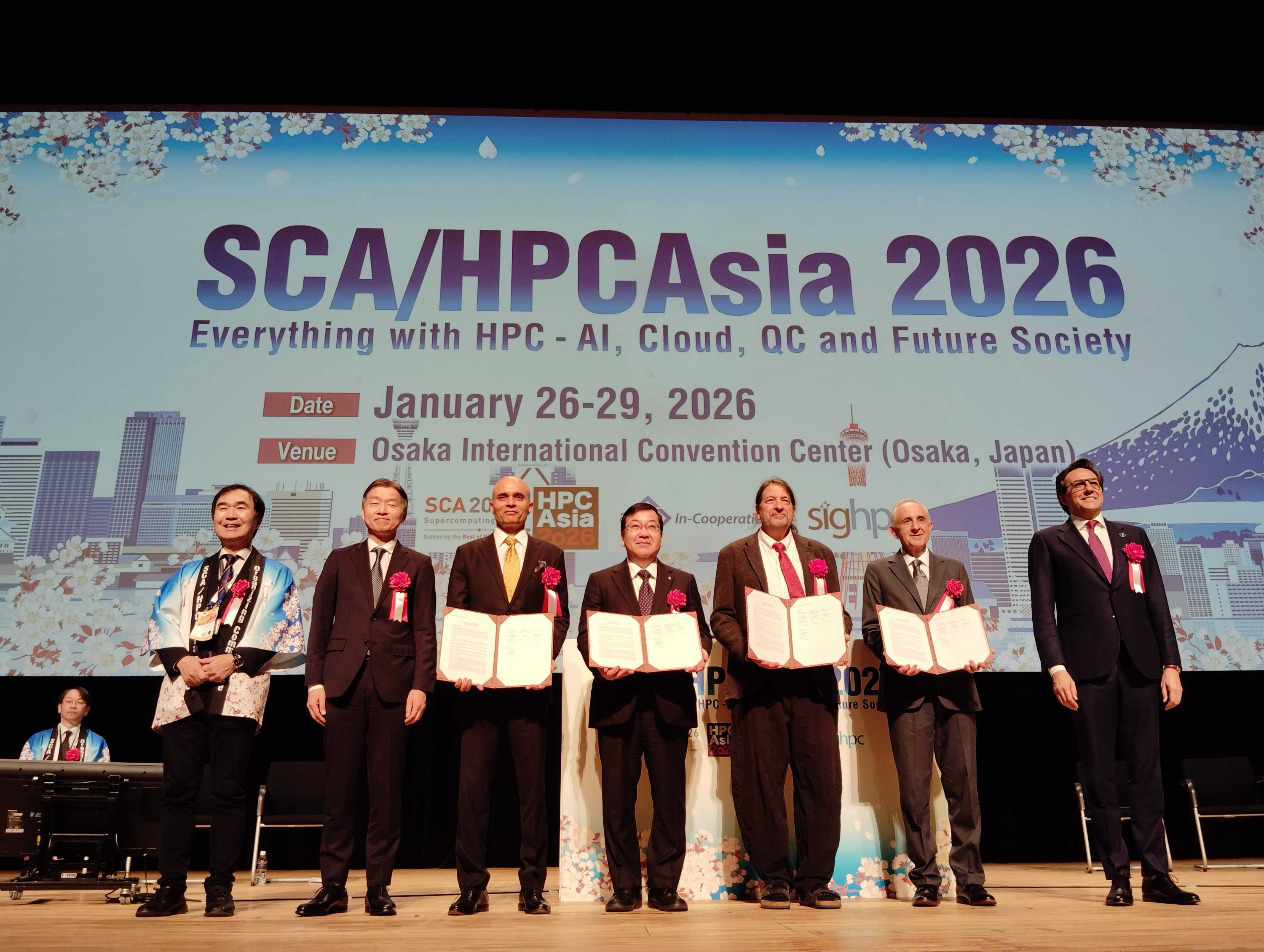
The agreement aligns with DOE’s Genesis Mission, a national initiative to use transformative AI capabilities to accelerate discovery science, strengthen national security and drive energy innovation.
Building on an earlier agreement Argonne and RIKEN signed in 2024, the four organizations will work together to develop next-generation computing infrastructure, create and evaluate system software and applications for science and engineering, and promote the use of advanced AI technologies to accelerate scientific discovery.
“This collaboration represents a pivotal step forward in harnessing the transformative potential of AI and HPC to address pressing scientific challenges in energy, national security and fundamental research,” Laboratory Director Paul Kearns said. ?“Together we’re building a foundation for next-generation computing architectures and AI-driven scientific discovery that advances the Genesis Mission goals.”
Activities will include joint meetings, workshops and community engagement. Key areas of collaboration include:
- Future HPC and AI architectures: Design and prototype next-generation computing architectures that integrate modeling, simulation and AI to tackle complex scientific problems.
- Integrated HPC systems and platforms: Develop and validate end-to-end computing systems that seamlessly integrate hardware, software and the facilities that house them.
- Shared software ecosystem for AI-enabled science: Build a shared, open software stack that supports large-scale, AI-driven scientific research.
- Flagship AI for science applications: Demonstrate the real-world impact of AI through high-value scientific applications that help shape future computing systems and software.
- Laboratory experiment automation: Use AI and robotics to automate laboratory experiments.
- Accelerated quantum computing: Explore how combining quantum computing and AI can deliver practical, large-scale capabilities for scientific research.
Contacts
Christopher J. Kramer
Head of External Communications
Argonne National Laboratory
Office: 630.252.5580
Email: [email protected]
About The Author