All of Samsung’s global semiconductor manufacturing facilities certified for reducing carbon emissions, water use and waste discharge
SEOUL, South Korea–(BUSINESS WIRE)–Samsung Electronics Co., Ltd., a world leader in advanced semiconductor technology, today announced that it received the industry’s first Triple Standard for carbon, water and waste by Carbon Trust.
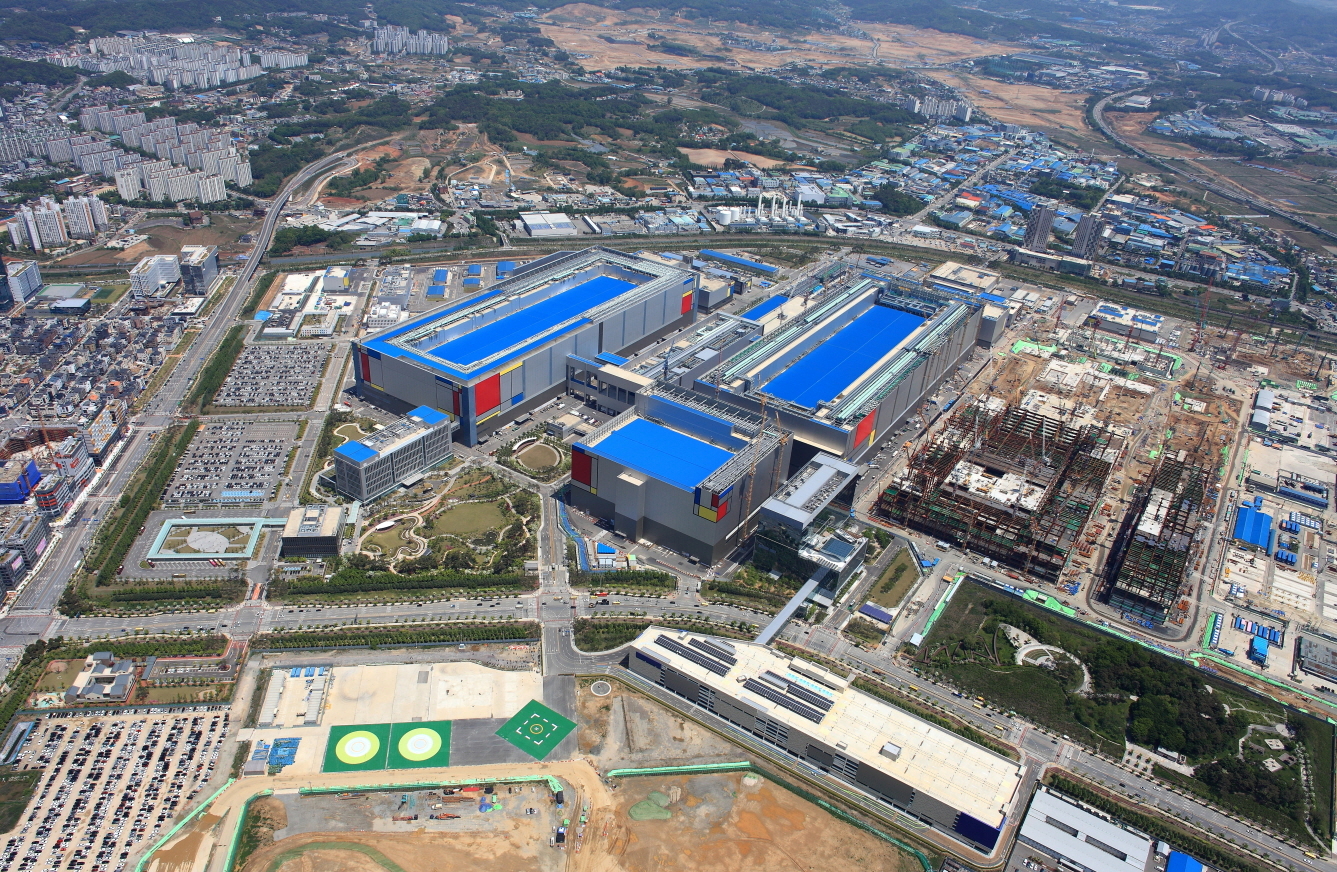

Samsung was awarded this certification by reducing the amount of carbon emissions, water use, and waste discharge over the past three years at five operations (Giheung, Hwaseong, Pyeongtaek, Onyang and Cheonan) in Korea and four global manufacturing sites in U.S. and China (Austin, Suzhou, Tianjin and Xi’an). This is a huge feat, considering that it is extremely challenging for semiconductor manufacturing companies to meet all three qualifications at once.
“For decades, Samsung has been striving to incorporate environmental sustainability into every aspect of the semiconductor manufacturing process,” said Seong-dai Jang, senior vice president and head of DS Corporate Sustainability Management Office at Samsung Electronics. “We’ll continue to pursue more environmentally sustainable policies across the entire production and supply chain.”
Samsung has been making various efforts in carbon reduction, water resource conservation and recycling, and has been managing these as important sustainability goals.
Samsung’s efforts to reduce its environmental footprint
- Greenhouse Gas: Samsung has been sourcing 100-percent renewable energy for its overseas semiconductor operations in the United States and China since 2019, and the company’s continued efforts to reduce its carbon footprint also include optimizing gas use for etching and deposition processes, as well as developing new catalysts for its greenhouse gas reduction equipment. Through these endeavors, Samsung was able to cut about 1.3-million tons1 of carbon emissions in 2020—about 200 million pine trees would be required to absorb the same amount of carbon2.
- Water Management: Samsung has been recycling wastewater generated in the process of producing ultra-pure water for equipment such as wet scrubbers and cooling towers. The company has also reduced water usage utilizing its wastewater filtration technology—known as the ‘membrane process’—to reuse water and optimize manufacturing processes. Equipment operation efficiency has also increased by consolidating wastewater reclamation and reuse systems. As a result, Samsung was able to reuse about 70 million tons of water in 2020, a 12-percent increase compared to 2018~2019, and reduce more than 10 million tons of water usage3, which is the same amount used for two-million people per month in a metropolitan area in Korea4.
- Waste Discharge: Samsung has significantly reduced wastewater sludge5, which accounts for more than 60-percent of total waste generation, by applying alternative materials and optimizing the amount of materials supplied to particular facilities. In addition, by establishing packaging standards for products brought into the line, the amount of waste from over-packaging has also been reduced. Through all these efforts, Samsung reduced a total of 35,752 tons6 of waste discharged in 2020.
Samsung Electronics strives to incorporate environmental sustainability into everything it does. Samsung’s products are thoughtfully designed to minimize the impact on the environment during their entire lifecycle – from planning and manufacturing to consumption and recycling.
About Samsung Electronics Co., Ltd.
Samsung inspires the world and shapes the future with transformative ideas and technologies. The company is redefining the worlds of TVs, smartphones, wearable devices, tablets, digital appliances, network systems, and memory, system LSI, foundry and LED solutions. For the latest news, please visit the Samsung Newsroom at news.samsung.com.
1 The amounts stated are converted measurements based on production levels
2 A 30-year-old pine tree can absorb about 6.6 kilograms of carbon dioxide (CO2) per year (Korea Institute of Forest Science)
3 The amounts stated are converted measurements based on production levels
4 Korea Ministry of Environment (2019)
5 Wastewater sludge is a by-product generated in the treatment process of industrial wastewater or sewage.
6 The amounts stated are converted measurements based on production levels
Contacts
Editorial Contact:
Lisa Warren-Plungy
Samsung Semiconductor, Inc.
Lisa.plungy@samsung.com