RAS AL KHAIMAH, United Arab Emirates–(BUSINESS WIRE)–A satellite that American University of Ras Al Khaimah (AURAK) students are helping to develop, build and test is planned for launch on a Soyuz-2 rocket from Russia in June 2020, said Dr. Abdul-Halim Jallad, Director and Assistant Professor, Center of Information, Communication and Networking Education and Innovation (ICONET).
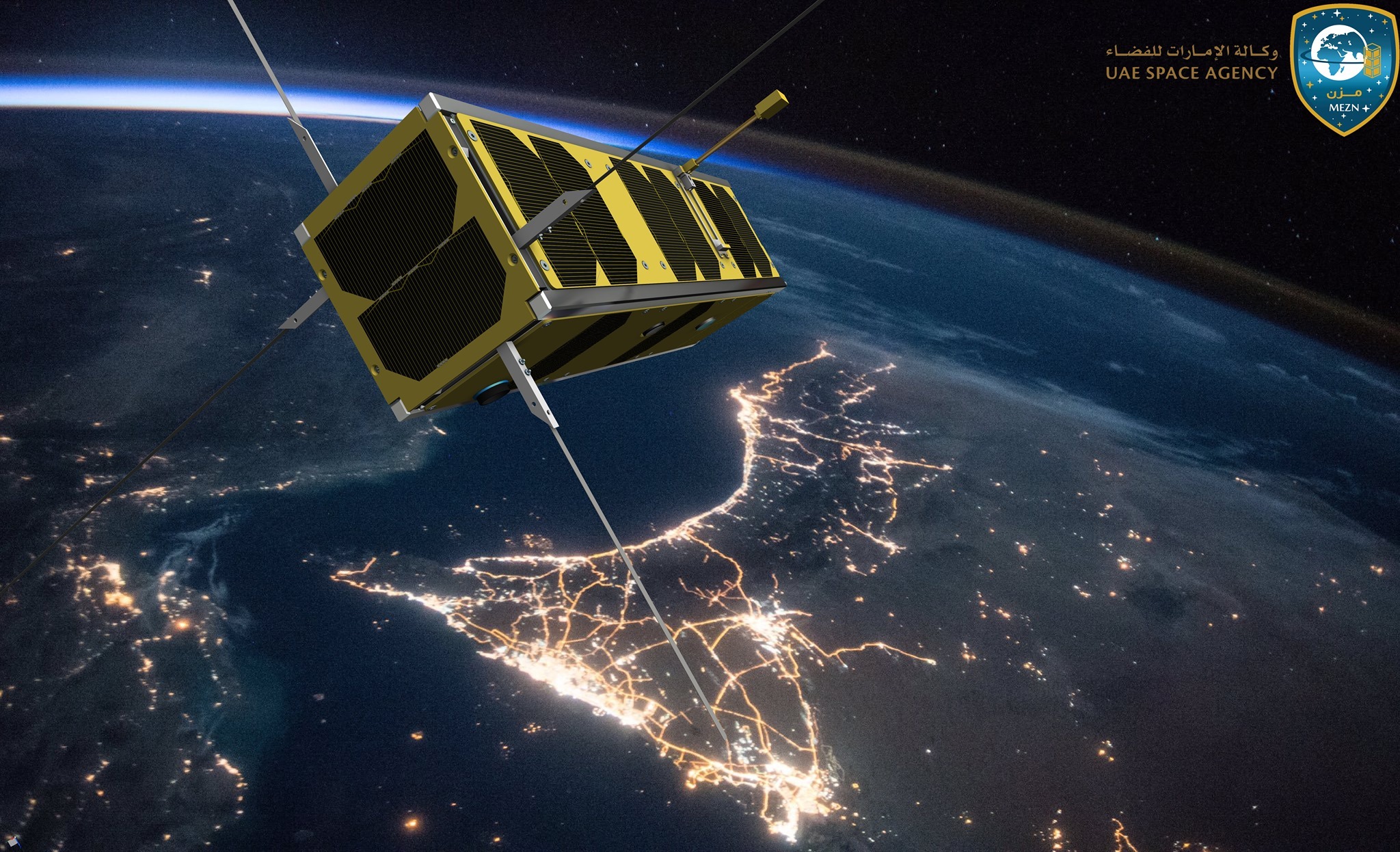

The MeznSat Nano-satellite is designed to detect greenhouse gas concentrations from an orbit of 565 kilometers above the Earth.
The project has successfully passed the Critical Design Review stage with the satellite currently undergoing the final stages of construction in the purpose-built cleanroom at AURAK’s Space Lab before it moves on to the testing phase in March 2020.
The project is a collaboration between the UAE Space Agency, AURAK and Khalifa University of Science and Technology (KUST).
MeznSat will be the first student-built scientific satellite in the UAE. The project aims at providing the UAE space industry with qualified, well-trained graduates through hands-on experience, while at the same time opening windows for advanced space-oriented research relevant to the UAE.
The project has seen undergraduate students design and construct the MeznSat which will be used to collect and analyze data on carbon dioxide and methane levels around the UAE. The project seeks to realize the Space Agency’s strategic goals of capacity development, promoting scientific research and coordinating national space sector activities.
Once in orbit, the team of students will then monitor, process and analyze the data from a ground station in the UAE. The processes and expertise involved in monitoring the atmosphere are similar to those employed during conventional Earth Observation programs. The project will support Emirati young people in developing the skillsets necessary for the UAE’s ambitious National Space Program and its future projects.
Using a visible camera as well as a shortwave infrared spectrometer, the satellite will measure the abundance and distribution of methane and carbon dioxide in the atmosphere. It will also provide valuable insight into the concentration of nutrients in the coastal waters of the Arabian Gulf, which will allow for more accurate predictions of algal blooms and supports the timely implementation of relevant precautionary measures.
*Source: AETOSWire
Contacts
American University of Ras Al Khaimah
Maryam Albloushi
Department of Communications and Public Relations
Tel: +971 7 2468803
Email: maryam.albloushi@aurak.ac.ae