
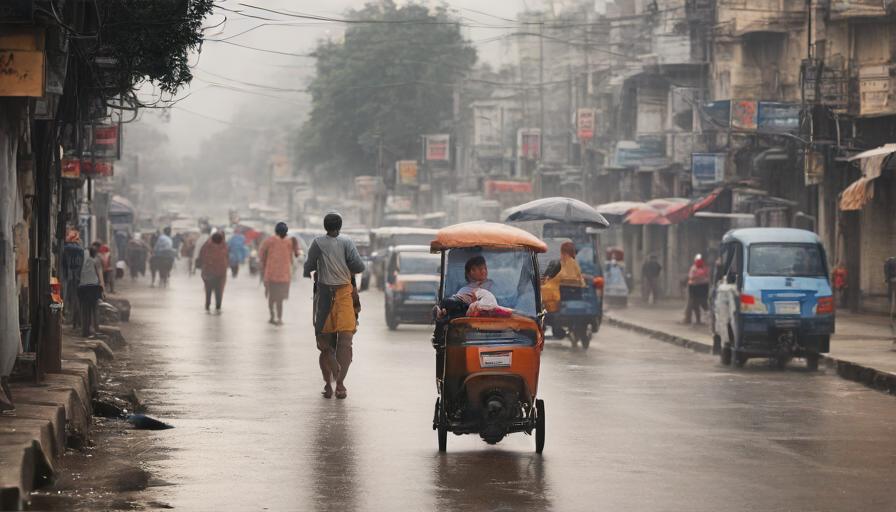
- Hyderabad features a tropical wet and dry climate with summer peak temperatures of 40°C–45°C and mild winter lows of 13°C–15°C.
- The city receives an annual precipitation of 800–850 mm, with nearly 80% of rain falling during the southwest monsoon from June to September.
- The best time to visit Hyderabad is from November through February when conditions are dry, mild, and suitable for sightseeing.
- Air Quality Index (AQI) improves significantly during the monsoon due to rain washouts, while winter inversions lead to elevated PM2.5 levels.
The general weather in Hyderabad features a tropical wet and dry climate characterized by hot summers, moderate monsoon rainfall, and pleasant, mild winters. Located on the Deccan Plateau at an elevation of approximately 542 meters (1,778 feet), Hyderabad experiences peak summer temperatures reaching up to 45°C (113°F) between April and May, while winter temperatures between December and February typically range from a comfortable 13°C to 28°C (55°F to 82°F). The city receives the majority of its annual rainfall of around 800 to 850 millimeters during the southwest monsoon season, spanning from June through September.
What Type of Climate Does Hyderabad Have?
Hyderabad operates under the Köppen climate classification of Aw (tropical wet and dry climate), bordering on a hot semi-arid climate (BSh). The city’s geographic position on the Deccan Plateau grants it a higher altitude than coastal regions of Andhra Pradesh, which moderates extreme coastal humidity but maintains high inland temperatures during the spring and summer months. The regional atmosphere is influenced heavily by monsoon wind patterns originating from the Arabian Sea and the Bay of Bengal. Due to rapid urban expansion and industrial growth, Hyderabad also experiences a localized urban heat island effect, keeping core city temperatures roughly 2°C to 3°C warmer than nearby rural surrounding districts.
Detailed Seasonal Weather Breakdown for Hyderabad
Summer in Hyderabad (March to May)
Summers in Hyderabad are intensely hot and dry, starting in early March and reaching maximum intensity in May. Afternoon temperatures during peak summer consistently exceed 40°C (104°F) and occasionally touch 45°C (113°F) during severe heatwave conditions. Relative humidity during March and April remains relatively low, often dropping below 30%, which causes rapid moisture evaporation. Dry afternoon winds known locally as heat waves can make outdoor activities hazardous during peak daylight hours. Relief typically arrives late in May in the form of pre-monsoon thundershowers, which bring sudden downpours, squalls, and temporary drops in temperature.
Monsoon Season in Hyderabad (June to September)
The southwest monsoon arrives in Hyderabad around the first week of June, delivering long-awaited relief from summer heat. Approximately 75% to 80% of the city’s annual precipitation falls during these four months, with July and August recording the highest average rainfall. Daytime temperatures fall to a manageable range of 30°C to 33°C (86°F to 91°F), while humidity levels rise above 75% to 85%. While precipitation is crucial for local water reservoirs like Himayat Sagar and Osman Sagar, intense rain spells frequently cause urban flooding and traffic congestion in low-lying suburban corridors such as Cyberabad and Secunderabad.
Post-Monsoon Transition (October to November)
October and November represent a transitional phase in Hyderabad’s atmospheric conditions. As the southwest monsoon retreats, rainfall decreases significantly, though short-lived showers can still occur due to cyclonic disturbances forming in the Bay of Bengal. Daytime temperatures hover between 30°C and 32°C (86°F to 90°F), while night temperatures begin a steady decline toward 18°C (64°F). The air becomes noticeably drier by mid-November, providing comfortable, sunny days with clear skies and moderate evening breezes.
Winter in Hyderabad (December to February)
Winter is widely regarded as the most pleasant atmospheric period in Hyderabad. Spanning from December through February, this season brings mild, sunny days and cool, crisp nights. Minimum temperatures drop to an average of 13°C to 15°C (55°F to 59°F) in December and January, with occasional cold waves pushing nighttime readings down to 10°C (50°F) in suburban areas like Rajendranagar. Maximum daytime temperatures rarely cross 28°C to 30°C (82°F to 86°F). Early mornings often see light fog or haze, particularly around lakes and open green zones.
Monthly Weather Data and Temperature Averages in Hyderabad
Understanding monthly climate parameters helps travelers and residents plan outdoor activities effectively. Below is a structured overview of average high temperatures, average low temperatures, and typical monthly rainfall recorded across the year in Hyderabad.
| Month | Avg High (°C / °F) | Avg Low (°C / °F) | Avg Rainfall (mm) |
|---|---|---|---|
| January | 29°C / 84°F | 15°C / 59°F | 3 mm |
| February | 32°C / 90°F | 17°C / 63°F | 5 mm |
| March | 36°C / 97°F | 21°C / 70°F | 12 mm |
| April | 39°C / 102°F | 24°C / 75°F | 22 mm |
| May | 40°C / 104°F | 26°C / 79°F | 35 mm |
| June | 34°C / 93°F | 24°C / 75°F | 115 mm |
| July | 31°C / 88°F | 23°C / 73°F | 170 mm |
| August | 30°C / 86°F | 22°C / 72°F | 165 mm |
| September | 31°C / 88°F | 22°C / 72°F | 130 mm |
| October | 31°C / 88°F | 20°C / 68°F | 110 mm |
| November | 29°C / 84°F | 17°C / 63°F | 25 mm |
| December | 28°C / 82°F | 14°C / 57°F | 5 mm |
When Is the Best Time to Visit Hyderabad Based on the Weather?
The optimal time to visit Hyderabad for tourism, heritage walks, and sightseeing is between November and February. During these winter months, outdoor conditions are dry, comfortable, and mild, allowing visitors to explore historical landmarks such as Golconda Fort, Charminar, and Ramoji Film City without enduring severe heat. Light cotton clothing supplemented by a light jacket or sweater for late evenings is recommended. Visiting during peak summer (April to May) is generally discouraged due to dangerous heat levels, whereas visiting during monsoon (July to September) offers lush greenery around the city’s parks, though unexpected heavy rainfall can disrupt outdoor travel itineraries.
How Do Humidity and Air Quality Impact Hyderabad Weather?
Humidity levels in Hyderabad fluctuate dramatically according to the season. Relative humidity hits its lowest annual values of 25% to 35% during April and May, contributing to high skin evaporation rates and dehydration risks. Conversely, during the peak monsoon months of July and August, humidity frequently exceeds 80% to 85%, increasing the heat index and making temperatures feel warmer than the actual air reading. Air Quality Index (AQI) values also vary seasonally; during winter months (December to January), atmospheric inversion traps particulate matter (PM2.5 and PM10) near the ground, leading to moderate-to-poor AQI readings, whereas monsoon rains wash away airborne pollutants, resulting in the cleanest air quality of the year.
Frequently Asked Questions
What is the hottest month in Hyderabad?
May is the hottest month in Hyderabad, with average high temperatures reaching 40°C (104°F) and peak heatwaves driving temperatures up to 45°C (113°F). Intense solar radiation and dry winds make outdoor exposure hazardous during afternoon hours.
Which months experience the heaviest rainfall in Hyderabad?
July and August experience the heaviest rainfall in Hyderabad, receiving an average of 170 mm and 165 mm of precipitation respectively. These months fall during the peak of the southwest monsoon season, bringing frequent rain spells across the region.
Does it get cold in Hyderabad during winter?
Winter in Hyderabad is mild rather than severely cold. Minimum nighttime temperatures in December and January average between 13°C and 15°C (55°F to 59°F), though open suburban areas can occasionally drop to 10°C (50°F) during brief cold waves.
What clothing should I pack for Hyderabad weather?
For winter (November to February), pack breathable cotton clothes for daytime and a light jacket for cool evenings. For summer (March to May), bring lightweight, light-colored cotton clothing and sun protection. For monsoon (June to September), quick-drying garments and rain gear are essential.