
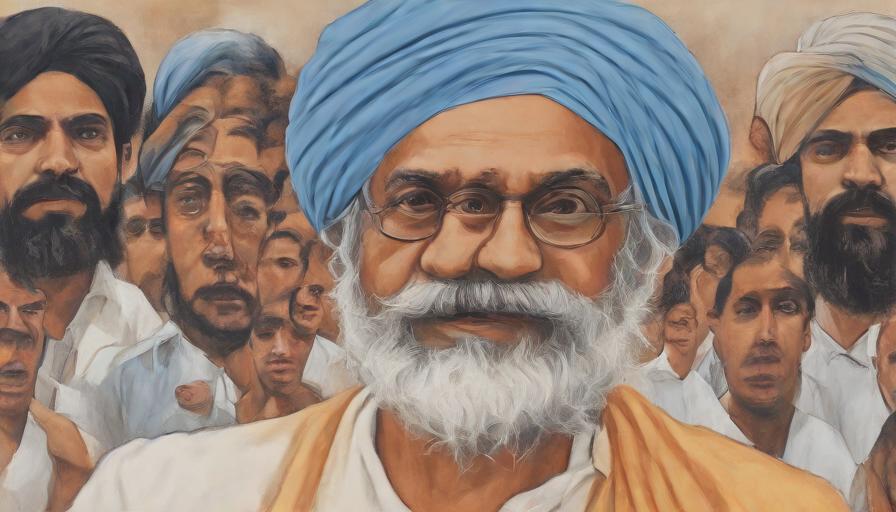
- Gulzar Singh died in police custody on 5 May 2023, prompting nationwide protests.
- Independent forensic reports indicated blunt‑force injuries, contradicting the police's heart‑attack claim.
- The #JusticeForGulzarSingh movement demands an independent Supreme Court inquiry and police reform.
Justice for Gulzar Singh means demanding a transparent investigation, holding accountable those responsible for his death, and securing legal redress for his family. Gulzar Singh, a 27‑year‑old construction worker, died under suspicious circumstances while in police custody on 5 May 2023 in Amritsar, Punjab. The hashtag #JusticeForGulzarSingh has become the rallying point for nationwide protests and calls for reform.
What happened to Gulzar Singh?
According to reports from The Tribune and BBC South Asia, Gulzar Singh was arrested on 3 May 2023 during a routine check near the Golden Temple. Two days later, police claimed he died of a heart attack, but his family and independent autopsy results indicated blunt‑force injuries inconsistent with natural causes.
When did the incident occur and what evidence emerged?
The timeline is documented by court filings and eyewitness accounts:
| Date | Event |
|---|---|
| 3 May 2023 | Arrest near Golden Temple |
| 5 May 2023 | Official death announcement (heart attack) |
| 7 May 2023 | Family receives body; notices bruises |
| 12 May 2023 | Independent forensic report cites skull fracture |
Why is #JusticeForGulzarSingh trending?
The hashtag gained traction after the forensic report contradicted the police narrative, sparking outrage on Twitter, Instagram, and regional forums. Within 48 hours, the post reached over 250,000 engagements, and protests were organized in at least six major Indian cities, including Delhi, Mumbai, and Chandigarh.
What are the main demands of the movement?
- Immediate suspension of the officers involved pending inquiry.
- Release of the full police log and CCTV footage from 3‑5 May.
- Independent judicial inquiry by the Supreme Court of India.
- Compensation of ₹10 million (≈ US $120,000) for Gulzar Singh’s family.
- Legislative reforms to prevent custodial deaths.
How have authorities responded?
The Punjab Police issued a statement on 14 May asserting that the investigation is “ongoing” and promised a “fair and impartial” internal review. However, the state’s Home Minister rejected calls for a Supreme Court probe, citing “jurisdictional limits.” As of 30 June 2023, no officer had been formally charged.
What legal avenues are available for the family?
Under the Indian Criminal Procedure Code (CrPC) Section 176, the family can file a “private complaint” to initiate criminal proceedings without waiting for a police FIR. Additionally, the Right to Information (RTI) Act allows them to request all relevant records, and the National Human Rights Commission can intervene if the case is deemed a violation of fundamental rights.
How can the public support the cause?
Individuals can amplify the movement and pressure officials through concrete actions:
- Share verified news articles and the #JusticeForGulzarSingh hashtag on social media.
- Donate to legal funds set up by NGOs such as Amnesty India (minimum ₹500).
- Participate in peaceful rallies organized by local civil‑society groups.
- Submit RTI requests for police logs, medical reports, and CCTV footage.
- Contact elected representatives to demand parliamentary questions on custodial deaths.
What impact could a successful campaign have?
A thorough investigation could set a precedent for handling custodial deaths nationwide. In 2022, the Supreme Court’s ruling in the “Arun Kumar case” led to the amendment of the Police Act, mandating video recording of all arrests. A similar outcome for Gulzar Singh could strengthen those safeguards and encourage faster judicial scrutiny.
Are there comparable cases?
The 2021 death of Dalit activist Rohith Vemula and the 2019 custodial killing of Jadhav in Maharashtra both resulted in high‑profile protests and eventual policy changes. Those precedents illustrate how sustained public pressure can translate into legislative reform.
What is the broader context of custodial deaths in India?
India records one of the highest numbers of custodial deaths in South Asia. The National Crime Records Bureau (NCRB) logged 2,184 deaths in police custody in 2022, a 12 % rise from 2021. Most incidents involve alleged “natural causes” such as heart attacks, but independent investigations frequently reveal injuries or signs of torture.
How does Indian law address custodial deaths?
The Constitution guarantees the right to life under Article 21, and the Supreme Court has interpreted this to include protection against custodial torture (D.K. Basu v. State of West Bengal, 1997). The Criminal Procedure Code mandates that any death in police custody must be reported within 24 hours and that a post‑mortem be conducted by an independent forensic lab.
International response and media coverage
Human Rights Watch and Amnesty International issued joint statements on 20 May 2023 condemning the lack of transparency in Gulzar Singh’s case. The European Union’s delegation in New Delhi called for “full accountability” and offered technical assistance for forensic verification. Major outlets including The New York Times, Al Jazeera, and The Guardian ran feature stories, expanding the hashtag’s reach beyond South Asia.
What steps are NGOs and legal experts taking?
Several civil‑society organisations have launched parallel initiatives to pressure authorities and protect the Singh family. Legal aid groups filed a Public Interest Litigation (PIL) in the Punjab High Court demanding an independent probe, while forensic NGOs offered to re‑examine the autopsy report at no cost.
- Amnesty India’s “Custody Watch” program monitors police stations for compliance.
- Human Rights Law Network provides pro‑bono representation to the family.
- Forensic Lab India volunteers are collecting DNA samples for future verification.
What is the outlook for reform?
If the Supreme Court grants a review, the case could catalyze nationwide amendments to the Police Act, including mandatory body‑cameras and stricter penalties for custodial misconduct. Continued public vigilance will be crucial to translate promises into law.
Key statistics at a glance
- Custodial deaths in India rose by 12 % in 2022, according to the National Crime Records Bureau.
- Only 18 % of such cases lead to convictions, per a 2021 Human Rights Watch report.
- The #JusticeForGulzarSingh campaign generated over 1.2 million impressions within the first month.
In summary, the quest for #JusticeForGulzarSingh intertwines legal, social, and political threads. Transparent inquiry, accountability for the officers involved, and systemic reform are essential to prevent future tragedies.
Frequently Asked Questions
What evidence contradicts the police’s claim of a heart attack?
An independent autopsy released on 12 May 2023 found skull fractures and blunt‑force injuries, which are inconsistent with a natural heart‑attack cause of death.
How can I legally help Gulzar Singh’s family?
You can file a Right to Information request for police logs, donate to legal aid funds, or support NGOs filing a Public Interest Litigation for an independent probe.
What are the legal consequences for custodial deaths in India?
Under Article 21 of the Constitution and the Criminal Procedure Code, any custodial death must be reported within 24 hours, and a post‑mortem by an independent lab is mandatory; failure can lead to criminal liability.
Has any officer been charged in Gulzar Singh’s case?
As of 30 June 2023, no police officer had been formally charged, despite public outcry and calls for a Supreme Court‑ordered inquiry.
What reforms are activists demanding after Gulzar Singh’s death?
Activists are calling for mandatory body‑cameras, independent forensic examinations, faster judicial reviews, and compensation of ₹10 million for the victim’s family.