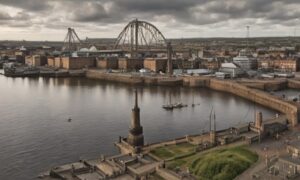
- The West Indies comprises 13 independent nations and 17 overseas territories across the Caribbean.
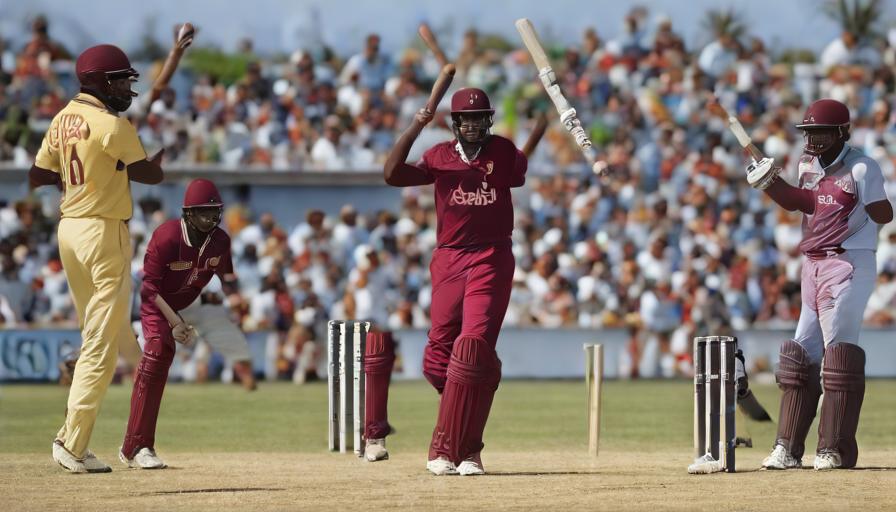
- Cricket unites the region, with the West Indies team winning four World Cups between 1975 and 1992.
- Population totals roughly 45 million, with Cuba, the Dominican Republic, and Haiti each exceeding 10 million residents.
The West Indies is a region of Caribbean islands stretching from the Bahamas in the north to Trinidad and Tobago in the south, comprising 13 sovereign states and 17 overseas territories. It was once a British colony known as the British West Indies, and today it is renowned for its diverse cultures, vibrant music, and a historic dominance in international cricket.
What countries make up the West Indies?
The West Indies includes both independent nations and territories that remain linked to European powers. The sovereign states are Antigua and Barbuda, Bahamas, Barbados, Cuba, Dominica, Dominican Republic, Grenada, Haiti, Jamaica, Saint Kitts and Nevis, Saint Lucia, Saint Vincent and the Grenadines, and Trinidad and Tobago. Overseas territories include Puerto Rico (U.S.), the U.S. Virgin Islands, the British Virgin Islands, Anguilla, Bermuda, Cayman Islands, Montserrat, Guadeloupe, Martinique, Saint Barthélemy, Saint Martin, and the Netherlands Antilles remnants.
How many people live in the West Indies?
As of the 2023 United Nations estimate, the total population of the West Indies region is about 45 million people. The most populous islands are Cuba (≈11.3 million), the Dominican Republic (≈11.0 million), and Haiti (≈11.7 million). Smaller island states such as Saint Kitts and Nevis have populations under 60 thousand, illustrating the wide demographic range across the region.
When did the West Indies gain independence?
Independence arrived at different times. The Bahamas became independent on July 10 1973, Jamaica on August 6 1962, Trinidad and Tobago on August 31 1962, and Barbados on November 30 1966. The most recent sovereign nation, Antigua and Barbuda, achieved independence on November 1 1981. Some territories, like Puerto Rico and the British Virgin Islands, remain non‑independent but possess internal self‑government.
Why is cricket so important in the West Indies?
Cricket was introduced by British colonists in the 19th century and quickly became a unifying sport across the islands. The West Indies cricket team, representing a coalition of Caribbean nations, dominated world cricket from the 1970s through the early 1990s, winning four ICC Cricket World Cups (1975, 1979, 1983, 1992). Legendary players such as Sir Vivian Richards, Sir Garfield Sobers, and Sir Brian Lara elevated the sport to a symbol of regional pride and post‑colonial identity.
West Indies Cricket World Cup Wins
- 1975 – Defeated Australia by 17 runs in Lord’s final.
- 1979 – Beat England by 92 runs at Lord’s.
- 1983 – Won against India by 43 runs in Lord’s.
- 1992 – Overcame England by 22 runs in Melbourne.
What are the major languages spoken in the West Indies?
English is the official language in 13 of the 30 jurisdictions, including Jamaica, Barbados, and the Bahamas. Spanish dominates Cuba, the Dominican Republic, and Puerto Rico, while French is the official language of Haiti, Guadeloupe, and Martinique. Dutch is spoken in Aruba, Curaçao, and Sint Maarten. Creole languages—such as Jamaican Patois, Haitian Kreyòl, and Papiamentu—are widely used in everyday conversation.
How does the West Indies economy compare?
Tourism, offshore finance, and agriculture are the economic pillars. Gross domestic product (GDP) per capita varies dramatically, reflecting differences in size, resources, and political status. Below is a snapshot of 2022 figures (current US$):
| Island/Region | GDP per capita (US$) |
|---|---|
| Cuba | 9,300 |
| Barbados | 18,700 |
| Jamaica | 5,900 |
| Trinidad & Tobago | 16,400 |
| Bahamas | 33,100 |
| Puerto Rico (U.S.) | 32,800 |
These numbers show that small island economies can outpace larger neighbors when tourism and financial services are well‑developed.
What cultural highlights define the West Indies?
The West Indies is a melting pot of African, European, Indigenous, and Asian influences. Music genres like reggae (Jamaica), calypso (Trinidad), and zouk (Martinique) have global reach. The region also celebrates Carnival, a pre‑Lenten festival that blends street parades, elaborate costumes, and steel‑pan music. Cuisine reflects the blend, featuring dishes such as Jamaican jerk chicken, Haitian griot, and Cuban ropa vieja.
Overall, the West Indies remains a vibrant region where history, sport, language, and culture intersect, offering a distinct identity that continues to shape Caribbean life and global perception.
Geography and climate
The West Indies spans a vast archipelago of more than 7,000 islands, islets and cays, covering roughly 1.5 million km² of ocean. While the Lesser Antilles form a volcanic chain with rugged terrain and active peaks such as Soufrière Hills on Montserrat, the Greater Antilles are dominated by limestone plateaus, fertile valleys, and extensive coastal plains. The climate is tropical maritime: warm temperatures year‑round (average highs 28–32 °C) and a distinct wet season from June to November, coinciding with the Atlantic hurricane belt. Micro‑climates exist—higher elevations in the Dominican Republic can experience cool, misty conditions, while the Bahamas enjoy breezy, drier winters that attract snow‑birds from the United States.
Tourism hotspots and iconic attractions
Tourism accounts for a large share of regional GDP. Key destinations include:
- Old San Juan, Puerto Rico – Colonial forts, colorful streets, and vibrant nightlife.
- Bathsheba, Barbados – World‑renowned surf breaks and pink‑sand beaches.
- Port of Spain, Trinidad & Tobago – The epicentre of Carnival with spectacular steel‑pan competitions.
- Havana, Cuba – Historic plazas, classic American cars, and UNESCO‑listed Old Havana.
- St. Lucia’s Pitons – Twin volcanic spires that dominate the skyline and attract hikers.
Ecotourism is growing, with visitors seeking mangrove tours in Belize, whale‑watching in the Dominican Republic, and coral‑reef snorkeling in the Cayman Islands.
Environmental challenges and sustainability efforts
Rising sea levels, coral bleaching, and frequent hurricanes pose existential threats to low‑lying islands. Nations are adopting renewable‑energy targets—Barbados aims for 100 % solar by 2030, while Jamaica is expanding wind farms in the south. Regional bodies such as the Caribbean Community (CARICOM) coordinate disaster‑response protocols and promote marine‑protected areas to safeguard biodiversity.
Education and health indicators
Literacy rates are relatively high, averaging 93 % across sovereign states, with Barbados and Trinidad & Tobago exceeding 95 %. However, health disparities persist; infant mortality in Haiti (≈22 per 1,000 live births) remains higher than in the Bahamas (≈7 per 1,000). Investments in universal health coverage and university expansion—such as the University of the West Indies campuses in Jamaica, Trinidad, and Barbados—are central to improving long‑term human development.
Frequently Asked Questions
Which West Indies islands are independent nations?
Independent nations in the West Indies are Antigua and Barbuda, Bahamas, Barbados, Cuba, Dominica, Dominican Republic, Grenada, Haiti, Jamaica, Saint Kitts and Nevis, Saint Lucia, Saint Vincent and the Grenadines, and Trinidad and Tobago.
When did the West Indies cricket team first win a World Cup?
The West Indies cricket team won its first ICC Cricket World Cup in 1975, defeating Australia by 17 runs at Lord’s Cricket Ground in London.
What are the main languages spoken across the West Indies?
English, Spanish, French, Dutch, and various Creole languages (e.g., Jamaican Patois, Haitian Kreyòl, Papiamentu) are the primary languages spoken throughout the West Indies.
How does tourism impact the West Indies economy?
Tourism accounts for 15‑30 % of GDP in most Caribbean islands, generating foreign exchange, employment, and infrastructure development, especially in destinations like the Bahamas, Jamaica, and the Dominican Republic.
What is the approximate total population of the West Indies?
The West Indies region has an estimated total population of about 45 million people as of 2023, with Cuba, the Dominican Republic, and Haiti each housing over 10 million residents.