
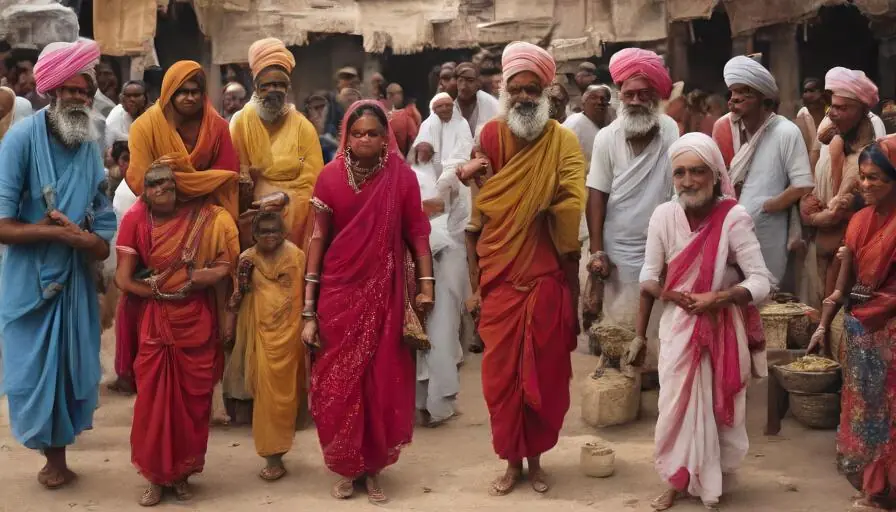
- The word 'desi' originates from the Sanskrit term 'deśa' (meaning land or country) and describes people, culture, and products from the Indian subcontinent.
- The region traditionally includes seven South Asian nations: India, Pakistan, Bangladesh, Nepal, Sri Lanka, Bhutan, and the Maldives.
- In the global diaspora, 'desi' serves as an inclusive cultural identifier that transcends specific national, state, or religious boundaries.
- South Asian culture has influenced global music, film, and cuisine through genres like Bhangra fusion, Bollywood cinema, and traditional culinary heritage.
The term desi (pronounced day-see) refers to the people, cultures, foods, and products originating from the Indian subcontinent and its worldwide diaspora. Derived from the ancient Sanskrit word deśa, meaning “land” or “country,” it encompasses individuals with cultural roots in India, Pakistan, Bangladesh, Nepal, Sri Lanka, Bhutan, and the Maldives. Today, the term serves as a unifying identity for over 1.9 billion people residing in South Asia and an estimated 25 million living across the global diaspora.
What Is the Etymology and Linguistic Origin of Desi?
The word traces its roots to the classical Sanskrit term deśa (देश), which translates directly to land, region, or country. Over centuries, this root evolved in classical Indo-Aryan languages into deśī, an adjective used to denote something that is native, local, or belonging to one’s home country. Historically, the term distinguished local customs, folk music, and indigenous products from imported or foreign items.
In contrast to this concept, traditional South Asian languages use the terms pardesi or videshi to describe foreigners, outsiders, or things originating from foreign lands. The distinction between native and foreign has existed in Indian literature, folklore, and music for over two millennia. As regional Indo-Aryan languages like Hindi, Urdu, Punjabi, Bengali, and Gujarati developed, the word maintained its core meaning of local or indigenous heritage while adapting to modern colloquial usage.
Which Countries and Regions Are Considered Desi?
Geographically, the term applies to the nations comprising the Indian subcontinent. While distinct political boundaries separate these nations today, they share deep historical, culinary, linguistic, and cultural ties spanning thousands of years.
The primary nations associated with the region include:
- India: The largest country in South Asia, accounting for over 1.4 billion people, with vast linguistic and cultural diversity.
- Pakistan: Established in 1947, home to over 240 million people with strong Punjabi, Sindhi, Pashtun, and Balochi traditions.
- Bangladesh: Gained independence in 1971, home to 170 million people with a rich Bengali literary and musical heritage.
- Nepal: A Himalayan nation with deep cultural, historical, and religious connections to the broader subcontinent.
- Sri Lanka: An island nation in the Indian Ocean with rich Sinhalese, Tamil, and Islamic cultural traditions.
- Bhutan and Maldives: Neighboring South Asian states that share regional cultural and economic ties.
| Country | Population (2024 Est.) | Primary Languages | Major Diaspora Hubs |
|---|---|---|---|
| India | 1.43 Billion | Hindi, Bengali, Marathi, Telugu, Tamil, Gujarati | United States, United Arab Emirates, United Kingdom, Canada |
| Pakistan | 240 Million | Urdu, Punjabi, Pashto, Sindhi, Balochi | United Kingdom, Saudi Arabia, United Arab Emirates, United States |
| Bangladesh | 170 Million | Bengali | United Kingdom, United States, Malaysia, Saudi Arabia |
| Nepal | 31 Million | Nepali | India, Qatar, United Arab Emirates, United States |
| Sri Lanka | 22 Million | Sinhala, Tamil | Canada, United Kingdom, Australia, India |
How Did the Identity Evolve in the Global Diaspora?
The modern usage of the term expanded significantly during the mid-to-late 20th century following major shifts in global migration policies. The passage of the United States Immigration and Nationality Act of 1965, alongside post-World War II labor migration to the United Kingdom and Western Europe, established large South Asian communities abroad. By 2024, the South Asian diaspora grew to exceed 5.4 million people in the United States, 1.5 million in the United Kingdom, and 1.8 million in Canada.
Within these diaspora communities, second- and third-generation immigrant youth began using the term as a collective identifier. Rather than identifying solely by specific national, state, or religious affiliations, young immigrants adopted the term to build community and express a shared experience of balancing Western upbringing with South Asian cultural heritage. College campus organizations, known as Desi Student Associations (DSAs), emerged across North American and European universities in the 1990s, solidifying the term’s place in modern vocabulary.
What Role Does Desi Culture Play in Music, Entertainment, and Food?
The global dispersion of the diaspora has elevated South Asian cultural traditions into mainstream international media. In music, genres like Bhangra fusion, Desi Hip-Hop (DHH), and Bollywood pop have gained global audiences. A notable milestone occurred in 2002 when British producer Panjabi MC collaborated with American rapper Jay-Z on the track “Mundian To Bach Ke,” introducing Punjabi folk beats to top international music charts. Contemporary artists continue to blend traditional instruments like the dhol and sitar with modern electronic production.
Cinema has also served as a primary vector for cultural diffusion. The Hindi film industry based in Mumbai (Bollywood), alongside vibrant regional film industries such as Telugu (Tollywood) and Tamil (Kollywood), distributes films to over 90 countries worldwide. The global success of films like “RRR,” which won an Academy Award in 2023, demonstrates the expanding international reach of South Asian storytelling.
Culinary heritage remains another central component of the global identity. From popular street foods like pani puri and samosas to regional staples like biryani, dal, and naan, culinary traditions reflect complex spice profiles developed over millennia. Today, South Asian restaurants operate in virtually every major metropolitan area globally.
What Is the Difference Between Desi, South Asian, and Brown?
While the terms Desi, South Asian, and Brown are often used interchangeably in casual conversation, they carry distinct academic, geographical, and social meanings:
- South Asian: A formal geographic and geopolitical designation used by international bodies, academic institutions, and governments. It encompasses the physical region of South Asia and its modern nation-states.
- Desi: An informal cultural endonym rooted in shared heritage, language roots, food, and social customs. It is self-referential and carries emotional resonance for those within the community.
- Brown: A broader racial or physical descriptor common in Western Anglophone countries. While often applied to South Asians, it is an external racial categorization that can also include Middle Eastern, North African, or Hispanic populations depending on social context.
Summary of Modern Usage and Acceptance
Today, the term stands as an empowering, inclusive symbol of cultural heritage. It allows individuals across national borders—whether in New Delhi, London, Toronto, or Dubai—to celebrate shared roots while embracing multi-ethnic global identities. As media, digital connectivity, and global migration continue to bridge continents, the concept continues to adapt, uniting millions through a shared cultural foundation.
Frequently Asked Questions
Which countries are included in the term desi?
The term desi includes seven main countries located in the Indian subcontinent: India, Pakistan, Bangladesh, Nepal, Sri Lanka, Bhutan, and the Maldives. People from these nations or their worldwide diaspora identify with the term based on shared geographic, historical, and cultural connections.
Is the term desi polite or offensive?
The term desi is a polite, neutral, and affectionate self-identifier widely used within South Asian communities. It functions as an endonym that expresses cultural pride and solidarity. It is commonly accepted in mainstream media, academic discussions, and everyday conversation.
What is the difference between desi and South Asian?
While 'South Asian' is a formal geographical and geopolitical classification used by governments and academics, 'desi' is an informal cultural endonym. 'South Asian' refers to the geographical region, whereas 'desi' emphasizes shared heritage, customs, languages, and diaspora experiences.
What is the opposite of desi?
The linguistic opposite of desi is 'pardesi' (or 'videshi'), derived from Sanskrit roots meaning 'from another land' or 'foreign.' While desi describes local, native, or indigenous people and traditions, pardesi refers to foreigners, international locations, or non-native cultural elements.