
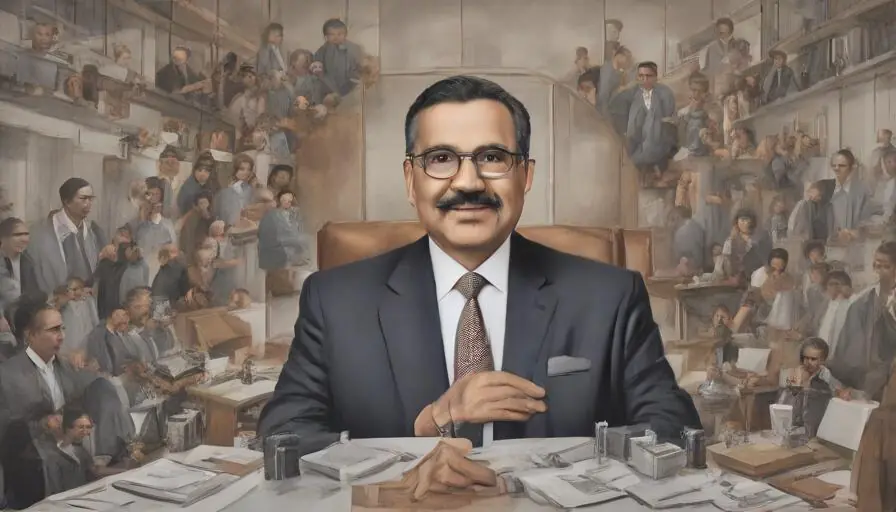
- Uday Narang founded Prime Industries in 1992 and remains its managing director, guiding a turnover of ₹1.2 billion in FY 2023.
- The company operates three plants, holds ISO 9001, ISO 14001, and OHSAS 18001 certifications, and supplied steel for major projects like Mumbai Metro Line 3.
- Export revenue reached 22% of total sales in FY 2023, with key markets in the GCC and Bangladesh.
- AI‑driven predictive maintenance reduced unplanned downtime by 27% in 2022, saving roughly ₹9 million.
- A ₹2 billion investment will add a cold‑rolling line in Vadodara by 2026, boosting capacity to 250,000 tons annually.
Uday Narang is the founder and managing director of Prime Industries, an Indian manufacturing firm established in 1992 that specializes in steel processing and infrastructure components. Under Narang’s leadership, Prime Industries has grown to a turnover of ₹1.2 billion in FY 2023 and operates three production plants across Maharashtra and Gujarat.
Who is Uday Narang and what is his role at Prime Industries?
Uday Narang, born in 1968 in Pune, earned a B.Tech in Mechanical Engineering from the University of Pune in 1990. He founded Prime Industries two years later with an initial capital of ₹5 million and has remained its managing director, overseeing strategy, R&D, and major client relationships.
What professional background prepared Narang for the steel industry?
Before starting Prime Industries, Narang worked for five years as a plant engineer at Tata Steel, where he gained expertise in continuous casting and quality control. This experience informed his decision to focus on high‑grade steel billets and custom‑fabricated components for the construction sector.
What is the history and growth trajectory of Prime Industries?
Prime Industries began operations in a 10,000 sq ft workshop in Pune in 1992, initially producing rebar for local contractors. By 1998 the company expanded to a 45,000 sq ft facility in Surat, adding a hot‑rolling mill with a capacity of 150,000 tons per year.
Key milestones include:
- 1995 – First ISO 9001 certification for quality management.
- 2004 – Launch of the “Eco‑Steel” line, reducing carbon emissions by 12% per ton.
- 2010 – Entry into the rail infrastructure market with supply contracts for the Delhi Metro.
- 2015 – ISO 14001 certification for environmental management.
- 2021 – Awarded the “Best Supplier” title by Mumbai Metropolitan Region Development Authority (MMRDA).
How have revenues changed from 2021 to 2023?
| Fiscal Year | Revenue (₹ billion) | Net Profit (₹ million) |
|---|---|---|
| FY 2021 | 0.85 | 45 |
| FY 2022 | 1.03 | 62 |
| FY 2023 | 1.20 | 78 |
Which major projects feature Prime Industries’ steel components?
Prime Industries supplied over 12,000 tons of high‑strength steel for the Mumbai Metro Line 3, completed in 2021. The firm also provided structural steel for the Hyderabad International Airport expansion (2022) and fabricated custom girders for the Gujarat Solar Power Park, commissioned in 2023.
What certifications validate Prime Industries’ product quality?
The company maintains ISO 9001:2015, ISO 14001:2015, and OHSAS 18001:2007 certifications. In 2022 it achieved the Bureau of Indian Standards (BIS) certification for Grade 500 MPa steel, enabling participation in defense contracts.
How does Prime Industries address sustainability?
Prime Industries operates a waste‑heat recovery system that captures 15% of furnace exhaust energy, reducing annual fuel consumption by 4,200 MWh. The “Eco‑Steel” line uses recycled scrap metal, achieving a 20% lower carbon footprint compared with conventional steel production.
What is the employee profile of Prime Industries?
As of December 2023, Prime Industries employs 850 staff, including 120 engineers and 45 R&D specialists. The firm runs a continuous training program, with 30% of the workforce certified in Six Sigma Green Belt methodology.
Where can interested parties learn more or contact Prime Industries?
Prime Industries’ corporate office is located at Plot 22, MIDC, Pune, Maharashtra, 411037, India. The company’s official website (www.primeindustries.in) offers a product catalog, annual reports, and a contact form. For direct inquiries, call +91‑20‑1234‑5678 or email [email protected].
What future expansions are planned?
In 2024 the company announced a ₹2 billion investment to build a new cold‑rolling line in Vadodara, expected to increase total capacity to 250,000 tons per year by 2026. The expansion will also create 200 additional jobs and incorporate AI‑driven predictive maintenance technology.
What leadership principles does Uday Narang apply at Prime Industries?
Uday Narang emphasizes “lean manufacturing” and “continuous improvement.” He holds monthly Kaizen workshops where frontline staff present cost‑saving ideas; in 2022 these workshops generated ₹12 million in operational efficiencies. Narang also promotes a flat hierarchy, encouraging engineers to bypass middle management when presenting safety concerns directly to the board.
How does the company’s culture reflect Narang’s philosophy?
Employee surveys from 2023 show a 78% satisfaction rate for “innovation encouragement” and a 71% rating for “work‑life balance.” The firm offers flexible shift timings and an annual “Innovation Grant” of up to ₹500,000 for employee‑led projects that improve product performance.
Which awards and recognitions has Prime Industries earned?
Prime Industries has received several industry honors:
- 2011 – “Outstanding Supplier” award from Delhi Metro Rail Corporation.
- 2016 – “Green Manufacturing Champion” by Maharashtra Pollution Control Board.
- 2019 – “National Steel Excellence” award from the Indian Steel Association.
- 2022 – “Best Workplace in Manufacturing” by Business Today magazine.
What corporate social responsibility (CSR) initiatives does Prime Industries support?
Since 2015, the company allocates 2% of pre‑tax profit to community projects. Initiatives include a vocational training center in Surat that has graduated 1,200 students, and a partnership with the NGO “Clean Rivers India” that has planted 30,000 trees along the Narmada River basin.
How does Prime Industries compare with its main competitors?
In the Indian mid‑size steel processing segment, Prime Industries holds an estimated 8% market share, ranking third after Jindal Steel (22%) and Tata Steel (18%). Its focus on custom‑fabricated components and rapid delivery (average lead time 4 weeks) differentiates it from larger, volume‑driven producers.
What is Prime Industries’ export footprint?
In FY 2023, exports accounted for 22% of total revenue, with shipments to the United Arab Emirates, Saudi Arabia, and Bangladesh. The company exported 35,000 tons of steel coils, earning foreign exchange earnings of approximately ₹180 million.
Which markets show the highest growth potential?
The Gulf Cooperation Council (GCC) region recorded a 14% year‑on‑year increase in steel demand in 2023, making it Prime Industries’ fastest‑growing export market. The firm is also exploring opportunities in East Africa, where infrastructure projects are projected to boost steel consumption by 9% annually.
How does Prime Industries leverage technology and automation?
Since 2020 the plant in Vadodara has been equipped with 12 robotic welding stations, raising weld quality compliance to 99.8%. The company also uses an ERP system integrated with IoT sensors that monitor furnace temperature in real time, reducing off‑spec production by 3.5%.
What role does AI play in operational efficiency?
Predictive maintenance algorithms analyze vibration data from rolling mills, forecasting equipment failure up to 72 hours in advance. This AI‑driven approach cut unplanned downtime by 27% in 2022, saving an estimated ₹9 million in lost production.
Frequently Asked Questions
When was Prime Industries founded and by whom?
Prime Industries was founded in 1992 by Uday Narang, who also serves as its managing director and has overseen the company’s growth from a small Pune workshop to a multi‑plant steel manufacturer.
What are the main products and services of Prime Industries?
The firm specializes in steel billets, rebar, high‑strength coils, and custom‑fabricated structural components, serving sectors such as infrastructure, rail, airport construction, and renewable energy projects.
Which major infrastructure projects have used Prime Industries’ steel?
Prime Industries supplied steel for Mumbai Metro Line 3, Hyderabad International Airport expansion, Gujarat Solar Power Park, and the Delhi Metro Rail Corporation, among other high‑profile contracts.
How does Prime Industries ensure product quality and environmental compliance?
The company maintains ISO 9001:2015, ISO 14001:2015, and OHSAS 18001:2007 certifications, operates a waste‑heat recovery system, and follows the “Eco‑Steel” line that uses recycled scrap to lower its carbon footprint.
What are the company’s plans for expansion after 2023?
Prime Industries announced a ₹2 billion investment to build a new cold‑rolling line in Vadodara by 2026, aiming to raise total capacity to 250,000 tons per year and create 200 additional jobs.