France Is Burning: Violent Protests, Looting and Over 1,200 Arrests Sweep the Country
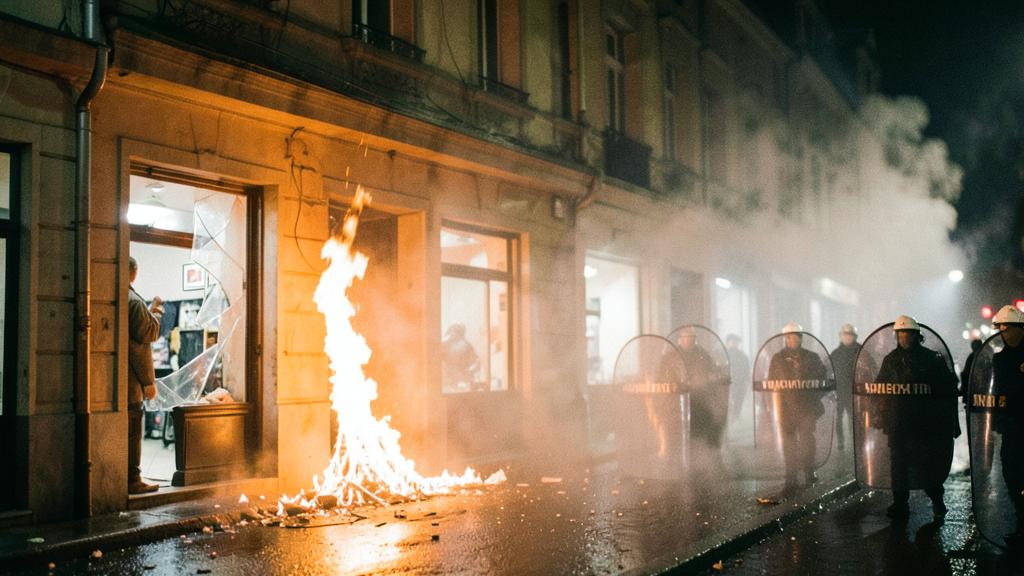
- Violent protests swept France over a single chaotic weekend, bringing clashes, widespread looting and buildings set ablaze.
- More than 1,200 people were arrested during the unrest, the clearest figure reported by the BBC.
- NBC News described the violence as sweeping across France, and Reuters described the country as in turmoil after riots and looting.
- BBC correspondent Katya Adler reported that France's government is under pressure after a weekend of widespread violence.
- The cause of the protests has not been stated in the available coverage, so the trigger of the unrest remains unknown.
Violent protests have erupted across France over a single chaotic weekend, and the world is asking a blunt question: is France burning? The answer, based on current reporting, is partially — buildings have been set ablaze and unrest has been described as sweeping the country, with more than 1,200 people arrested and the government under intense pressure. What triggered the protests, and how the crisis might end, has not been established in the reporting available so far.
Why is France burning right now?
Time Magazine’s headline poses the very question readers are typing into search engines — and, strikingly, the answer is not yet on the page. Reports from the BBC, Reuters, NBC News and Time describe the scale of destruction — violent clashes, looting and buildings ablaze — but the headlines themselves do not state what sparked the protests. No date, named organizer, political trigger or set of demands has been confirmed in the coverage reviewed. Until news organizations report one, the precise cause of the current unrest is simply unknown, and any explanation circulating online should be treated as speculation.
What do we know about the weekend of unrest?
Despite those gaps, the reporting that exists is specific about the effects of the violence. Taken together, the available headlines support a short list of hard facts:
- More than 1,200 people arrested during the protest weekend — the clearest figure reported, by the BBC.
- Violent clashes between protesters and police in multiple areas.
- Widespread looting, with Reuters describing France as “in turmoil after riots and looting.”
- Buildings set ablaze, confirming that the phrase “France is burning” is more than rhetoric.
- Unrest “sweeping” across the country, with dramatic images published by NBC News.
- A government under pressure, per BBC correspondent Katya Adler, after a “weekend of widespread violence.”
Where is the unrest happening?
The headlines describe the unrest as nationwide — “sweeping across France” in NBC News’ phrasing — but they do not name the cities, districts or neighborhoods where the violence was concentrated. Until that geographic detail is published, neither readers nor authorities can rank one region above another, and claims about a specific epicenter go beyond what has been reported.
How many people have been hurt?
No figure for injuries or fatalities appears in the available reporting. That absence is not, by itself, proof that no one was harmed — casualty counts are often slow to confirm in the early days of mass unrest — but it is a data point that has not yet been published.
Confirmed facts vs. open questions
For anyone trying to separate what is known from what is assumed, the state of play looks like this:
| Confirmed by reporting | Still unknown |
|---|---|
| More than 1,200 arrests over the protest weekend | The specific trigger or cause of the unrest |
| Violent clashes between protesters and police | Exact dates and the hardest-hit locations |
| Widespread looting | Injuries or casualties, if any |
| Buildings set ablaze | The government’s planned response |
| Unrest described as sweeping across France | How long the turmoil will continue |
Is “France is burning” literally true?
Partly. Buildings have been reported ablaze in the coverage, so the phrase — which has trended as a search term and a social-media frame — reflects a real, if partial, on-the-ground reality rather than pure rhetoric. As an overall description it also carries an unmistakable warning tone: it signals that this is not a small-town skirmish but a nationwide event, serious enough that the country’s political leadership itself is described as being under pressure.
Why is France’s government under pressure?
BBC correspondent Katya Adler reported that France’s government is under pressure following a weekend of widespread violence. The headlines do not itemize the pressure, but it is grounded in the reported facts: looting across the country, buildings ablaze, clashes between protesters and police and more than 1,200 arrests in a single weekend. In French political culture, maintaining public order is a core test of authority, which is why nationwide unrest so quickly becomes a government crisis.
France’s long tradition of protest — and why it matters now
This outburst should not be mistaken for something unprecedented in the country. France has a deep tradition of street protest as an instrument of political change — from the revolutionary crowds of 1789, through the uprisings in Paris in 1848 and 1871, to May 1968 and the gilets jaunes (Yellow Vest) movement that blocked roundabouts and shut down city centers from late 2018 into 2019. None of this establishes any link between past movements and today’s unrest: no such connection has been reported, and the current trigger remains unknown. What the history does provide is a template for what to watch next — how far authorities allow disorder to spread before restoring order, and whether those behind the unrest are seeking political concessions.
How should readers treat coverage of the unrest?
With care. The words doing the most work in this story — “sweeping,” “widespread,” “turmoil” — come from headlines rather than verified data tables, and dramatic nighttime images can make one burning street look like a hundred. The solid ground here is narrow but checkable: clashes, looting, buildings ablaze, more than 1,200 arrests and a government under pressure after a single weekend. Reputable outlets can expand that base as facts firm up: who organized the protests, what they demand, and what response the French state is preparing.
What happens next in France?
No source establishes what comes next. Whether the state will announce extraordinary measures, whether more protest weekends are being organized, and whether injuries or fatalities will come to light are all open questions. What the current reporting fixes is the baseline: violence across France, more than 1,200 arrests, buildings ablaze and a government under pressure to act. For readers who typed the question “why is France burning” into a search engine, the truthful answer so far is that the country is burning — and the reason has not yet been reported.
Sources
- France protests: Violent clashes, looting and buildings ablaze as over 1,200 arrested — BBC
- Why is France Burning? — Time Magazine
- Dramatic images show violent unrest sweeping across France — NBC News
- France in turmoil after riots and looting: What we know — Reuters
- Katya Adler: France's government under pressure after weekend of widespread violence — BBC
Frequently Asked Questions
What is happening in France right now?
Across France, protests have turned violent over a single chaotic weekend, with clashes between protesters and police, widespread looting and buildings set ablaze. More than 1,200 people have been arrested, according to the BBC, and the unrest has been described as sweeping the country. France's government is under pressure to respond, while the underlying cause of the protests remains unconfirmed in the available reporting.
How many people have been arrested in the France protests?
More than 1,200 people were arrested, according to BBC reporting. Coverage does not break the figure down by city, by day of the protest weekend, or by alleged offense, and there is no indication yet of how much higher the toll may climb if further weekends of unrest follow.
Why are buildings on fire in France?
Buildings have been reported ablaze during the unrest, and images of the violence have circulated widely. But the available headlines do not say who set the fires, which cities were hit hardest, or how many buildings were affected, so the precise scale of the property destruction — as opposed to its reality — remains unconfirmed in the reporting.
Is France's government under pressure because of the protests?
Yes — BBC correspondent Katya Adler reported the government is under pressure after a weekend of widespread violence. That pressure rests on reported facts: looting, buildings ablaze, clashes nationwide and more than 1,200 arrests. What the government will do in response has not been detailed in the available coverage.
What caused the protests in France?
Available headlines do not establish a cause. Time Magazine's own headline asks the question — "Why is France Burning?" — without supplying an answer, and no trigger event, organizer or set of protest demands has been confirmed in the reporting reviewed. Any explanation circulating online should be treated as unverified until news organizations state it plainly.
About The Author