Poland Crisis: EU Exit Talk Controversy, Constitutional Tribunal Suspension, and Protests
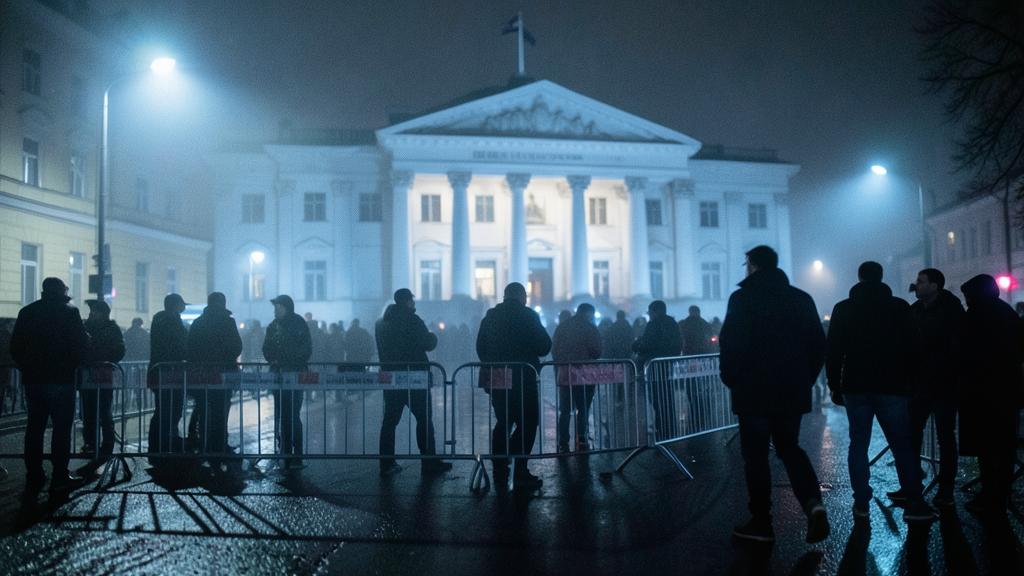
- Poland is in a political crisis: the head judge of its Constitutional Tribunal has been suspended, police have secured the court, and protests have erupted, with the tribunal crying “coup d'etat” amid a prime minister–president face-off.
- Reports note that Nawrocki returned to the Constitutional Tribunal during the confrontation, though the headlines do not specify his formal role or the legal basis for the suspension.
- A Polish opposition leader sparked controversy by giving a speech on potential European Union exit talks; Poland has been an EU member since 2004, and no official exit process has been reported.
- An NDTV opinion piece argues that a Polish defence-industry “experiment” could change India's defence industry, but the headline does not describe what that experiment involves.
What is happening in Poland right now?
Poland is currently in the grip of a political crisis playing out at once in its highest court and over the country’s place in Europe. An opposition leader has sparked controversy with a speech discussing potential EU exit talks, while the head judge of the Constitutional Tribunal has been suspended — prompting police to secure the tribunal building, street protests, and accusations of a “coup d’etat” from inside the court itself. The standoff has sharpened an already visible face-off between the prime minister and the president.
Background: how Poland is governed
Poland is a Central European republic of roughly 38 million people that joined the European Union in May 2004 and NATO in 1999. It is a parliamentary republic sharing power between a directly elected president — commander-in-chief with a legislative veto — and a prime minister whose cabinet is drawn from the Sejm, the lower house of parliament. When those offices are held by rival camps, disputes over nominations and laws can escalate into public standoffs.
The Constitutional Tribunal is Poland’s highest authority on whether statutes comply with the constitution. Its 15 judges are elected by parliament for nine-year terms, and its rulings are binding on all state bodies, including the Sejm and the Senate. Because the tribunal can strike down legislation, control of the court has been a recurring battleground in Polish politics for more than a decade.
Why is Poland’s top court at the center of the crisis?
According to Al Jazeera, Polish police were deployed to the country’s top court after its head judge was suspended. The Hindu reported that police secured the Constitutional Tribunal as protests erupted over the court chief’s suspension, with demonstrators gathering outside the building.
The Times of India frames the episode as a prime minister–president face-off, reporting that the top court chief was suspended while the tribunal cried “coup d’etat,” and that Nawrocki returned amid the confrontation. The suspension’s legal basis and the identities of those involved were not stated.
How unusual is this confrontation?
Judicial control has been contested for years. Reforms pushed between 2015 and 2023 shifted sway over judicial appointments toward parliament, and the European Court of Justice found parts of the resulting system in breach of EU law; earlier flashpoints involved disputes over whether judges could take their seats at all. That history explains why a fresh suspension of the tribunal’s head judge instantly drew “coup d’etat” accusations and street mobilization.
Why did talk of an EU exit cause controversy?
Separately, Notes From Poland reported that an opposition leader sparked controversy with a speech on potential EU exit talks. The headline does not name the speaker, give a date, or set out the speech’s content, so the speaker’s motive and the scenario discussed cannot be confirmed from the cited reporting.
The sensitivity is genuine. Poland’s 2004 EU accession underpins both its security planning and its economy: the single market absorbs the largest share of Polish exports, and EU funds financed much of the modern road network. Any member may withdraw under Article 50 of the EU’s founding treaty, as the United Kingdom did, but nothing in the cited reports suggests Poland has begun such a process.
Why would an opposition leader raise EU exit talks?
The headlines do not say. Readings on offer include a bid to put the governing camp on the defensive over its rule-of-law dispute with Brussels, or an attempt to energize euroskeptic voters. Until the speech’s text is reported, its intent remains speculation rather than fact.
What do the reports confirm — and what do they leave out?
The current coverage supports only these claims:
- Police were deployed to the Constitutional Tribunal after the head judge’s suspension, and forces secured the building while protests erupted (Al Jazeera; The Hindu).
- The tribunal publicly cried “coup d’etat” as the top court chief was suspended (The Times of India).
- Nawrocki returned during the confrontation, framed as a prime minister–president face-off (The Times of India).
- An opposition leader gave a controversial speech on potential EU exit talks (Notes From Poland).
- An opinion piece argues a Polish “experiment” could change India’s defence industry (NDTV).
Not stated: dates; the names of the suspended judge, prime minister and president; the legal basis for the suspension; the speech’s content; and any outcome in either dispute.
How does Poland connect to India’s defence industry?
A fifth headline links the Polish story to India. An opinion piece in NDTV argues that a Polish “experiment” could change India’s defence industry. Because the point appears only as an opinion column and is not detailed in the headline, what the “experiment” involves should be treated as unknown here rather than guessed.
The comparison is not as odd as it may sound. Since Russia’s 2022 full-scale invasion of Ukraine, Poland has sharply raised defence spending, rearmed quickly with Western systems, and boosted domestic arms firms for both military supply and export. India, meanwhile, is modernizing its forces and pushing indigenous production — a plausible reason a commentator might see lessons for Delhi in Warsaw’s approach.
Poland at a glance
Stable reference facts about the country, unaffected by the crisis:
| Item | Detail |
|---|---|
| Capital | Warsaw |
| Population | Roughly 38 million |
| EU member since | May 2004 |
| NATO member since | 1999 |
| Head of state | Directly elected president |
| Head of government | Prime minister |
| Highest constitutional court | Constitutional Tribunal — 15 judges, nine-year terms |
What happens next, and what remains unknown?
The reports cited here do not say how either dispute ends. Open questions: whether the prime minister and president can agree on the tribunal’s leadership, whether protests grow, whether judges rule on the suspension, and whether EU-exit talk becomes a lasting debate. Until fuller reporting appears, any claim about outcomes, police conduct, charges, or the speech’s intent should be treated as unconfirmed.
Sources
- Polish opposition leader sparks controversy with speech on potential EU exit talks — Notes From Poland
- Police secure Poland's Constitutional Tribunal as protests erupt over court chief's suspension — The Hindu
- PM-President face-off in Poland: Top court chief suspended, court cries 'coup d'etat' as Nawrocki returns — The Times of India
- Polish police deployed to top court after head judge suspended — Al Jazeera
- Opinion | How A Poland 'Experiment' Could Change India's Defence Industry — NDTV
Frequently Asked Questions
What is the political crisis in Poland about right now?
Two stories are colliding. First, the head judge of Poland's Constitutional Tribunal was suspended, police secured the court building, and protests erupted, with the tribunal itself crying “coup d'etat” amid a face-off between the prime minister and the president. Second, an opposition leader sparked controversy by giving a speech about potential European Union exit talks.
Who is Nawrocki and what is his role in the Poland court crisis?
The Times of India described the suspension of Poland's top court chief as occurring “as Nawrocki returns,” framing the events as a confrontation between the prime minister and the president. The headlines do not specify Nawrocki's formal position or when he returned, so his exact role in the dispute cannot be confirmed from the cited reports.
Could Poland actually leave the European Union?
Nothing in the cited reports indicates that Poland has any concrete plan to leave the EU. An opposition leader's speech about potential exit talks sparked controversy, and Poland has been a member since 2004. Any member state can withdraw under Article 50 of the EU's founding treaty, as the UK did, but so far this remains political rhetoric rather than official policy.
Why does the Constitutional Tribunal matter in Polish politics?
The Constitutional Tribunal decides whether Polish laws comply with the constitution, and its 15 judges are elected by parliament for nine-year terms. Its rulings bind all state bodies, including parliament, which makes control of the court a durable source of conflict between rival political forces in Poland.
How does Poland connect to India's defence industry?
An opinion piece in NDTV argues that a Polish defence-industry “experiment” could change India's defence industry, though the headline does not describe what that experiment involves. The broader context is that Poland has rapidly expanded defence spending and domestic arms production since Russia's 2022 invasion of Ukraine, while India is modernizing its military and pursuing indigenous manufacturing.
About The Author