“Stockpile Now”: Why Governments Tell Households to Prepare Emergency Supplies

- Governments in the US, Europe and Japan are urging households to stockpile 7 to 10 days of emergency essentials, including food, water and medicines.
- The Pentagon has ordered US military bases to plan for 90 days without grid power — a far longer horizon than household advice.
- Britain is separately urging families to stockpile food and water, part of a broader European push to prepare citizens for emergencies.
- BBC reporting quotes criticism of the advice as "tone deaf at best," and Guardian letters describe emergency stockpiles as a luxury not everyone can afford.
Yes — governments across the US, Europe and Japan are currently urging households to “stockpile now”: build emergency supplies of food, water and medicines sufficient for roughly 7 to 10 days. In a separate move, the Pentagon has ordered US military bases to plan for 90 days without grid power, and Britain is urging families to stockpile food and water. The advice has drawn sharp criticism, with some observers calling it “tone deaf at best.”
Why are governments telling households to stockpile now?
Reporting gathered for this article points to a broad, transatlantic push for household preparedness rather than one isolated warning. According to a summary from The Economic Times, the US, Europe and Japan are all urging households to prepare emergency stockpiles covering 7 to 10 days. Analysis from Northeastern University describes governments across Europe actively preparing citizens for emergencies through advice to stockpile food, water and medicines, while Britain has joined in urging families to stockpile food and water specifically.
The headlines alone do not identify a single triggering event. What is clear is that the advice arrives at a moment when living costs are already pressuring household budgets — which is central to the backlash described below.
How long should your emergency stockpile last?
The short answer depends on who is giving the advice. For ordinary households, the common thread across the US, Europe and Japan is a 7-to-10-day buffer of essentials. Military guidance is markedly more demanding: the Pentagon has ordered bases to plan for 90 days without the grid, meaning three months of self-sufficient operation if power and public infrastructure fail.
| Who is advising | Recommended duration |
|---|---|
| Households in the US, Europe and Japan | 7 to 10 days of essentials |
| Britain (families) | Stockpile food and water |
| US military bases (Pentagon order) | 90 days without grid power |
The three-tier structure — roughly a week for ordinary preparedness, up to ten days in current government advice, and a full quarter for military installations — is worth noting. Most household guidance assumes you can remain in your home, not shelter in a fortified facility.
Is 7 to 10 days really enough?
The sources gathered here present 7 to 10 days as the consensus figure for households, but they do not explain the reasoning or what happens after day ten. Long-standing preparedness practice generally suggests sizing supplies to survive at least several days of disrupted shops, power and water, so a multi-day buffer is sensible even if the exact number varies.
What should go in your emergency stockpile?
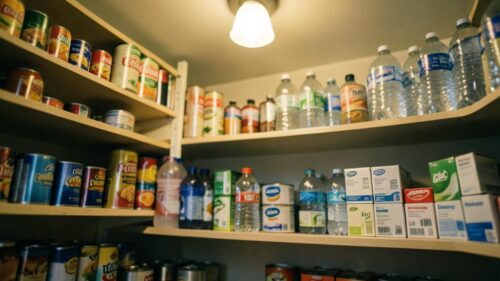
The items explicitly cited in the reporting are food, water and medicines — the first three categories named in guidance across Europe and echoed in US and Japanese household advice. Beyond those three, standard preparedness checklists typically recommend:
- Drinking water — commonly cited guidance is about one gallon (roughly four litres) per person per day, including water for pets
- Non-perishable food — canned goods, dried staples and ready-to-eat items that need little or no cooking
- Essential medicines — prescriptions, over-the-counter treatments and a basic first-aid kit
- Power-independent basics — flashlight, spare batteries, a phone power bank and candles where safe
- Sanitation and warmth — soap, hand sanitiser, moist wipes and blankets
The headlines do not reproduce official item-by-item government lists, so quantities and specifics genuinely vary. Treat the list above as established practice rather than quoted government specification.
Why are some experts calling this advice “tone deaf”?
BBC reporting describes the stockpile advice worrying both experts and low-income families, with the approach labelled “tone deaf at best.” The charge is that telling people to buy extra supplies presumes a budget surplus many simply do not have. Letters published in The Guardian make the same point bluntly: “Emergency stockpiles are a luxury that not everyone can afford.”
The fairness of that criticism is a live question. Preparedness experts tend to respond that even a modest buffer — a few days of water and tinned food — is achievable gradually. But the reporting gathered here does not indicate any government financial support aimed at helping low-income households comply, and none should be assumed.
Is stockpiling worth it if you can’t afford much?
For households stretched thin, the practical route is incremental rather than a single bulk purchase:
- Add one extra non-perishable item to each regular grocery shop
- Prioritise drinking water and any prescription medicines first — these are the hardest to improvise
- Rotate stock by placing new items at the back of the cupboard and using older cans first, so nothing expires unused
- Reuse sealed bottles and food-safe containers for water storage rather than buying purpose-made packaging
None of these steps requires a large upfront outlay, and they align with the gradual approach advocates favour in response to the affordability criticism.
“Stockpile now”: the bottom line
Current government advice across the US, Europe and Japan converges on one idea: keep 7 to 10 days of food, water and medicines at home, because shops and services may not be immediately available in a crisis. The Pentagon’s 90-day planning order for bases shows how much longer institutional resilience is held to — and why the gap between official confidence and household budgets is generating headlines. Whether the advice is “stockpile now” or build supplies slowly over time, the common denominator is water, food and medication on the shelf before you need them.
Sources
- 'Tone deaf at best' – advice to stock up on essentials worries experts and low-income families — BBC
- US, Europe, Japan urge households to prepare emergency stockpiles from 7 to 10 days. Here's what you need — The Economic Times
- Stockpile Food, Water And Medicines: Why Governments Across Europe Are Preparing Citizens For Emergencies — Northeastern University
- Emergency stockpiles are a luxury that not everyone can afford | Letters — The Guardian
- Pentagon orders bases to plan for 90 days without the grid as Britain urges families to stockpile food and water — Fortune
Frequently Asked Questions
How many days of supplies should a household emergency stockpile contain?
Current guidance summarized in reporting from the US, Europe and Japan recommends 7 to 10 days of essentials such as food, water and medicines for households. That is separate from the Pentagon's order for US military bases to plan for 90 days without grid power.
What items should go in an emergency stockpile?
The reporting explicitly cites food, water and medicines as the core categories named by governments across Europe, with US and Japanese household advice matching. Established preparedness practice typically adds a flashlight, spare batteries, a first-aid kit and sanitation supplies, though the headlines do not publish official item lists.
Is the 90-day advice meant for ordinary households?
No. The 90-day figure applies specifically to US military bases under a Pentagon order to plan for operating without grid power. Household advice from the US, Europe and Japan centers on much shorter 7-to-10-day stockpiles of essentials.
I can't afford to stockpile. What should I do?
Commentators including Guardian letter writers note emergency stockpiles are a luxury not everyone can afford. Practical steps are incremental: buy one extra non-perishable item per shop, prioritise water and prescription medicines, rotate stock so cans do not expire, and reuse sealed bottles for water storage.
Why are experts critical of the stockpile advice?
BBC reporting says the advice has worried experts and low-income families, with some calling it "tone deaf at best." The concern, echoed in Guardian letters, is that stockpiling presumes disposable income and storage space that many households simply do not have.
About The Author