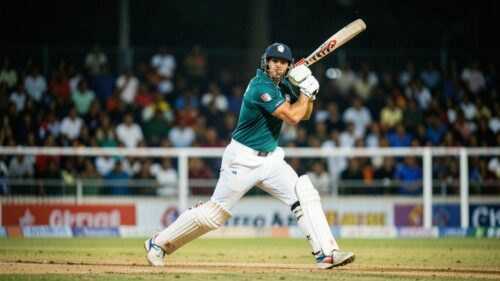
AFG vs SCO: Afghanistan XI vs Scotland XI Hong Kong Sixes 2026 Semi-Final Breakdown
- Afghanistan XI scored 121/4 in the Cup Semi-Final 2 of the Hong Kong Sixes 2026 on October 31, 2026.
- Scotland XI scored 100/3 in their full allocation of 6.0 overs during the run chase.
- Lyle Robertson scored 14 runs off 3 balls for Scotland XI, while Jasper Davidson added 3 runs off 3 balls.
- The 2nd Semi-Final match was played at Mong Kok as part of the Hong Kong International Sixes 2026.
In the second Cup Semi-Final of the Hong Kong International Sixes 2026, Afghanistan XI faced Scotland XI at Mong Kok on October 31, 2026. Afghanistan XI batted first to set a target of 121/4, while Scotland XI responded with 100/3 in their allotted 6 overs. This exciting clash highlighted the fast-paced nature of the afg vs sco fixture in one of short-form cricket’s premier showcase events.
What Was the Result of the Afghanistan vs Scotland Semi-Final?
The high-stakes Cup Semi-Final 2 between Afghanistan XI and Scotland XI delivered high-octane action at the Mong Kok venue. Playing on October 31, 2026, Afghanistan XI posted a formidable total of 121 runs for the loss of 4 wickets. In response, Scotland XI produced a spirited chase, reaching 100 runs for 3 wickets across their 6 overs.
This matchup formed a critical leg of the Hong Kong Sixes 2026 knockout stage. With only six overs per innings, every ball carries immense weight, demanding immediate aggressive intent from the opening delivery. Afghanistan XI established a strong foundation by driving their total past the 120-run mark, setting a tough run rate requirement for the Scottish side. Scotland XI mounted a swift response, hitting 100 runs in their 6 overs, but ultimately fell short of the 122-run target needed to clinch victory.
Breakdown of the SCO vs AFG Scorecard at Mong Kok
The scorecard from the second semi-final reflects the frantic pace of 6-over cricket at Mong Kok. Afghanistan XI lost four wickets while pushing their total to 121, demonstrating a high-risk, high-reward tactical approach designed to maximize boundaries.
During Scotland XI’s run chase of 100/3 in 6 overs, individual contributions highlighted the rapid scoring rates required in this format. Scottish batter Lyle Robertson recorded a rapid 14 runs off just 3 deliveries, capitalizing on short boundaries and relentless attacking strokes. Teammate Jasper Davidson added 3 runs off 3 balls during his stint at the crease.
To visualize the key match totals from the Mong Kok fixture, the summary below details the core statistics recorded during the contest:
| Team | Total Score | Overs Completed | Wickets Lost |
|---|---|---|---|
| Afghanistan XI | 121 | – | 4 |
| Scotland XI | 100 | 6.0 | 3 |
Such high totals within six overs demonstrate how modern bat technology, small boundary dimensions, and aggressive field restrictions combine to produce massive scoring rates in Mong Kok.
Understanding the Hong Kong International Sixes Format
The Hong Kong International Sixes is an established, unconventional cricket tournament held in Hong Kong, celebrated for its unique set of fast-paced rules designed to maximize entertainment and spectator engagement. Unlike standard Twenty20 or Fifty-over International cricket, the Sixes format drastically reduces match duration and alters traditional play mechanics.
In a standard Hong Kong Sixes match, each team consists of only six players on the field, contrasting with the standard eleven-player lineup seen in conventional international fixtures. Each innings lasts a maximum of six overs, meaning a complete match can conclude in under an hour. Every player on the fielding team—with the exception of the wicketkeeper—is typically required to bowl one over, putting an emphasis on versatile, all-round skill sets across the entire squad.
Furthermore, wide balls and no-balls carry heavier penalties to encourage continuous play, while extra runs are frequently scored via rapid running between the wickets or clear boundary hits. Wide boundaries are minimized to fit smaller venues like Mong Kok, creating ideal conditions for frequent sixes and high overall team scores.
Tactical Nuances in the AFG vs SCO Semi-Final
Short-format cricket matches like the afg vs sco semi-final leave zero room for defensive consolidation. Teams must attack from the first delivery, as saving wickets is far less important than maintaining a run rate exceeding 15 to 20 runs per over.
For Afghanistan XI, accumulating 121 runs in their innings required consistent boundary hitting and immediate capitalisation on loose deliveries. By taking risks early, they pushed their projected total into triple digits, forcing Scotland XI to chase at an average required run rate exceeding 20 runs per over right from ball one.
Scotland XI’s pursuit showed the intense pressure of chasing a target over 120. While Lyle Robertson’s 14 runs off 3 balls provided a lightning burst of momentum, maintaining that extreme scoring frequency across all six overs remains one of the toughest challenges in short-form sports. Losing three wickets while attempting to match the required tempo eventually restricted Scotland to 100/3 when their six overs expired.
The Evolution of Short-Form Cricket in Global Sport
The competition between emerging and established cricket nations in events like the Hong Kong International Sixes underscores the changing global landscape of short-form cricket. Fast, shortened formats provide non-traditional and growing cricket regions with an exciting platform to demonstrate talent against top international opposition.
Venues such as Mong Kok offer an ideal background for these international showcases. The high-altitude trajectory of hit balls, compact outfield boundaries, and enthusiastic crowd engagement create an atmosphere distinct from traditional multi-day Test matches or One Day Internationals. Fans benefit from rapid outcomes and action-packed sequences, while broadcasters enjoy concise time slots suitable for global audiences.
As teams like Afghanistan XI and Scotland XI continue to compete across diverse international tournaments, fixtures like this semi-final reinforce how adaptable modern cricket has become. Whether through T20 leagues, Ten10 events, or Sixes competitions, short-format encounters bring unmatched intensity to the sport.
Sources
- SCO vs AFG, Cup, Semi Final 2, Hong Kong Sixes 2026 – Scorecard — Cricbuzz
- Live Cricket Score | SCO vs AFG | hk sixes 2026 | Cricket Scoreboard — NDTV Sports
- SCO 100/3 (6) vs AFG 121/4 (Jasper Davidson 3(3) Lyle Robertson 14(3)) | Scotland vs Afghanistan, Cup, Semi Final 2, Hong Kong Sixes 2026 Live Cricket Stream, live scores, ball-by-ball commentary, highlights, videos, news, and more in USA & Canada — Cricbuzz
- 2nd Semi-Final, Hong Kong International Sixes at Mong Kok, Oct 31 2026 — ESPN
- Afghanistan XI vs Scotland XI, Cup, Semi Final 2, 2026, Live Scores, full scorecard with commentary, Hong Kong Sixes — BDCricTime
Frequently Asked Questions
What was the final score in the AFG vs SCO Hong Kong Sixes 2026 semi-final?
Afghanistan XI posted 121/4 in their innings, while Scotland XI scored 100/3 in 6 overs during the Cup Semi-Final 2 match held on October 31, 2026, at Mong Kok.
Which Scotland XI players had individual scores noted in the semi-final?
Lyle Robertson scored a rapid 14 runs off 3 deliveries, while Jasper Davidson contributed 3 runs off 3 balls for Scotland XI during their 6-over chase.
Where and when did the Afghanistan XI vs Scotland XI match take place?
The fixture was played at Mong Kok on October 31, 2026, serving as the Cup Semi-Final 2 of the Hong Kong International Sixes 2026 tournament.
How does the Hong Kong Sixes format differ from standard cricket?
Hong Kong Sixes features 6 players per team and matches lasting only 6 overs per side, creating extremely rapid play focused heavily on boundary hitting and high scoring rates.
About The Author