4.1-Billion-Year-Old Martian Meteorite Discovered in the Sahara Desert
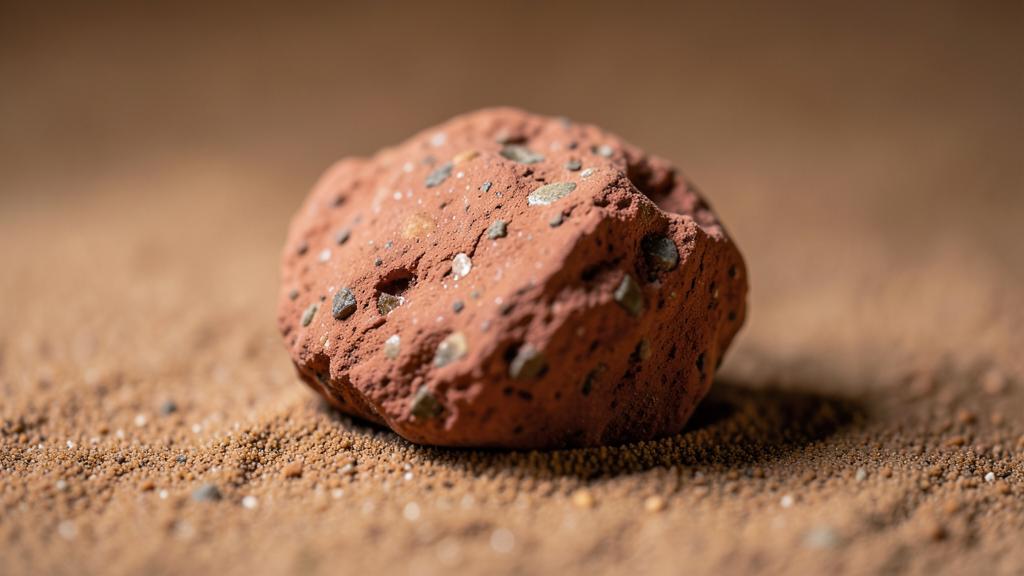
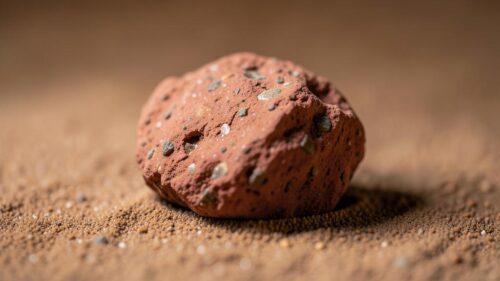
- A rosy-toned Martian meteorite discovered in the Sahara Desert has been dated to more than 4.1 billion years old, making it one of the oldest Mars rock samples ever found.
- A NASA-funded study detailed the ancient space rock and identified 13 specific candidate origin locations on the surface of Mars.
- The 4.1-billion-year-old rock provides planetary scientists with critical physical evidence of Mars's early crustal composition during the inner solar system's primordial era.
A recently analyzed martian meteorite discovered in the Sahara Desert has been identified as a 4.1-billion-year-old piece of the Red Planet. The rare, rosy stone represents one of the oldest Martian meteorites ever found on Earth, providing unprecedented scientific insight into early planetary evolution. A NASA-funded study has investigated the rock’s chemical makeup and successfully identified 13 candidate origin locations on Mars where the specimen may have formed before being knocked into space.
What Is the Sahara Martian Meteorite Discovery?
The discovery of this ancient space rock in the vast expanse of the Sahara Desert has captured the attention of astronomers and planetary geologists worldwide. First noticed as a distinct rosy stone, detailed laboratory testing confirmed that the object is a fragment of the Martian crust that formed more than 4.1 billion years ago. This extraordinary age makes it one of the oldest Martian meteorites ever identified in human history.
Because active planetary processes like plate tectonics, weathering, and volcanism regularly resurface terrestrial worlds, rock samples dating back over four billion years are exceptionally rare anywhere in the solar system. Finding a surviving piece of Mars crust from this primordial era allows scientists to study the physical and chemical conditions present during the early stages of planetary formation.
What Did the NASA-Funded Study Reveal?
A comprehensive NASA-funded study detailed the historical and geological significance of this ancient space rock. By analyzing the specimen’s unique physical characteristics and isotopic signature, researchers confirmed its origin from the Red Planet and established its timeline of formation. The scientific study provides a rare look at planetary materials created during the solar system’s early formation period.
In a major scientific breakthrough, the research team identified 13 possible origins on Mars for this 4.1-billion-year-old rock. These candidate locations represent specific impact craters or ancient surface formations on the Red Planet where a massive collision likely took place. Identifying candidate locations bridges the gap between laboratory analysis of physical rock samples on Earth and orbital remote sensing data collected by Martian spacecraft.
Key Specifications and Facts About the Meteorite
The following summary highlights the key facts and specifications surrounding this remarkable Martian meteorite based on recent scientific research:
| Property | Scientific Record |
|---|---|
| Object Type | Martian Meteorite |
| Estimated Age | More than 4.1 billion years old |
| Discovery Region | Sahara Desert, Earth |
| Distinct Appearance | Rosy-toned stone |
| Scientific Support | NASA-funded study |
| Candidate Origins | 13 identified sites on Mars |
| Historical Status | One of the oldest Mars meteorites ever found |
How Do Martian Rocks Travel from Mars to Earth?
Understanding how a rock originating on Mars lands in the desert on Earth requires examining planetary impact dynamics. Millions or billions of years ago, a violent collision occurred on Mars when a large asteroid or comet slammed into the planet’s surface. The force of this high-energy impact blasted debris high above the atmosphere, accelerating some rock fragments beyond Mars’s escape velocity.
Once liberated into space, these fragments drifted along solar orbits for extended periods. Gravitational perturbations from nearby planetary bodies gradually altered their pathways until their trajectories crossed Earth’s orbital plane. When entering Earth’s atmosphere, atmospheric friction heated the outer layer of the space rock. The surviving interior landed in dry environments like the Sahara Desert, where arid conditions prevented rapid degradation and preserved the specimen until discovery.
Why the Sahara Desert Is Ideal for Meteorite Recovery
The Sahara Desert is renowned as one of the world’s premier locations for searching for extraterrestrial material. The vast, arid landscape provides several natural advantages for locating ancient meteorites:
- High Visual Contrast: Dark or unusually colored rocks, such as this rosy stone, stand out clearly against pale desert sand and limestone plateaus.
- Arid Climate: Low precipitation slows chemical weathering and rust, allowing rocks to remain intact for thousands of years on the surface.
- Geologic Stability: Wind erosion continually uncovers buried rocks while dry conditions prevent dense vegetation from concealing fallen specimens.
Why Is This 4.1-Billion-Year-Old Rock So Significant?
Rocks dating back 4.1 billion years offer a pristine window into the early history of the inner solar system. During this early period, both Earth and Mars were undergoing rapid cooling and differentiation. However, dynamic plate tectonics on Earth have destroyed almost all surface rocks older than four billion years through recycling and subduction.
In contrast, Mars experienced less extensive global tectonic recycling, preserving ancient surface crust across vast highlands. Studying a 4.1-billion-year-old Martian meteorite enables researchers to investigate the composition of Mars’s early crust, evaluate early atmospheric density, and search for ancient magnetic signatures. Connecting this specific sample to 13 possible origin sites on Mars provides an invaluable anchor point for calibrating crater-age models across the entire planet.
What Questions Remain for Scientists?
Despite the insights provided by the NASA-funded study, scientists continue to investigate key unresolved questions regarding this ancient sample:
- Exact Origin Point: Determining which of the 13 candidate sites on Mars was the precise location of the original impact event.
- Transit Duration: Calculating exactly how long the stone drifted in space after leaving Mars before entering Earth’s atmosphere.
- Impact Parameters: Modeling the exact size and speed of the asteroid impact that dislodged the rock without pulverizing its internal mineral structure.
Sources
- A Meteorite Found in the Sahara Is a 4.1-Billion-Year-Old Piece of Mars — The New York Times
- NASA-funded Study Details One of Oldest Mars Meteorites Ever Found — NASA (.gov)
- Ancient Martian Meteorite Found in the Sahara Desert May Have Formed More Than 4.1 Billion Years Ago — Discover Magazine
- This Rosy Stone Spotted in the Sahara Turned Out to Be a 4.1-Billion-Year-Old Meteorite From Mars, One of the Oldest Ever Found — Smithsonian Magazine
- NASA identifies 13 possible origins on Mars for a 4.1-billion-year-old meteorite found in the Sahara — Education Times
Frequently Asked Questions
How old is the Martian meteorite found in the Sahara Desert?
The Martian meteorite found in the Sahara Desert is estimated to be more than 4.1 billion years old. This extraordinary age makes the rosy stone one of the oldest known meteorites originating from Mars ever recovered on Earth, dating back to the primordial early era of the Red Planet.
How did scientists identify where the Martian meteorite came from on Mars?
In a NASA-funded study, researchers analyzed the physical properties and mineral composition of the 4.1-billion-year-old meteorite. By comparing these rock attributes with orbital satellite mapping data of Mars's surface, the research team identified 13 specific candidate impact sites that could be the specimen's original source location.
Why are 4.1-billion-year-old meteorites so rare on Earth?
Rocks older than four billion years are extremely rare because geological processes like plate tectonics, erosion, and volcanism continuously destroy and recycle surface rock. While Earth has destroyed most of its oldest crust, Mars preserved ancient rock formations, allowing collision debris to occasionally land on Earth.
What does the Sahara Martian meteorite look like?
Reports describe the 4.1-billion-year-old Martian meteorite found in the Sahara Desert as a rosy-toned stone. Its unique coloration and physical characteristics distinguished it from native terrestrial rocks, prompting laboratory analysis that confirmed its extraterrestrial origin from Mars.
About The Author