Air India’s Iraq Airspace Route Cuts US Flight Time by Four Hours, Saves 10% Fuel
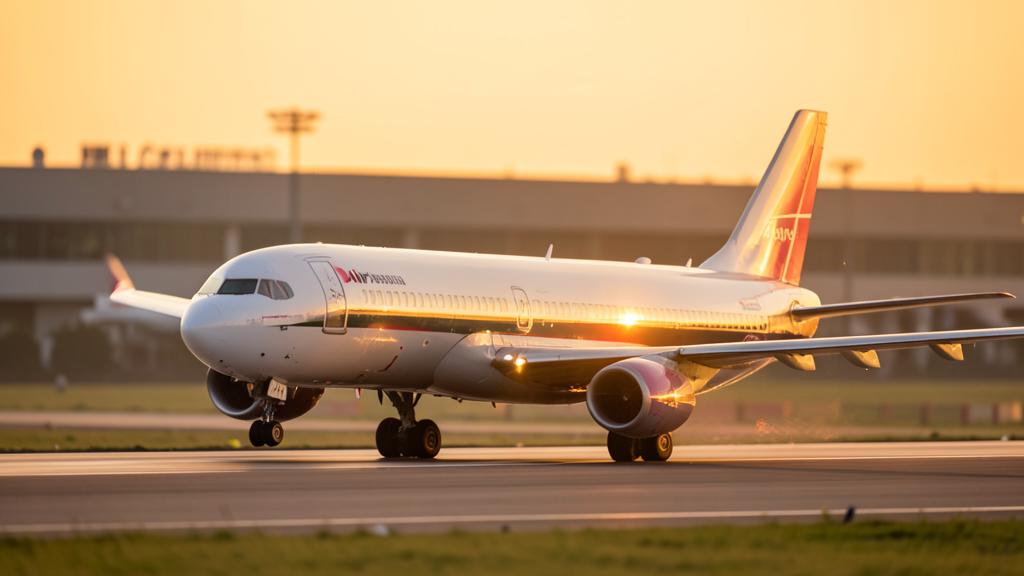
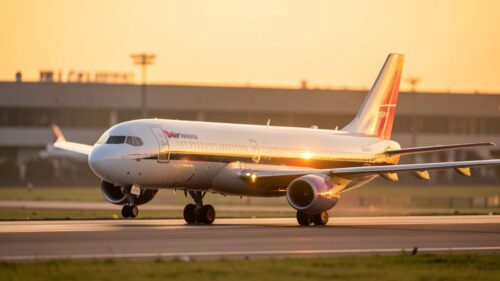
The most expensive detour in the India-US aviation map isn’t a longer flight — it’s the one that never leaves the ground. Air India’s Delhi and Mumbai to New York and Newark services have become genuinely non-stop this week, not because a new runway opened but because Iraq’s airspace, closed to Indian carriers since the Middle East flare-up, reopened. The airline’s US-bound flights now shave close to four hours off journey times and save nearly 10% in fuel, the airline expects, simply by flying a straighter line.
What the route change actually delivers
Before this week, travellers on Air India’s air india us direct flights had to touch down at Rome for a technical refuelling stop. That added hours, burned fuel twice for the same stretch, and made a “non-stop” schedule a fiction. With Iraq’s airspace back in play, the New Delhi and Mumbai services to both New York’s JFK and Newark’s EWR run without the Rome stop, cutting scheduled journey times by around four hours — from roughly 20 hours down to 16. The Financial Express reported the time saved as two to three hours on some schedules. The Times of India, which first carried the story, put the saving at “close to four hours” and framed it as a “Diwali gift” to travellers.
- Air India has resumed non-stop flights from Delhi and Mumbai to New York and Newark via reopened Iraq airspace.
- Journey times have been cut by around four hours, to approximately 16 hours, with the Rome refuelling stop eliminated.
- The airline expects nearly 10% fuel savings on the route due to the shorter, more direct great-circle path.
- The savings depend on Iraqi airspace remaining open; a shift in the Middle East situation could reverse the advantage.
- The route change is timed ahead of the Diwali travel peak, a key period for India-US demand.
Flight time isn’t the only thing being shaved. PTI reported the airline expects fuel savings of around 10%, a meaningful figure on a route where fuel is the single largest operating cost. The Economic Times quoted the same 10% figure, and Moneycontrol reported the airline expects nearly 10% savings on fuel costs. Shorter distance, less fuel, lower burn — the arithmetic is straightforward, but it matters at a moment when carriers are under pressure on yields.
Why this route took the detour in the first place
The Rome refuelling stop wasn’t a choice; it was a workaround. Since the Israel-Hamas war began, airspace over the Middle East — including Iraq’s — was closed to commercial traffic, forcing India-US flights to swing south around the Arabian Peninsula, past the Gulf states and up through North Africa, far off the great-circle route. That’s why the one-stop at Rome appeared, why flight times ballooned, and why airlines couldn’t honour their “non-stop” branding. The reopening of Iraqi airspace, reported this week, restores the direct line. The New Indian Express noted the resumption happened on Thursday, and the route now bypasses the Middle East entirely rather than skirting it.
The timing is pointed. The Times of India’s “Diwali gift” framing isn’t just marketing spin — it lands ahead of the festival travel peak, when India-US demand is at its most inelastic and every seat on the North Atlantic is premium. A four-hour saving on a 16-hour journey is a competitive edge that rivals can’t easily match, particularly carriers still routing around the conflict.
The counter-point: a temporary gain, not a structural fix
This is worth stating plainly: the gain is real but fragile. Every advantage Air India now enjoys depends on Iraqi airspace staying open. The sources note the reopening as a condition of the current operation; they do not project stability. If the Middle East situation shifts, the same flights can be forced back around the detour, and the four-hour saving and 10% fuel gain disappear with the airspace. The route has effectively become a political variable, not an aviation one. Air India has no control over it, and neither do its passengers — the airline is, for now, the beneficiary of a diplomatic opening it did nothing to create. The gain is operational; the risk is geopolitical.
What changes for the traveller
Practical effect: a traveller on Air India’s air india us direct flights from Delhi or Mumbai now boards, flies one plane, and lands in New York or Newark without the Rome stop. Journey times are listed at around 16 hours. For business travellers, that’s a full working day recovered; for leisure, it’s four hours less in a metal tube. The route now runs as it was meant to before October 2023 — nonstop, shorter, cheaper to operate. What happens next depends entirely on what happens in Baghdad and the wider region, not on anything within the airline’s control.
Reporting from
- Air India reroutes US-bound flights through Iraq airspace, eyes 10% fuel savings — Telegraph India
- Iraq airspace available again, Air India flights between Delhi, Mumbai and New York become nonstop; shave — The Times of India
- Air India starts using Iraq airspace for New York, Newark direct flights; likely to see 10 pc fuel savings — Press Trust of India
About The Author