Sub-Zero Temperatures and Heavy Snowfall Freeze Transit Networks Across Kashmir
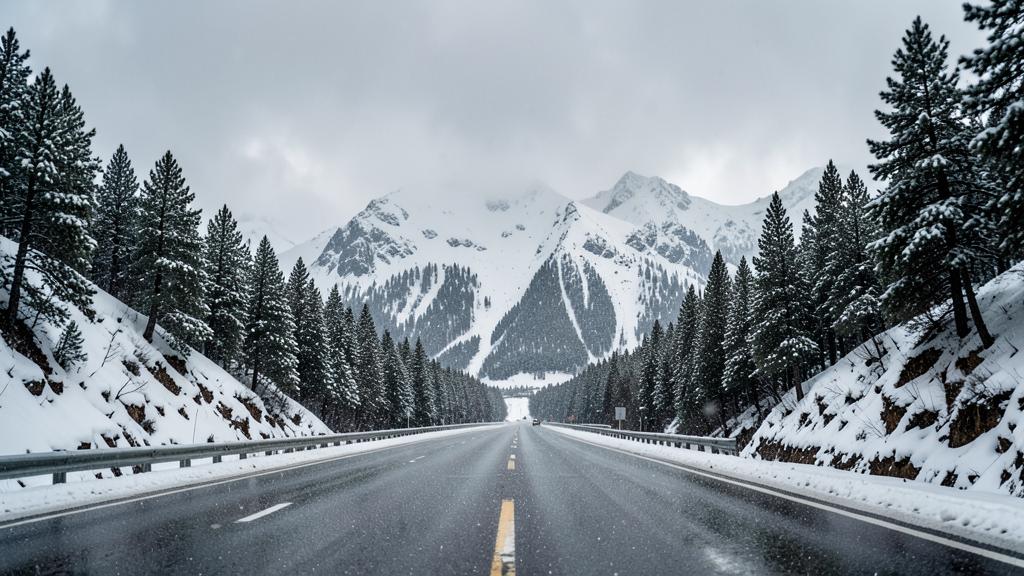
The immediate threat posed by Kashmir’s sharp winter arrival is not the aesthetic chill of early mountain snow, but the operational freeze it imposes on transport networks and public safety across the region. When Srinagar’s weather plunged below the freezing mark to record a season-low of -0.1°C, it signalled more than just autumn slipping into winter. It marked the start of a weather pattern that instantly disrupted high-stakes infrastructure plans, closed crucial mountain corridors, and forced administrative interventions across multiple districts.
- Srinagar recorded its season's first sub-zero night at -0.1°C while daytime temperatures dropped by 6 to 8 degrees Celsius across J&K.
- Severe weather forecasts delayed the Katra-Srinagar Vande Bharat inauguration and postponed the Prime Minister's visit.
- Authorities issued strict travel advisories for Gurez Valley and Anantnag high-altitude passes due to heavy snow and gusty winds.
- The Meteorological Department predicts precipitation to subside, with dry weather expected from November 15.
A fresh weather system moving across Jammu and Kashmir brought widespread rainfall to the plains and heavy snowfall to the higher reaches on November 12 and 13. According to data from the Meteorological Department, daytime temperatures across the Valley plummeted by 6 to 8 degrees Celsius in a 48-hour span. The weather office accompanied this sharp dip with warnings of thunderstorms, lightning, gusty winds reaching speeds of 40 to 50 kmph, and isolated hailstorm activity across Jammu, Kashmir, Ladakh, Gilgit-Baltistan, Muzaffarabad, and neighbouring Himachal Pradesh.
The impact on ground travel was immediate. In Baramulla, rain lashed the plains while surrounding peaks took on heavy snow. Further north, fresh snowfall in Gurez Valley prompted local authorities to issue urgent travel warnings. As reported by The Hindu, tourists were explicitly advised to avoid traveling to Gurez Valley due to hazardous road conditions brought on by the sudden accumulation of snow.
Sub-zero temperatures and transit advisories halt mountain mobility
High-altitude transit routes became the first casualty of the changing conditions. Recognizing the hazards of rapid ice accumulation on unpaved and steep mountain roads, the Anantnag district administration stepped in with formal restrictions. Kashmir Life reported that the district administration issued a comprehensive weather advisory urging residents and travelers to avoid unnecessary movement toward high-altitude passes and upper reaches.
These precautionary closures reflect a growing reality for mountain administration in Jammu and Kashmir. A sudden drop in daytime temperatures combined with gusty 50 kmph winds creates rapid icing on roads, transforming standard mountain passes into severe hazard zones within hours. Rather than managing stranded vehicles after the storm hits, district officials chose preemptive warnings to keep commuters off vulnerable passes.
High-profile transit plans hit a wall as high-altitude passes shut
The reach of this weather system extended well beyond local road networks, disrupting major national transit milestones. News18 reported that the high-profile inauguration of the Katra-Srinagar Vande Bharat train service was delayed, while Prime Minister Narendra Modi’s scheduled visit to the region was postponed specifically because of the severe weather forecast.
The alignment of high winds, lightning, and heavy precipitation presented direct operational risks for major public gatherings and VIP transit. When weather systems force the postponement of landmark infrastructure unveilings, it underlines how completely severe weather in Srinagar and the wider region dictates state-level schedules. The delay of the flagship Vande Bharat launch shows that modern transport initiatives remain bound by seasonal weather realities in the Himalayas.
Tourism benefits face the harsh reality of severe weather warnings
To be sure, early snowfall is not viewed as a total loss across the Kashmir Valley. Hospitality operators and tourism advocates often see early snow as an essential commercial trigger. Sonamarg transformed into a winter wonderland following its season’s first snowfall, creating an instant influx of visual interest and promising an early start to the profitable winter tourism trade.
Yet, set against the broader economic activity of the state, tourist excitement in resort towns like Sonamarg represents a narrow gain. While hotels in select scenic spots benefit from early snow photos, the broader economy faces immediate drag. Freight movement slows down, construction projects grind to a halt, agricultural work in the plains suffers under heavy downpours, and inter-district supply chains face friction. The immediate financial gains of early resort tourism come at the cost of widespread operational delays across non-tourism sectors.
The current stretch of wet weather is expected to remain active through Friday. According to official weather forecasts reported by The Kashmir Horizon, the Meteorological Department expects precipitation to taper off, paving the way for dry weather across Jammu and Kashmir starting November 15.
Reporting from
About The Author