Anand Mahindra Rebuilds Grandfather’s 1918 Engine and Shares UK Rickshaw Video
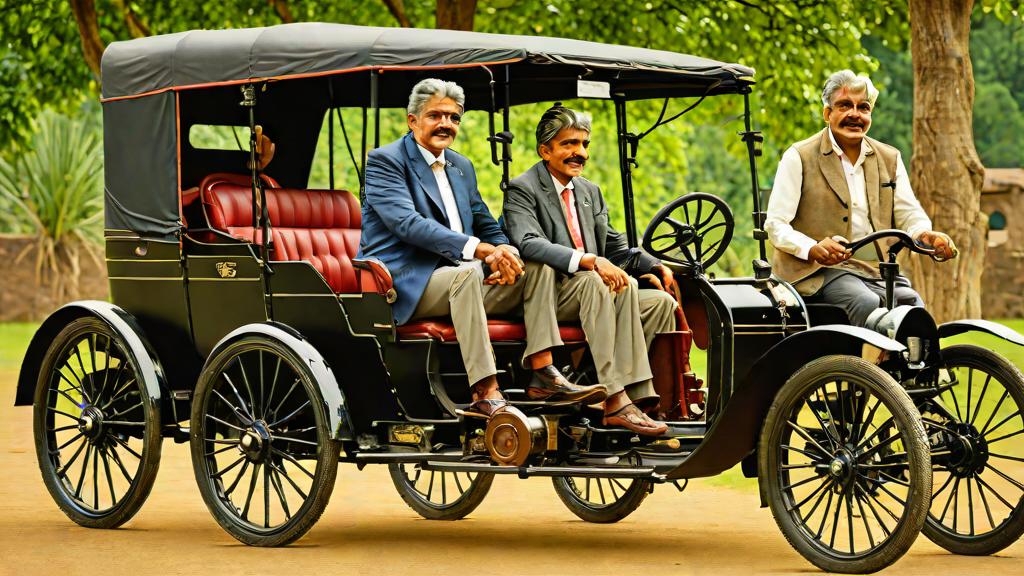
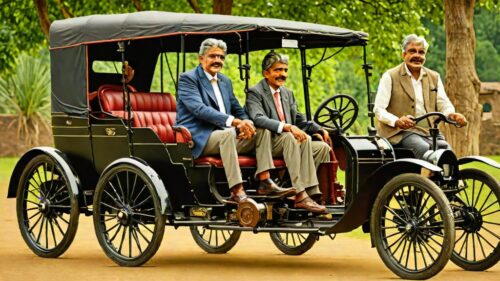
- Anand Mahindra’s team rebuilt his grandfather J.C. Mahindra’s 1918 piston engine 108 years later.
- The rebuild used original patent drawings, modern CAD, and contemporary materials to recreate the engine.
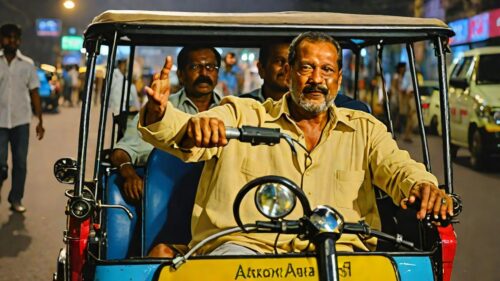
- A video of an Indian rickshaw in the UK posted by Anand Mahindra prompted online remarks of "reverse colonisation".
- J.C. Mahindra co‑founded Mahindra & Mahindra and filed the 1918 patent that is now being commemorated.
Anand Mahindra recently highlighted two distinct events: his team rebuilt a piston engine patented by his grandfather J.C. Mahindra 108 years after the original 1918 filing, and he posted a video of an Indian rickshaw driving in the UK, sparking online commentary about “reverse colonisation”.
What engine did Anand Mahindra’s team rebuild?
The engine in question is a piston‑type internal combustion engine that was patented by J.C. Mahindra in 1918. Business Today reports that the Mahindra engineering team reconstructed the engine exactly 108 years later, demonstrating that the original design can still be fabricated using modern tools.
Why is the 108‑year gap significant?
108 years marks the time elapsed between the 1918 patent filing and the 2026 reconstruction. The span underscores the longevity of Mahindra’s engineering heritage and provides a tangible link between the company’s early 20th‑century innovations and its present‑day technology capabilities.
How did the rebuild project come about?
Anand Mahindra publicly confirmed that the project was an internal initiative aimed at honoring the founder’s legacy. The team used historical patent drawings, archived technical notes, and contemporary CAD software to recreate the engine components.
- Step 1: Retrieve original patent documents from 1918.
- Step 2: Digitise drawings and create 3D models.
- Step 3: Source modern materials that match the original specifications.
- Step 4: Manufacture and assemble the engine in the Mahindra R&D facility.
- Step 5: Test the rebuilt engine for functional fidelity.
What was the public reaction to Anand Mahindra’s rickshaw video?
NDTV reported that Anand Mahindra posted a video of an Indian rickshaw operating on UK streets. Social media users reacted with the phrase “reverse colonisation,” interpreting the scene as an Indian vehicle appearing in a traditionally Western environment.
Is the video a marketing stunt?
The headlines do not provide evidence that the video was part of a formal marketing campaign. The coverage only notes the internet’s reaction, leaving the intent of the post unspecified.
Who was J.C. Mahindra and what did his 1918 patent cover?
J.C. Mahindra, the grandfather of Anand Mahindra, co‑founded the Mahindra & Mahindra conglomerate. His 1918 patent protected a piston engine design that was intended for early automotive applications. The exact technical specifications are not detailed in the headlines, but the patent is recognized as a foundational innovation for the company’s later vehicle production.
How does this heritage influence today’s Mahindra Group?
The successful rebuild showcases how historical engineering knowledge can inform contemporary projects. It also reinforces the brand narrative that Mahindra’s roots are deeply technical, a point often highlighted in corporate storytelling.
What broader lessons can be drawn from these two events?
Both the engine reconstruction and the rickshaw video illustrate Mahindra’s blend of heritage reverence and modern visibility. The former demonstrates technical continuity, while the latter reflects the global cultural footprint of Indian mobility solutions.
| Event | Date Mentioned | Key Detail |
|---|---|---|
| Engine rebuild | 108 years after 1918 (2026) | Mahindra team reconstructed J.C. Mahindra’s piston engine |
| Rickshaw video | Recent (2024‑2025 coverage) | Video posted by Anand Mahindra; sparked “reverse colonisation” commentary |
While the headlines do not provide exhaustive technical data, they confirm that Mahindra continues to celebrate its founder’s inventions and remains active in cultural conversations across continents.
## The technical significance of reviving a century‑old engine
Materials science meets vintage design
The reconstruction required a careful balance between authenticity and safety. Mahindra’s materials engineers evaluated the original cast‑iron and steel grades described in the 1918 patent and selected modern alloys that replicate the mechanical properties while complying with today’s emissions and durability standards. For instance, they opted for a high‑strength low‑alloy (HSLA) steel for the crankshaft, which offers a comparable weight‑to‑strength ratio to the historic material but with improved fatigue resistance.
Digital twins and rapid prototyping
Using the digitised 3D CAD models, the team created a “digital twin” of the engine. This virtual replica allowed engineers to run finite‑element analysis (FEA) simulations, identify stress concentrations, and optimise tolerances before any physical part was machined. Once the virtual validation was complete, additive manufacturing was employed for prototype components such as the valve covers, accelerating the build‑test‑iterate cycle.
Strategic implications for Mahindra’s R&D roadmap
Re‑engineering the 1918 piston engine is more than a nostalgic exercise; it informs Mahindra’s forward‑looking strategy in several ways:
- Heritage‑driven innovation: By demonstrating that legacy designs can be modernised, Mahindra reinforces a brand narrative that blends tradition with cutting‑edge technology.
- Skill development: The project served as a training platform for junior engineers, exposing them to archival research, reverse engineering, and advanced simulation tools.
- Cross‑functional collaboration: Historians, legal teams (for patent clearance), and design engineers worked together, showcasing a template for future interdisciplinary initiatives.
Analyzing the “reverse colonisation” debate
Social media dynamics
The rickshaw video ignited a wave of commentary across platforms like Twitter, LinkedIn, and regional forums. Analysts note that the phrase “reverse colonisation” taps into broader post‑colonial discourse, where the movement of cultural symbols in the opposite direction of historic imperial flows becomes a flashpoint for identity politics. While some users celebrated the visibility of Indian mobility heritage abroad, others critiqued it as a subtle assertion of economic influence.
Marketing or personal expression?
Although the post did not originate from an official campaign, Mahindra’s communications team later amplified the content through corporate channels, highlighting the company’s global footprint. This dual‑track approach—personal branding paired with corporate amplification—demonstrates a nuanced use of executive social media presence to generate organic buzz without overt advertising spend.
Future heritage projects on the horizon
Following the engine rebuild, insiders hint at a series of “heritage revivals” slated for the next two years. Potential initiatives include:
- Restoring a 1930s Mahindra tractor model for a museum exhibit.
- Developing an electric‑power‑train concept inspired by the original 1918 engine’s geometry.
- Launching an educational outreach program that allows engineering students to study the digitised patent archives.
These projects aim to cement Mahindra’s reputation as a custodian of industrial history while simultaneously leveraging that legacy to inspire next‑generation innovation.
In summary, the engine reconstruction underscores Mahindra’s technical depth, the rickshaw video spotlights its cultural resonance, and both events together illustrate how the company weaves its historic identity into contemporary global narratives.
Sources
- 108 years later, Mahindra team rebuilds piston engine patented by Anand Mahindra's grandfather — Business Today
- ‘Patent filed by J.C. Mahindra in 1918’: Anand Mahindra says team rebuilt his grandfather’s engine 108 years later — StartupPedia
- Video: Anand Mahindra Posts Video Of Indian Rickshaw In UK, Internet Says 'Reverse Colonisation' — NDTV
Frequently Asked Questions
When was the original piston engine patent filed?
The original piston engine patent was filed by J.C. Mahindra in 1918, as noted in the StartupPedia headline.
How many years passed between the patent filing and the engine rebuild?
108 years passed between the 1918 patent filing and the reconstruction of the engine, according to Business Today.
What did people say about the rickshaw video?
Internet users described the video as "reverse colonisation" after Anand Mahindra posted an Indian rickshaw driving in the United Kingdom.
Is there any indication that the rickshaw video was a marketing campaign?
The headlines do not indicate that the video was part of a formal marketing campaign; they only mention the public reaction.
Why is the engine rebuild important for Mahindra Group?
Rebuilding the engine highlights the company's technical heritage and shows how historic designs can be revisited with modern engineering tools.
About The Author