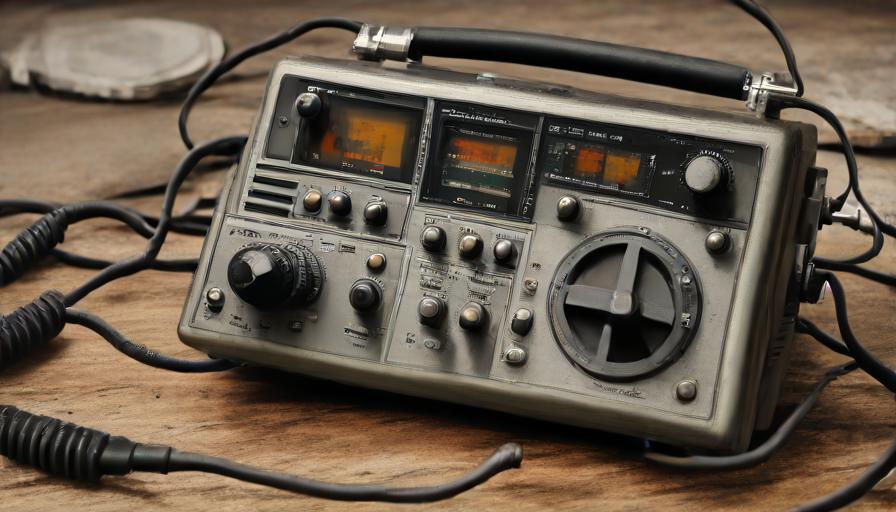
- CB stands for Citizens Band, a license-free personal radio service operating on 40 channels across the 27 MHz frequency spectrum (26.965 to 27.405 MHz).
- Standard legal CB radios are limited by the FCC to 4 watts of power output for AM/FM modes and 12 watts Peak Envelope Power (PEP) for Single Sideband (SSB).
- Channel 9 (27.065 MHz) is reserved for emergency communications, while Channel 19 (27.185 MHz) is used for highway traffic updates.
- In 2021, the FCC updated Part 95 rules to permit Frequency Modulation (FM) on CB radio channels alongside traditional Amplitude Modulation (AM).
- Outside radio communications, 'CB' commonly abbreviates Circuit Breaker in electrical engineering and Cannabinoid receptors (CB1/CB2) in neurobiology.
CB stands for Citizens Band, a short-distance, license-free personal radio communication service operating on 40 assigned channels within the 27 MHz frequency band (26.965 MHz to 27.405 MHz). Established by the Federal Communications Commission (FCC) in 1958, standard CB radios transmit voice messages using Amplitude Modulation (AM) capped at 4 watts of power output. Modern CB systems provide decentralized, line-of-sight communication over typical ranges of 2 to 15 miles without requiring cellular network infrastructure or internet access.
What Is CB Radio and How Does It Work?
Citizens Band (CB) radio operates as a land mobile radio system designed for short-range voice transmission. Unlike amateur (ham) radio, which requires passing a technical examination and obtaining an operator license, CB radio is available for immediate public use in the United States without a license fee. Users communicate by selecting a shared frequency channel from 1 to 40 and transmitting via push-to-talk (PTT) microphones.
Signals propagate primarily through ground waves, making effective communication dependent on terrain, antenna length, atmospheric conditions, and transmitter power. While standard AM transmission offers reliable local coverage, Single Sideband (SSB) modes—available on higher-end equipment—utilize Upper Sideband (USB) or Lower Sideband (LSB) to triple effective reach up to 30 miles or more under favorable conditions.
What Are the Key Technical Specifications of CB Radios?
Understanding the standard technical parameters of CB equipment ensures compliance with federal regulations and optimal equipment performance. The FCC under 47 CFR Part 95 rules governs all legal CB radio transmissions in the United States.
| Specification | Standard AM CB | Single Sideband (SSB) CB |
|---|---|---|
| Frequency Range | 26.965 MHz – 27.405 MHz | 26.965 MHz – 27.405 MHz |
| Number of Channels | 40 Channels | 40 Channels (with USB/LSB sub-channels) |
| Maximum Output Power | 4 Watts (AM or FM) | 12 Watts Peak Envelope Power (PEP) |
| Licensing Requirement | None (US FCC Part 95) | None (US FCC Part 95) |
| Typical Transmission Range | 2 to 10 miles | 10 to 30+ miles |
| Modulation Modes | AM, FM (Approved 2021) | AM, FM, USB, LSB |
What Are the Most Important CB Radio Channels?
Although any of the 40 channels can be used for general communication, specific frequencies have designated operational norms established by historical convention and federal regulation:
- Channel 9 (27.065 MHz): Officially reserved by the FCC for emergency communications and immediate traveler assistance. It is actively monitored by highway patrols and volunteer safety organizations like REACT.
- Channel 19 (27.185 MHz): The designated channel for highway truckers, motorists, and real-time traffic condition updates across North America.
- Channel 6 (27.025 MHz): Informally known as “The Superbowl,” frequented by high-power long-distance transmission enthusiasts.
- Channel 11 (27.085 MHz): Historically designated as the official calling channel to establish contact before switching to an open channel.
How Has CB Radio Technology Evolved Since 1945?
Invented in 1945 by Al Gross, the creator of the walkie-talkie, Citizens Band radio originally operated on the 460–470 MHz UHF band. In 1958, the FCC created the Class D CB service on the 27 MHz HF band with 23 channels to improve rural signal propagation for farmers, small businesses, and delivery drivers.
The service experienced massive commercial growth during the 1973 oil crisis, when truck drivers used CB radio to locate fuel stations with available gasoline and bypass speed traps created by the National Maximum Speed Limit of 55 mph. To relieve severe frequency congestion, the FCC expanded the service from 23 to 40 channels on January 1, 1977. In 1983, the FCC officially eliminated individual license requirements and fees. A major recent regulatory shift occurred in 2021, when the FCC authorized Frequency Modulation (FM) on CB channels, delivering clearer audio quality with reduced background static compared to traditional AM.
How to Get Started Using a CB Radio
Setting up a functional CB radio system requires three basic physical components: a transceiver unit, a coaxial cable (typically 50-ohm RG-58 or RG-8X), and an appropriately tuned antenna. Because 27 MHz signals rely heavily on physical antenna length, standard quarter-wave whips measure approximately 102 inches, though fiberglass load-coil antennas ranging from 2 to 5 feet are commonly used on personal vehicles.
Proper antenna tuning using a Standing Wave Ratio (SWR) meter is critical before broadcasting. Operating a CB transmitter with an SWR reading above 2.0:1 can damage the final RF power transistors inside the unit due to reflected energy. Adjusting antenna height or tip length to achieve an SWR reading below 1.5:1 ensures maximum signal efficiency and equipment protection.
What Are the Other Common Meanings of the Abbreviation “CB”?
While “CB” most commonly refers to Citizens Band radio in consumer communications, the acronym represents several critical concepts across technical and scientific fields:
- Circuit Breaker (Electrical Engineering): An automatically operated electrical switch designed to protect an electrical circuit from damage caused by excess current, overload, or short circuit.
- Cannabinoid Receptors (Neurobiology): Key G protein-coupled receptors in the human endocannabinoid system, designated CB1 (cloned in 1990, primarily in the central nervous system) and CB2 (cloned in 1993, primarily in immune tissues).
- Central Bank (Economics): A national public institution that manages a state’s currency, money supply, and interest rates, such as the Central Bank of Ireland or European Central Bank.
- Center Back (Sports): A key defensive position in association football (soccer) responsible for preventing opposing forwards from scoring.
Why Does CB Radio Remain Relevant Today?
Despite the ubiquitous availability of cellular networks and satellite internet, CB radio remains a critical resilient communication system. Because CB radios operate on direct radio-frequency spectrum without relying on ground infrastructure, cell towers, or centralized servers, they function reliably during power grid failures, natural disasters, and remote off-grid operations. Emergency responders, over-the-road truck drivers, off-road vehicle operators, and disaster relief groups rely on CB infrastructure as a zero-cost, immediate, decentralized communication tool.
Frequently Asked Questions
Do you need a license to operate a CB radio in the United States?
No, individual license requirements for Citizens Band radio were officially eliminated by the FCC in 1983. Anyone can operate an FCC-certified 40-channel CB radio in the US for personal or business communications under 47 CFR Part 95 regulations.
What is the maximum distance a CB radio can transmit?
Standard 4-watt AM CB radios typically transmit between 2 and 10 miles depending on terrain, antenna height, and obstructions. Using Single Sideband (SSB) mode at 12 watts PEP with an optimal antenna can extend line-of-sight range up to 30 miles.
Why did the FCC approve FM for CB radio in 2021?
The FCC approved Frequency Modulation (FM) on CB frequencies in 2021 to provide users with clearer, higher-fidelity audio quality. FM reduces static noise and background interference compared to traditional Amplitude Modulation (AM), particularly over short distances.
What is the difference between Channel 9 and Channel 19 on CB radio?
Channel 9 (27.065 MHz) is legally reserved for emergency communications and traveler assistance. Channel 19 (27.185 MHz) is the informal standard channel used by truck drivers and motorists for real-time traffic updates and road conditions.