
Embracing the Dichotomy: Understanding 12 Years of Vikas Bhi Virasat Bhi
The concept of balancing rapid modernization with the profound wisdom of tradition has long been a challenge for developing nations. However, the milestone marked by 12 Years of Vikas Bhi Virasat Bhi stands as a monumental testament to successfully navigating this dichotomy. It is more than just an anniversary; it represents a philosophy—a commitment that true progress (Vikas) cannot happen at the expense of our cultural inheritance and rich history (Virasat).
This journey over twelve years has established a unique blueprint: one where architectural innovation dialogues respectfully with ancient craftsmanship, where technological leaps are guided by ethical stewardship, and where community growth is inextricably linked to preserving local identity. It suggests a paradigm shift in how we approach development—moving away from extractive models toward regenerative ones.
The Guiding Philosophy: More Than Just Words
At its core, the ethos of ‘Vikas Bhi Virasat Bhi’ dictates that development must be contextual. It acknowledges that every modern structure, every digital advancement, and every economic policy must be filtered through the lens of what the land, the people, and the past have taught us. This foundational belief prevents progress from becoming merely superficial.
Balancing the Modern Imperative with Traditional Wisdom
For many years, the debate pitted ‘old’ against ‘new.’ Vikas Bhi Virasat Bhi masterfully rejects this false binary. Instead, it champions synthesis. Consider the integration of solar power technologies onto heritage buildings, or utilizing traditional local materials like terracotta and lime plaster in contemporary designs. This approach ensures that infrastructure improvements enhance, rather than erase, the aesthetic and historical integrity of a location. It demands deep collaboration between modern engineers and traditional artisans.
Pioneering Sustainable and Inclusive Growth Models
Sustainability in this context means looking beyond just carbon footprints. It involves socio-cultural sustainability. The focus has been placed on creating economic opportunities that utilize indigenous skills. Instead of importing external models wholesale, the effort has been to uplift local crafts, revive traditional agricultural methods, and empower artisanal clusters, thereby creating resilient local economies capable of sustaining themselves over generations.
Tangible Pillars of Achievement Over Twelve Years
The passage of twelve years has allowed for the crystallization of visible, measurable achievements across several critical sectors. These successes demonstrate that integrating heritage principles yields superior, resilient outcomes.
Revitalization of Cultural Ecosystems
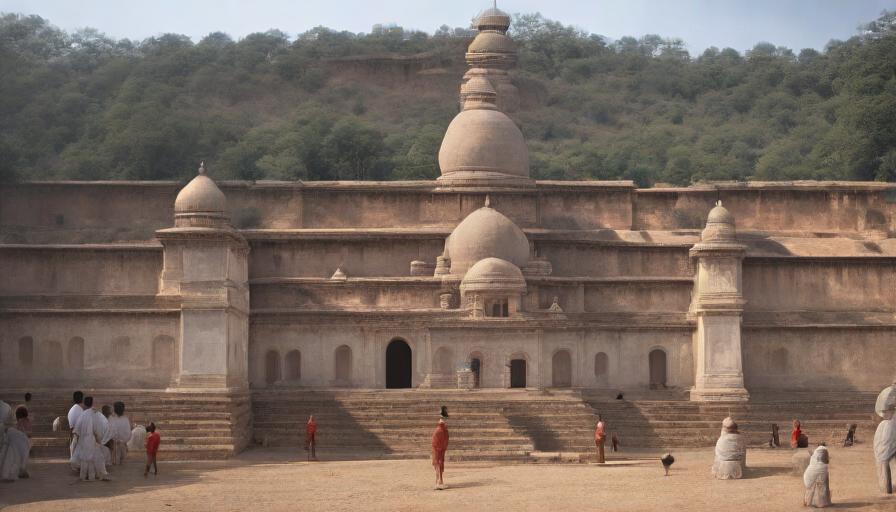
One of the most visible successes lies in urban revitalization. Instead of demolishing centuries-old neighborhoods to build sprawling modern complexes, the model has championed adaptive reuse. Entire market squares, residential lanes, and community gathering spots have been meticulously restored. This isn’t mere restoration; it’s reactivation. By ensuring that these spaces remain functional commercial and social hubs, the economic pulse of the area is maintained while its architectural soul is protected.
Community Empowerment Through Skill Preservation
Crucially, this movement has placed human capital at the epicenter. Many local artisans—masons who understood intricate stone carving techniques, weavers who mastered ancient dyeing processes—faced obsolescence. The ‘Vikas Bhi Virasat Bhi’ framework established incubation centers and apprenticeship programs, formally passing down these invaluable skills to younger generations. This ensures that heritage is not just an exhibit, but a living, marketable skill set.
The Road Ahead: Sustaining the Momentum
As the momentum continues, the challenge shifts from merely *achieving* the balance to *sustaining* it sustainably. The future requires scaling these localized successes into broader policy frameworks. It means ensuring that every new development proposal undergoes a rigorous ‘Heritage Impact Assessment’ before ground is even broken.
The ongoing narrative suggests that the next phase involves deeper digital integration. How can AI support the cataloging of oral histories? How can digital platforms support the global market reach for local crafts, thereby increasing economic viability? The guiding principle remains firm: progress must be rooted, respectful, and deeply connected to the custodianship of our shared past.
In conclusion, the journey summarized by 12 Years of Vikas Bhi Virasat Bhi is a powerful narrative of intent made manifest. It proves that true advancement isn’t about choosing between speed and soul; it is about designing a symbiotic relationship where the roots of history nourish the growth of tomorrow.
Translating Philosophy into Policy: The Regulatory Framework
The most complex challenge in sustaining this model lies not in the vision itself, but in its institutionalization. For ‘Vikas Bhi Virasat Bhi’ to move from a celebrated initiative to a permanent national paradigm, it must be cemented within robust policy and regulatory frameworks. This requires a radical rethinking of how development impact is assessed—shifting the focus from purely economic viability to comprehensive socio-cultural sustainability.
This involves integrating a mandatory, multidisciplinary ‘Heritage Impact Assessment’ (HIA) into the primary planning stage, rather than treating it as a tacked-on consultation. Such an HIA must involve not only structural engineers and archaeologists but also community ethnographers, local craftspeople, and anthropologists. These experts provide the qualitative data necessary to predict how a proposed development might alter intangible cultural assets, community cohesion, or traditional livelihood patterns.
The Necessity of Participatory Governance
Furthermore, the model necessitates a shift toward participatory governance. Development decisions cannot remain confined to governmental bodies or private developers. True ownership must be distributed. This is achieved by empowering local Resident Welfare Associations (RWAs) and heritage conservation trusts with meaningful advisory and veto power over localized changes. This bottom-up feedback loop ensures that the built environment remains responsive to the lived experience of its inhabitants, grounding modernity in daily, historical continuity.
The Economic Multiplier Effect: Beyond Brick and Mortar
To ensure economic longevity, the narrative must transition from ‘heritage preservation as a cost center’ to ‘heritage preservation as a significant economic driver.’ This involves cultivating the ‘Cultural Tourism Corridor’ concept. Instead of viewing historical sites merely as photo opportunities, they must be designed as integrated experiential destinations that support a full value chain.
This means promoting ‘blended finance’ models, where impact investors, government subsidies, and private capital pool resources specifically for heritage restoration. Furthermore, specialized training in ‘conservation economics’ is emerging—a field that quantifies the monetary value of intangible cultural assets, such as the value of a traditional weaving pattern, the knowledge embedded in a specific vernacular construction joint, or the economic pull of a restored local festival. By assigning measurable economic worth to ‘Virasat,’ the incentive structure for preservation becomes intrinsically robust.
Academia and Research: The Knowledge Engine
Sustaining such a complex philosophy requires a continuous feed of cutting-edge knowledge. Academia plays the crucial role of the knowledge engine. Research needs to evolve beyond mere documentation (archiving photos and texts) toward predictive modeling and applied science. Disciplines like Digital Humanities are vital here, using techniques like Geographic Information Systems (GIS) layered over historical cadastral maps to overlay modern zoning proposals, instantly visualizing potential conflicts between development plans and historical footpaths or resource boundaries.
Moreover, research must focus on ‘bio-mimicry’ derived from local architecture—studying how traditional ventilation systems, material sourcing (like naturally cool plasters), and energy capture were achieved without modern pollutants or massive external power sources. These academic findings then become the scientific bedrock for modern architects and engineers.
Conclusion: A Blueprint for Resilient Futures
In conclusion, the trajectory marked by 12 Years of Vikas Bhi Virasat Bhi is more than a successful chapter; it is a comprehensive, actionable blueprint for the 21st-century global city. It moves development from a model of resource extraction—where the past is sacrificed for the immediate needs of the future—to one of profound symbiosis. By embedding rigorous policy, fostering participatory governance, leveraging advanced research, and recognizing the intrinsic economic value of cultural capital, the commitment proves that ‘Vikas’ and ‘Virasat’ are not opposing forces, but rather two indispensable halves of a singular, resilient human trajectory. It is the definitive argument for rooted, mindful progress.