
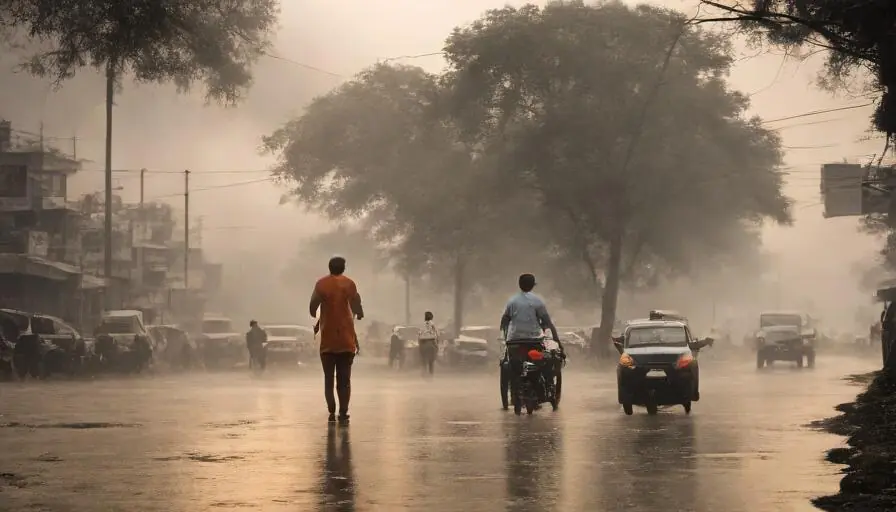
- Kanpur has a humid subtropical (Cwa) climate with hot summers, a dry winter, and monsoon rains concentrated June‑September.
- Average annual rainfall is about 950 mm, 80% of which falls during the monsoon months.
- Record extremes: highest temperature 46.7 °C (May 2016) and lowest 2.1 °C (January 2010).
- Short‑term forecasts are ~85% accurate; reliable sources include IMD and the Mausam app.
Kanpur experiences a humid subtropical climate with hot summers, cool winters, and a monsoon season that brings most of its rainfall. Average summer highs reach 42 °C (108 °F), while winter lows can dip to 7 °C (45 °F). The city receives about 950 mm (37 in) of rain each year, mainly between June and September.
What type of climate does Kanpur have?
According to the Köppen climate classification, Kanpur falls under the Cwa category – a humid subtropical climate with a dry winter. This means the city experiences a distinct summer‑monsoon pattern, a short, relatively dry winter, and moderate humidity year‑round.
How do temperatures vary throughout the year?
Temperatures in Kanpur show a wide range. The hottest month is May, where daily maximums often exceed 42 °C (108 °F). In contrast, January is the coldest month, with average lows around 7 °C (45 °F) and occasional fog that can reduce visibility.
Monthly temperature overview
| Month | Avg High (°C) | Avg Low (°C) |
|---|---|---|
| January | 22 | 7 |
| February | 27 | 10 |
| March | 33 | 16 |
| April | 38 | 22 |
| May | 42 | 27 |
| June | 38 | 28 |
| July | 35 | 28 |
| August | 34 | 27 |
| September | 33 | 26 |
| October | 31 | 22 |
| November | 27 | 15 |
| December | 23 | 9 |
When does the monsoon season occur and how much rain does Kanpur receive?
The southwest monsoon arrives in early June and peaks in July. During the monsoon months (June‑September), Kanpur accumulates roughly 750 mm (29 in) of its annual rainfall, accounting for 80% of the total. Outside this period, precipitation is sparse, with November to February averaging less than 30 mm per month.
Average monthly rainfall (mm)
- June – 210 mm
- July – 250 mm
- August – 180 mm
- September – 110 mm
- October – 45 mm
- November – 15 mm
- December – 5 mm
- January – 3 mm
- February – 4 mm
- March – 7 mm
- April – 12 mm
- May – 20 mm
What humidity levels can residents expect?
Relative humidity in Kanpur ranges from 30% in the dry winter mornings to 80% during monsoon evenings. The highest discomfort index typically occurs in May, when temperature and humidity combine to create a heat‑stress environment.
How does weather affect daily life and travel in Kanpur?
During summer, heatwaves often trigger temporary school closures and advise against outdoor exercise after 3 PM. In the monsoon, water‑logging is common on low‑lying roads, leading to traffic delays. Winter fog can reduce visibility to under 200 m, prompting the Uttar Pradesh Transport Department to issue low‑visibility advisories.
Practical tips for each season
- Summer (April‑June): Carry a water bottle, wear light cotton, and avoid midday outdoor activities.
- Monsoon (June‑September): Use waterproof footwear, keep electronic devices in dry bags, and check local flood alerts before commuting.
- Winter (December‑February): Dress in layers, be prepared for early‑morning fog, and keep a flashlight handy for power outages.
What are the historical extreme weather records for Kanpur?
The highest temperature ever recorded in Kanpur was 46.7 °C (116 °F) on 19 May 2016, during a nationwide heatwave. The lowest temperature on record is 2.1 °C (36 °F) recorded on 15 January 2010. The city’s most intense single‑day rainfall was 190 mm on 2 July 1999, causing significant flooding in low‑lying neighborhoods.
How reliable are weather forecasts for Kanpur?
Modern forecasting in Kanpur relies on data from the India Meteorological Department (IMD) and satellite inputs from the Indian Space Research Organisation (ISRO). Short‑term (0‑48 hour) predictions have an accuracy of around 85%, while 7‑day outlooks are reliable to within ±4 °C for temperature and ±15 mm for precipitation.
Sources for up‑to‑date weather information
- IMD official website (imd.gov.in) – provides daily bulletins and monsoon updates.
- Weather apps such as AccuWeather, Weather.com, and the Indian government’s “Mausam” app.
- Local news channels (e.g., News18 Uttar Pradesh) that broadcast hourly weather warnings.
Is climate change impacting Kanpur’s weather patterns?
Recent studies by the Indian Institute of Tropical Meteorology indicate a gradual rise in average annual temperature of 0.2 °C per decade for the Kanpur region. Rainfall intensity during monsoon events has increased by roughly 12% over the past 30 years, leading to more frequent flash floods. Adaptation measures include improved drainage infrastructure and public awareness campaigns about heat‑stroke prevention.
Air quality and its seasonal variation
Kanpur’s air quality is closely tied to its climatic cycles. During the winter months, temperature inversions trap pollutants near the surface, causing the AQI to spike to “moderate” or “unhealthy for sensitive groups” levels. The primary contributors are vehicular emissions, industrial smoke from the nearby Ganga industrial belt, and crop‑burning residues from neighboring states. In contrast, the monsoon brings heavy rains that help wash particulate matter (PM2.5 and PM10) out of the atmosphere, often lowering the AQI to “good” levels by August.
Typical seasonal AQI ranges for Kanpur are:
- Winter (December‑February): 120–180 µg/m³ (PM2.5) – moderate to unhealthy for sensitive groups.
- Summer (March‑May): 80–130 µg/m³ – moderate, with occasional spikes during dust storms.
- Monsoon (June‑September): 40–70 µg/m³ – good to moderate, thanks to rain‑induced cleansing.
- Post‑monsoon (October‑November): 70–110 µg/m³ – moderate, as humidity rises but rainfall declines.
Residents can monitor real‑time air quality on the Central Pollution Control Board (CPCB) portal or use mobile apps that sync with government sensors.
Best time to visit Kanpur for tourists
Considering temperature, rainfall, and air quality, the most comfortable window for travelers is from late October to early March. During this period:
- Daytime highs stay between 20 °C and 28 °C, ideal for sightseeing.
- Rainfall is minimal, reducing the risk of travel disruptions.
- Even though winter fog can be dense, early mornings are generally clear after sunrise.
For those interested in experiencing the city’s cultural festivals—such as Kali Puja in October or the Kanpur Mahotsav in February—plan visits around these dates to enjoy vibrant celebrations without the extreme heat of summer.
Impact of climate on agriculture around Kanpur
The fertile plains surrounding Kanpur rely heavily on the monsoon’s timing and intensity. The primary crops—wheat, rice, and sugarcane—are cultivated as follows:
- Wheat is sown in late October and harvested in March, benefiting from the cool, dry winter.
- Rice (both aman and boro varieties) depends on the June‑September monsoon; delayed onset or deficient rainfall can cut yields by up to 25%.
- Sugarcane requires a steady water supply throughout its 12‑month growth cycle, making it vulnerable to erratic monsoon bursts.
Recent climate analyses suggest a shift toward more intense, short‑duration rain events, prompting farmers to adopt micro‑irrigation techniques and high‑yield, drought‑tolerant crop varieties.
Future climate projections for Kanpur (2030‑2050)
Downscaled climate models from the Intergovernmental Panel on Climate Change (IPCC) indicate the following trends for the Kanpur region by mid‑century:
| Parameter | 2030 Projection | 2050 Projection |
|---|---|---|
| Average annual temperature | +0.4 °C | +0.8 °C |
| Maximum summer temperature (May) | 44 °C | 46 °C |
| Winter minimum temperature (Jan) | 9 °C | 11 °C |
| Annual rainfall | ≈1,000 mm | ≈1,050 mm |
| Number of heavy‑rain days (>50 mm) | 12 | 18 |
These projections suggest a modest warming trend, a slight increase in total precipitation, but a notable rise in the frequency of extreme rain events. Urban planners are therefore prioritizing green infrastructure—such as rain‑water harvesting, permeable pavements, and expanded urban wetlands—to mitigate flood risks.
Frequently asked questions (FAQ)
- Q: When is the coolest month in Kanpur?
- A: January is the coldest month, with average lows around 7 °C (45 °F) and occasional fog that can reduce visibility.
- Q: Does Kanpur ever experience snowfall?
- A: No. Snowfall is extremely rare at Kanpur’s latitude (≈26°N) and elevation (≈126 m). The lowest recorded temperature is just above freezing (2.1 °C).
- Q: How can visitors stay safe during heatwaves?
- A: Stay hydrated, avoid strenuous outdoor activities between 11 AM and 4 PM, wear a wide‑brimmed hat, and seek air‑conditioned environments during peak heat.
- Q: What is the best way to travel during the monsoon?
- A: Use public transport when possible, check real‑time traffic updates, and carry a compact umbrella or raincoat. Avoid low‑lying routes that are prone to water‑logging.
- Q: Are there any climate‑related festivals in Kanpur?
- A: Yes. The “Kanpur Summer Festival” in May celebrates the city’s cultural heritage with evening performances that help residents beat the heat. The monsoon period features the “Rain‑Blessing Fair” in August, showcasing local crafts and culinary specialties.
Frequently Asked Questions
When is the best time to visit Kanpur for pleasant weather?
The most comfortable period is from late October to early March, when temperatures range between 15 °C and 27 °C and humidity is low, making outdoor sightseeing pleasant.
How often does Kanpur experience severe flooding?
Severe flooding typically occurs during heavy monsoon bursts, especially in July and August. Historical data shows major floods roughly once every 5‑7 years, with the 1999 event recording 190 mm of rain in a single day.
What health precautions are recommended during Kanpur’s summer heatwaves?
Stay hydrated, avoid outdoor activity after 2 PM, wear loose cotton clothing, and monitor local heat‑stress alerts. Individuals with heart or respiratory conditions should seek cooler indoor environments.
Can I rely on smartphone weather apps for real‑time updates in Kanpur?
Yes. Most major apps pull data from the India Meteorological Department and provide hourly updates, alerts for storms, and temperature forecasts with an accuracy of about ±4 °C for the next 48 hours.
Is air quality affected by Kanpur’s weather patterns?
During winter, temperature inversions can trap pollutants, raising PM2.5 levels. Conversely, the monsoon’s heavy rains help clear the air, resulting in lower particulate concentrations.