Paris Protest of October 17: Multiple Grievances, Sideline Violence, and Eroding Trust in Police
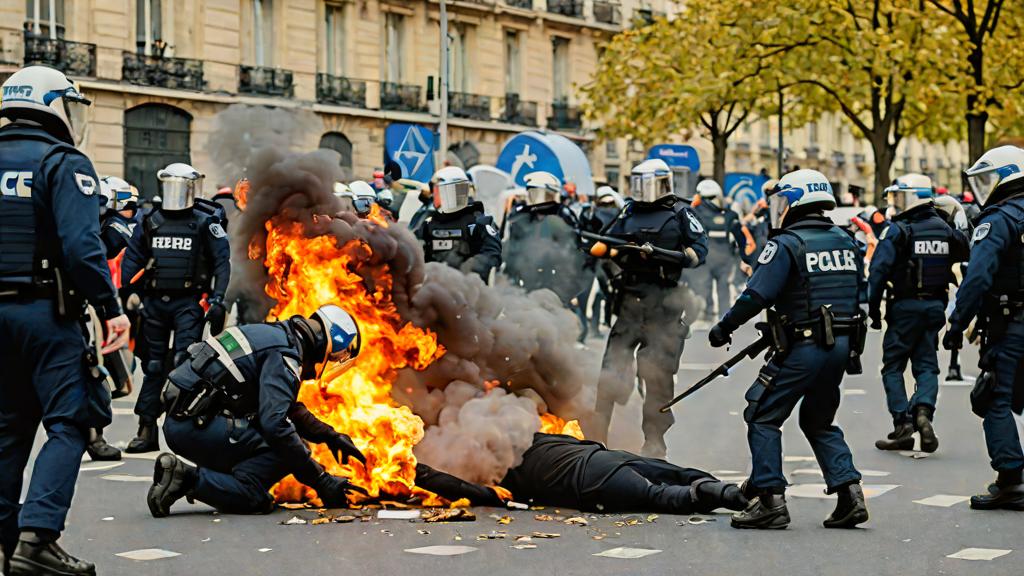
- On October 17, Paris demonstrators tried to voice a multitude of 'ras-le-bol' grievances, according to FranceInfo's reportage of the mobilization.
- BFM TV quoted Parisian high school student Henry Blunden, who called the violence 'intolerable' and said it should not hide the student movement's demands.
- Le Monde reported growing distrust of police among young protesters, quoting one demonstrator: 'Before, I had a great respect for the police, but now…'
- FranceInfo placed the violence on the margins of the march, and the headlines give no figures for attendance, arrests, injuries, or damage.
On October 17, demonstrators filled the streets of Paris for a protest in which activists tried to voice a broad range of frustrations — FranceInfo described a multitude of “ras-le-bol” grievances — despite violence that broke out on the edges of the march. High school student Henry Blunden, one of the Parisian protesters, spoke publicly to keep attention on his peers’ demands, calling the violence “intolerable.” Related coverage by Le Monde pointed to a wider shift: a growing distrust of police among young people amid the demonstrations.
Here is what the current reporting does — and does not — establish about that day in the French capital.
What happened during the Paris protest of October 17?
According to FranceInfo’s reportage on the mobilization of October 17 in Paris, demonstrators attempted to make their voices heard despite what unfolded away from the main procession. The report specifies that violence occurred en marge du cortège — on the margins of the march — a formulation that distinguishes the main body of the demonstration from unrest at its fringes. FranceInfo framed the protesters’ effort as an attempt to be heard despite that violence, not because of it.
The word ras-le-bol is a common French expression meaning roughly “fed up.” It is typically used when accumulated, everyday grievances — purchasing power, school life, working conditions — overflow into the street. Here, FranceInfo described a multitude of such grievances rather than one unified call, suggesting the demonstration worked as a convergence point for separate frustrations.
This pattern fits Paris’s long role as France’s demonstration capital, where wide avenues — from the Place de la Bastille to the Place de la République — have hosted generations of marches. Because large demonstrations follow authorized routes guarded by police, clashes frequently occur at a march’s margins even when its central body stays peaceful.
Who is Henry Blunden, and what did he say?
BFM TV quoted Henry Blunden, identified as a high school student in Paris, in a report tying him to the October 17 mobilization. Asked to weigh the violence surrounding the march, Blunden sought to protect the demonstration’s message from being reframed:
“Je ne veux pas que ces violences camouflent les revendications du mouvement lycéen” — “I do not want this violence to mask the demands of the student movement.” Blunden added that he judged the violence “intolerable.”
The headline gives no further biographical detail — no age, school, or background — and names no leaders of the movement itself. The term mouvement lycéen, however, is standard French vocabulary for activism by lycéens, the pupils of French high schools, a group that has repeatedly surfaced in French protest history from the student movements of the late 1960s onward.
Why did protesters distance themselves from the violence?
Blunden’s concern reflects a calculation familiar on the French demonstration scene: when violence erupts, television and news coverage tend to fix on clashes rather than on placards, and authorities gain room to recast orderly demands as public-order issues. FranceInfo’s account — crowds struggling to be heard despite the unrest at the march’s edges — describes exactly that dynamic from the ground. What the headlines do not provide are any figures for arrests, injuries, damaged property, or participant numbers, so the scale of the violence cannot be quantified from these sources.
What do the reports reveal about young people’s trust in police?
Le Monde reported on what it characterized as a growing defiance among young protesters toward law enforcement. Its headline quote, from a demonstrator inside the protests, runs: « Avant, j’avais un grand respect pour la police, mais là… » — “Before, I had a great respect for the police, but now…” The truncated French sentence, ending in the article’s characteristic ellipsis, was used to summarize a widening attitude gap the paper says it documented during the demonstrations.
The headlines do not specify which clashes the remark followed, or how many young protesters were interviewed. What they establish is qualitative: journalists on the scene describe a distrust that interviewees themselves linked to their experience of the police during these protests — a reversal, in the words of one demonstrator, of a formerly respectful view.
What do we know, and what remains unclear, about the Paris protest?
The table below separates what the three headlines establish from what they leave open:
| Established by the headlines | Not specified in these headlines |
|---|---|
| Date and city: October 17, Paris | Organizing groups or unions |
| A range of grievances (ras-le-bol) | The specific policy demands |
| Student participation, citing Henry Blunden | Attendance figures |
| Violence on the margins of the march | Arrests, injuries, property damage |
| Growing youth distrust of police | Police statements or response |
What is the broader context for a protest like this?
October is a classic month in the French protest calendar: the school year has restarted and student concerns resurface, which helps explain why a mouvement lycéen voice appears in the reporting. Paris sits at the epicenter of that calendar, and multi-cause marches are a recurring feature of it. Yet the headlines stop short of naming the precise policy issues at stake — pinning those down would require the full source articles rather than their headlines.
In sum: Paris on October 17 saw demonstrators carry a bundle of frustrations into the street, students like Henry Blunden insist the message not be lost to violence, and journalists note a visible chill in how some young protesters view the police. The reporting confirms those threads clearly while leaving the numbers and the demands themselves unstated.
Sources
- REPORTAGE. Dans la mobilisation le 17 octobre à Paris, les manifestants tentent de faire entendre une multitude de "ras-le-bol", malgré les violences en marge du cortège — franceinfo
- "Je ne veux pas que ces violences camouflent les revendications du mouvement lycéen", déclare Henry Blunden, lycéen à Paris, qui juge les violences "intolérables" — BFM
- « Avant, j’avais un grand respect pour la police, mais là… » : dans les manifestations, la défiance croissante des jeunes envers les forces de l’ordre — Le Monde.fr
Frequently Asked Questions
When and where did the protest described in these headlines take place?
The mobilization described by all three reports took place on October 17 in Paris. FranceInfo, BFM TV and Le Monde each covered the demonstration: FranceInfo on the crowds and violence at the march's edges, BFM TV on student reactions, and Le Monde on young protesters' views of the police. None of the headlines states the year.
What does 'ras-le-bol' mean?
Ras-le-bol is a common French expression meaning roughly 'fed up.' It describes a buildup of everyday grievances — over costs, school life, or working conditions — that spills into the street. FranceInfo used the term to stress that the October 17 protesters in Paris carried many separate frustrations rather than a single demand.
Who is Henry Blunden?
Henry Blunden is a Parisian high school student interviewed by BFM TV around the October 17 protest. He said he did not want the violence to mask the demands of the student movement and called the violence 'intolerable.' The headlines provide no further biographical details such as his age or school.
What is the 'mouvement lycéen'?
The French term mouvement lycéen refers to activism by lycéens — pupils attending French high schools (lycées). The label situates Henry Blunden's comments in a recognizable French protest tradition, since high school students have repeatedly organized around the school calendar and social grievances.
Was the whole Paris march violent?
Not according to these headlines. FranceInfo specifically reported violence 'en marge du cortège' — on the margins of the procession — and Henry Blunden's remarks, as quoted by BFM TV, separated the unrest from the demonstrators' underlying demands. The headlines give no figures on arrests, injuries, or property damage.
About The Author