
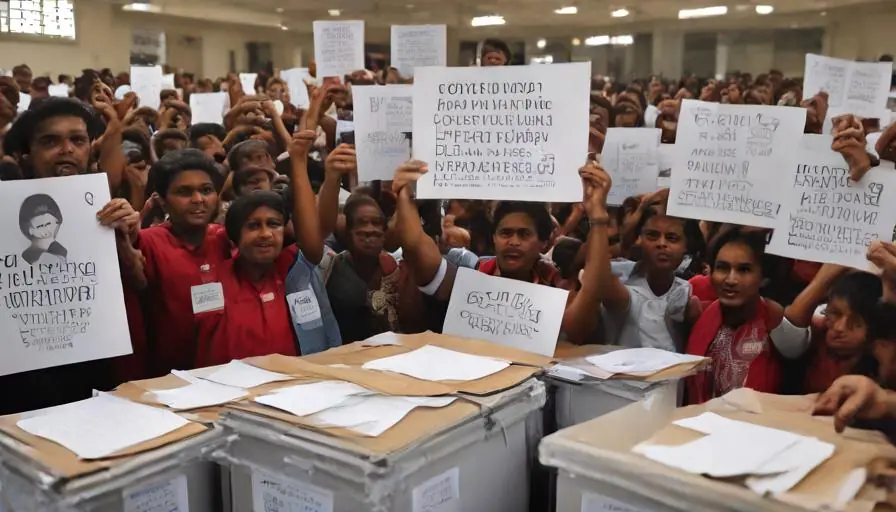
- #RecountDUSUResults represents candidate petitions and public demands for a formal re-tallying of votes in Delhi University Students' Union elections.
- Recount applications must be submitted in writing to the Chief Election Officer (CEO) before official election results are certified.
- The Delhi High Court holds constitutional jurisdiction under Article 226 to impound EVMs and order court-monitored recounts in DUSU disputes.
The trend #RecountDUSUResults refers to widespread online demands and official legal petitions seeking a formal recount of votes cast in the Delhi University Students’ Union (DUSU) elections. Triggered by paper-thin victory margins, alleged Electronic Voting Machine (EVM) glitches, or procedural counting errors, student organizations use this campaign to demand transparency from the University Election Office. Understanding how DUSU recounts are conducted, regulated, and legally challenged provides critical insight into electoral integrity within India’s largest central university student election.
What Is #RecountDUSUResults and Why Is It Trending?
The social media hashtag #RecountDUSUResults trends across digital platforms like X, Instagram, and WhatsApp following closely contested DUSU central panel elections. Delhi University conducts direct annual elections for four primary executive posts: President, Vice President, Secretary, and Joint Secretary. With an electorate exceeding 130,000 eligible voter students across 52 colleges and departments, vote margins in specific seats often come down to fewer than 500 votes.
When final tallies reveal narrow margins or when voting machines display technical errors during counting, political student wings—including the Akhil Bharatiya Vidyarthi Parishad (ABVP), National Students’ Union of India (NSUI), All India Students’ Association (AISA), and Students’ Federation of India (SFI)—mobilize online campaigns and formal protests demanding an immediate re-tally.
How Does the DUSU Vote Recount Process Work Legally?
The recount mechanism in DUSU elections is governed by the Delhi University Constitution and electoral regulations formulated in accordance with the Lyngdoh Committee recommendations mandated by the Supreme Court of India. A candidate or their official election agent must submit a written appeal for a recount directly to the Chief Election Officer (CEO) before the final results are officially signed and announced.
The decision to grant a complete or partial recount rests with the CEO and the official Returning Officers. Recounts are performed at the central counting facility—typically the DU Conference Centre in North Campus—under strict security and candidate oversight.
Summary of DUSU Recount Rules and Guidelines
| Recount Stage | Procedural Requirement | Responsible Authority |
|---|---|---|
| 1. Submission of Petition | Written request stating specific EVM IDs and booth irregularities filed immediately after counting. | Contesting Candidate / Agent |
| 2. Evaluation of Grounds | Assessment of victory margin, log sheets, paper seals, and documented EVM technical faults. | Chief Election Officer (CEO) |
| 3. Re-verification Procedure | Retrieval of control unit data, re-tallying of recorded votes, or manual audit of voter registers. | Returning Officers & Counting Staff |
| 4. Grievance Review | Secondary review of disputed decisions by an independent University committee. | DUSU Grievance Redressal Cell |
What Are the Primary Reasons for Demanding a DUSU Recount?
Student representatives and legal counsel invoke #RecountDUSUResults based on specific operational criteria established under university guidelines and election jurisprudence:
- Narrow Victory Margins: Recount requests are frequently accepted when the difference between the top two candidates is less than 1% of total votes cast or under 300 votes.
- EVM Display and Hardware Glitches: Instances where Control Units display error messages, fail to power on, or exhibit discrepancies between registered voter counts and button presses.
- Seal Integrity Compromises: Allegations that security seals on EVM carrying cases or control unit paper seals were damaged during transit from college polling stations to the North Campus counting center.
- Postal and Special Ballot Disputes: Disagreements over the qualification or counting of physical postal ballots issued to faculty, election staff, or disabled student voters.
What Is the Role of the Delhi High Court in DUSU Result Recounts?
When the Delhi University Chief Election Officer rejects an administrative application for a recount, aggrieved candidates frequently file writ petitions before the Delhi High Court under Article 226 of the Constitution of India. The High Court maintains judicial authority to intervene in student union elections to protect democratic fairness and procedural propriety.
In prominent legal precedents, the Delhi High Court has directed Delhi University to impound EVM control units, preserve video recordings of counting halls, and lock counting venues until independent verification is complete. If substantial evidence of voting machine error or counting miscalculation is established, the High Court can order a court-monitored recount or direct the University Grievance Cell to conduct a fresh audit of disputed booths.
How Does a Recount Impact Delhi University Governance?
A successful recount or judicial stay order directly impacts the governance of the Delhi University Students’ Union. DUSU executive members represent the interests of over 100,000 students, oversee student welfare funds, and hold advisory seats on key university academic and executive committees.
When election disputes trigger recounting delays or extended litigation in court, the swearing-in of elected office bearers is paused. While administrative delays can temporarily freeze student union budget allocations, transparent recount procedures ensure that elected leaders hold an indisputable, verified democratic mandate.
What Steps Must Candidates Take to File an Official Recount Request?
Candidates seeking an official vote recount in DUSU elections must strictly adhere to the following procedural timeline:
- Document Irregularities Immediately: Record exact booth numbers, EVM unit serial numbers, and specific error codes during the counting process.
- Submit Written Application: Hand-deliver a signed petition to the Chief Election Officer prior to the official certification of results.
- Obtain Stamped Acknowledgment: Secure an official timestamped receipt from the DUSU Election Office to establish proof of submission.
- Escalate to Grievance Redressal Cell: File an immediate appeal with the University’s independent Grievance Redressal Cell if the CEO rejects the request without written justification.
Frequently Asked Questions
Under what conditions can a candidate request a recount in DUSU elections?
Candidates can request a recount if victory margins are extremely narrow (typically under 1%), or if there are documented EVM display errors, damaged security seals, or discrepancies between registered voter turnouts and total votes counted.
Who has the authority to grant a DUSU vote recount?
The Chief Election Officer (CEO) of Delhi University holds primary administrative authority to accept or reject recount requests before results are certified. Candidates can appeal rejections to the University Grievance Cell or the Delhi High Court.
Can the Delhi High Court order a recount of DUSU election votes?
Yes, under Article 226 of the Indian Constitution, the Delhi High Court can order Delhi University to impound EVM control units, review counting logs, or conduct a supervised recount if candidates present credible evidence of electoral irregularities.