
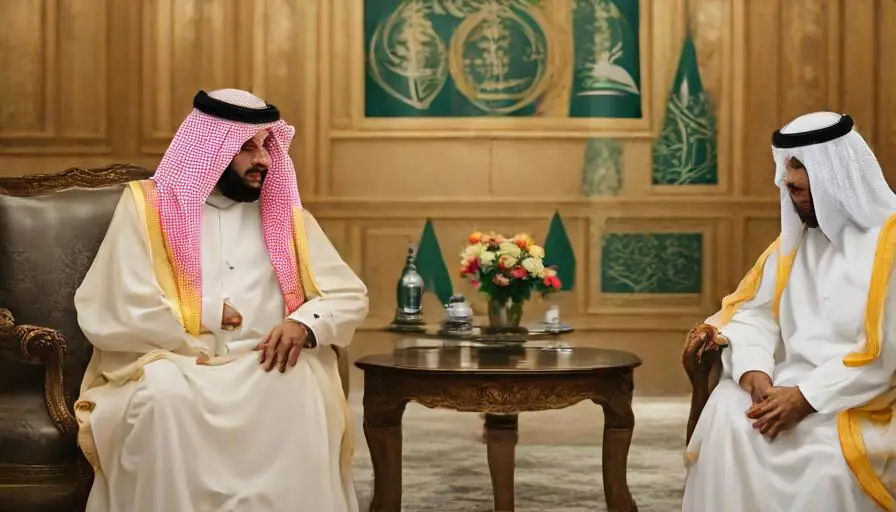
- Saudi Arabia's land area of 2.15 million square kilometers is over 120 times larger than Kuwait's 17,818 square kilometers.
- Saudi Arabia operates as an absolute monarchy, whereas Kuwait is a constitutional monarchy with an elected National Assembly that holds substantial legislative authority.
- In 2019, Saudi Arabia and Kuwait resolved a border dispute by agreeing to resume joint oil production in the 5,770-square-kilometer Neutral Zone.
- Kuwait's Kuwait Investment Authority (KIA), established in 1953, is the world's oldest sovereign wealth fund and holds roughly $980 billion in assets.
When comparing saudi arabia vs kuwait, Saudi Arabia stands as a regional powerhouse with a land mass over 120 times larger and an economy nearly seven times greater than Kuwait’s, whereas Kuwait boasts a higher GDP per capita and one of the world’s oldest sovereign wealth funds. Both Gulf Cooperation Council (GCC) nations are major petroleum exporters and share deep cultural ties, yet Saudi Arabia exercises broader geopolitical influence, while Kuwait often operates as a neutral diplomatic mediator in Middle Eastern affairs.
How Do Saudi Arabia and Kuwait Compare in Size, Population, and Economy?
To understand the scale difference in the saudi arabia vs kuwait comparison, reviewing core macroeconomic and demographic indicators provides essential context. Saudi Arabia occupies the vast majority of the Arabian Peninsula, whereas Kuwait is a compact state situated at the tip of the Persian Gulf.
| Indicator | Saudi Arabia | Kuwait |
|---|---|---|
| Land Area | 2,149,690 sq km | 17,818 sq km |
| Population (2024 est.) | ~36.5 million | ~4.3 million |
| Nominal GDP | ~$1.07 trillion | ~$160 billion |
| GDP Per Capita (Nominal) | ~$32,000 | ~$37,500 |
| Proven Oil Reserves | 267 billion barrels | 101.5 billion barrels |
| Sovereign Wealth Fund Assets | ~$925 billion (PIF) | ~$980 billion (KIA) |
What Are the Primary Economic Differences Between Saudi Arabia and Kuwait?
Although hydrocarbons generate the vast majority of government revenue for both nations, their economic trajectories and transformation strategies differ significantly in scope and execution.
Saudi Arabia is currently undergoing a massive economic restructuring driven by its Vision 2030 initiative. Spearheaded by Crown Prince Mohammed bin Salman, this plan aims to diversify the kingdom’s income away from crude oil by funding gigaprojects such as NEOM, developing international tourism, expanding local manufacturing, and attracting foreign direct investment. Saudi Arabia’s Public Investment Fund (PIF) serves as the primary engine for domestic transformation and global strategic investments.
Kuwait operates under its New Kuwait Vision 2035, which aims to transform the country into a regional financial, commercial, and cultural hub centered around mega-developments like the Silk City and Boubyan Island port. Kuwait’s sovereign wealth manager, the Kuwait Investment Authority (KIA), was established in 1953 and represents the oldest sovereign wealth fund in the world, holding roughly $980 billion in assets. However, structural economic reforms in Kuwait have frequently experienced delays due to political friction between the elected legislature and the appointed executive branch.
How Do Political Systems and Governance Compare?
While both Saudi Arabia and Kuwait are hereditary monarchies governed by long-standing ruling families—the House of Saud and the House of Al Sabah, respectively—their political institutions function under contrasting governance models.
Saudi Arabia operates as an absolute monarchy. Executive, legislative, and judicial authorities are centralized under King Salman bin Abdulaziz and the Crown Prince. This political structure allows Saudi Arabia to implement rapid top-down legal, economic, and social reforms without legislative gridlock.
Kuwait is a constitutional monarchy featuring the most active semi-democratic parliament in the Gulf region. The Kuwaiti National Assembly (Majlis al-Ummah) consists of 50 elected members who hold real legislative power, including the right to introduce laws, interrogate government ministers, and block royal directives. While this parliamentary model ensures strong civic representation, frequent standoffs between parliament and the government have led to political instability and repeated cabinet dissolutions.
What Is the Relationship and History Between Saudi Arabia and Kuwait?
Saudi Arabia and Kuwait share a deeply intertwined history and maintain strong bilateral relations anchored by shared security interests and GCC integration. The bilateral relationship was critically tested and forged during the 1990–1991 Gulf War. Following Iraq’s invasion of Kuwait in August 1990, Saudi Arabia hosted the exiled Kuwaiti government in Taif and served as the primary staging area for the US-led coalition that liberated Kuwait during Operation Desert Storm in February 1991.
A notable aspect of their bilateral cooperation is the management of the Neutral Zone (Divided Zone). Established by the 1922 Uqair Protocol to settle border claims, this 5,770-square-kilometer zone contains major shared oil resources. In December 2019, Saudi Arabia and Kuwait signed a historic memorandum of understanding resolving years of operational disputes. This agreement allowed for the resumption of joint crude oil production at the onshore Wafra and offshore Khafji fields, which combined can produce up to 500,000 barrels per day.
Despite close security ties, their foreign policy approaches differ:
- Saudi Arabia: Acts as a leading regional power, maintaining a defense budget exceeding $70 billion and pursuing assertive geopolitical policies across the Middle East.
- Kuwait: Focuses on non-alignment and diplomatic mediation, historically serving as a key negotiator during regional crises, including the 2017–2021 Gulf diplomatic rift.
How Do Social Life and Culture Differ Between Saudi Arabia and Kuwait?
Culturally, Saudi Arabia and Kuwait share common Arabian Peninsular roots, Bedouin customs, Arabic language dialects, and Islamic jurisprudence. Historically, however, their social environments followed contrasting paths.
During the 1960s and 1970s, Kuwait was widely regarded as the cultural capital of the Gulf, known for its liberal arts scene, vibrant theater, active press, and progressive social environment. In contrast, Saudi Arabia maintained strict religious norms and gender segregation enforced by public morality police.
In recent years, these roles have partially inverted. Under Vision 2030, Saudi Arabia has undertaken sweeping social liberalizations, including lifting bans on female drivers, ending public gender segregation, opening cinemas, and hosting international entertainment events. Kuwait maintains an open, highly educated society with a free press, but public policy reforms move more conservatively due to traditionalist influence in parliament.
Key Differences: Saudi Arabia vs Kuwait Summary
In summary, choosing between Saudi Arabia vs Kuwait in terms of regional impact highlights two distinct Gulf development models. Saudi Arabia leverages its vast geographical footprint, massive oil production capabilities, and centralized decision-making to rapidly modernize its economy and project military strength. Kuwait relies on its extraordinary per-capita wealth, mature sovereign fund investments, and parliamentary governance system to maintain economic stability and exercise soft-power diplomatic mediation across the Arab world.
Frequently Asked Questions
Which country is wealthier, Saudi Arabia or Kuwait?
While Saudi Arabia has a significantly larger overall economy with a nominal GDP exceeding $1 trillion compared to Kuwait's $160 billion, Kuwait boasts a higher GDP per capita (approximately $37,500 compared to Saudi Arabia's $32,000). Kuwait also holds one of the world's largest sovereign wealth funds relative to its population size.
What is the Neutral Zone between Saudi Arabia and Kuwait?
The Neutral Zone, or Divided Zone, is a 5,770-square-kilometer area along the Saudi-Kuwaiti border established by the 1922 Uqair Protocol. Neither nation claims exclusive sovereignty over the area. In December 2019, both countries signed a historic agreement to jointly operate and split crude oil production evenly from the region's Khafji and Wafra oil fields.
How do Saudi Arabia and Kuwait differ politically?
Saudi Arabia is an absolute monarchy where executive and legislative authorities are concentrated under the King and Crown Prince, allowing swift economic and social policies. Kuwait is a constitutional monarchy with an elected National Assembly (Majlis al-Ummah) that possesses genuine legislative power to pass laws, inspect government actions, and question cabinet ministers.