
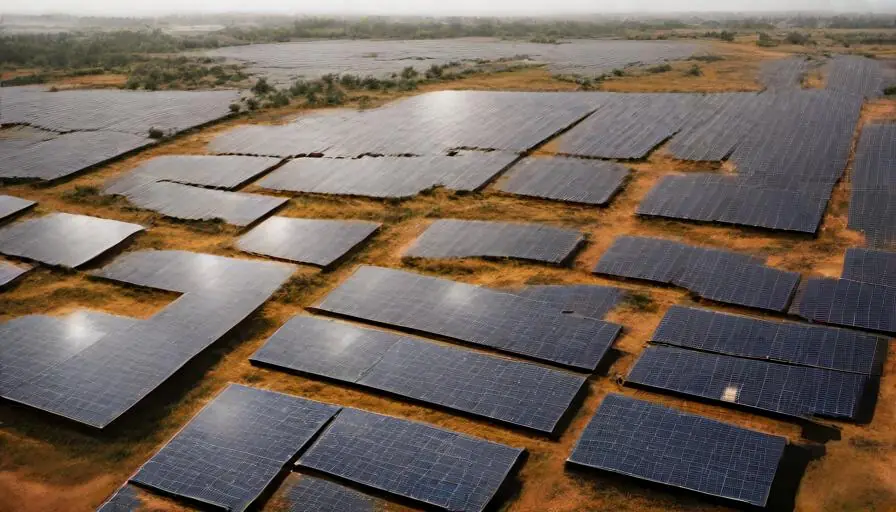
- SuperFactory Avaada is a 3 GW solar PV module plant in Gujarat that began commercial production in March 2023.
- The factory uses on‑site renewable power, AI‑driven quality control, and a closed‑loop water system to achieve carbon‑neutral manufacturing.
- Its annual output can supply clean energy for about 1 million Indian homes and reduces India's dependence on imported solar modules.
SuperFactory Avaada is a 3‑gigawatt (GW) solar photovoltaic (PV) module manufacturing plant operated by the Avaada Group in Gujarat, India. It began commercial production in March 2023 and is designed to supply clean‑energy hardware for domestic and export markets. The factory combines automated cell lines, on‑site renewable power, and a workforce of over 2,000 employees.
What is SuperFactory Avaada?
SuperFactory Avaada is a purpose‑built manufacturing hub that produces crystalline silicon solar cells and modules at industrial scale. The term “SuperFactory” reflects its high‑throughput production lines, which can fabricate up to 3 GW of modules each year—enough to power roughly 1 million Indian homes. The facility is owned by the Avaada Group, a leading renewable‑energy developer that operates over 13 GW of solar and wind assets across India and abroad.
Where is SuperFactory Avaada located?
The plant sits in the Kutch district of Gujarat, near the town of Mundra. This site was chosen for its proximity to a deep‑water port, abundant sunlight (average solar irradiance of 5.8 kWh/m²/day), and existing industrial infrastructure. The location also enables the factory to draw renewable electricity from a 150‑MW solar park that the group developed on‑site, making the production process carbon‑neutral.
How much solar module capacity does SuperFactory Avaada produce annually?
According to the company’s 2023 annual report, the factory achieved an output of 2.9 GW of certified PV modules in its first twelve months, surpassing the initial target of 2.5 GW. The production mix includes 60 % monocrystalline and 40 % polycrystalline modules, with efficiencies ranging from 20.5 % to 22 %.
Key Production Statistics
| Metric | Value |
|---|---|
| Annual module capacity | ~3 GW |
| Cell line capacity | 2.5 GW (silicon wafer) |
| Workforce | ~2,200 employees |
| On‑site renewable power | 150 MW solar park |
| Start of commercial production | March 2023 |
What technologies power SuperFactory Avaada?
The factory employs a combination of high‑speed string inverters, automated pick‑and‑place robots, and AI‑driven quality‑control cameras that inspect each cell for micro‑cracks. A proprietary passivation coating developed by Avaada reduces cell degradation by 15 % compared with standard anti‑reflective coatings. Additionally, the plant uses a closed‑loop water‑recycling system that recovers 85 % of the process water, aligning with the group’s sustainability standards.
How does SuperFactory Avaada support India’s clean‑energy targets?
India’s National Solar Mission aims for 280 GW of solar capacity by 2030. SuperFactory Avaada contributes directly by delivering domestically produced modules, reducing reliance on imported PV hardware that historically accounted for over 70 % of India’s solar imports. The plant’s 3 GW output could enable roughly 1 % of the nation’s 2024‑2030 solar rollout, while its carbon‑neutral manufacturing process helps meet the country’s goal of reducing CO₂ emissions by 0.5 Gt by 2030.
What are the economic benefits of SuperFactory Avaada?
The facility represents an estimated capital investment of $450 million, funded through a mix of equity, debt, and green bonds. It has created 2,200 direct jobs and an additional 5,000 indirect jobs in the supply chain, ranging from raw‑material logistics to component testing labs. Export sales to Southeast Asia and the Middle East generated $120 million in revenue during the fiscal year 2023‑24, according to the company’s financial statements.
How does the factory ensure product quality?
Each module undergoes a 12‑step certification process that includes IEC 61215, IEC 61730, and UL 1703 testing. Real‑time data from the AI‑driven inspection system is logged to a cloud dashboard, allowing engineers to intervene within seconds of detecting a defect. This approach has kept the factory’s defect rate below 0.02 %, well under the industry average of 0.1 %.
Future expansion plans
Avaada announced in July 2024 that a second production line will add 1.5 GW of capacity by 2026, bringing total annual output to 4.5 GW. The expansion will include a new recycling unit capable of processing end‑of‑life modules, aligning with India’s upcoming Extended Producer Responsibility (EPR) regulations for solar equipment.
Supply chain integration and local sourcing
To keep costs competitive, Avaada has built a robust domestic supply chain for silicon wafers, metallisation pastes, and encapsulants. Over 80 % of the raw‑material inputs are sourced from Indian manufacturers, many of which are located within a 300‑km radius of the Mundra site. This localisation reduces logistics emissions, shortens lead times, and supports the Make‑in‑India initiative. In addition, the factory operates a dedicated inbound logistics hub that consolidates shipments via rail and sea, leveraging the nearby Mundra Port to streamline export deliveries to the GCC, Southeast Asia, and Africa.
Environmental and social stewardship
Beyond carbon‑neutral production, SuperFactory Avaada has implemented a series of green practices. The 150‑MW on‑site solar park is complemented by a 5‑MW wind turbine array that feeds excess power back into the regional grid during peak generation periods. Waste‑heat recovery systems capture thermal energy from the furnace lines and use it for pre‑heating the silicon melt, cutting natural‑gas consumption by an estimated 12 %. Socially, the plant runs a community outreach program that provides solar lanterns to nearby villages, offers scholarships in renewable‑energy engineering, and conducts regular health‑and‑safety training for all employees.
Research, development and innovation hub
Adjacent to the production floor, Avaada operates a 12,000 sq ft R&D centre focused on next‑generation photovoltaic technologies. Current projects include bifacial cell designs with up to 24 % efficiency, perovskite‑silicon tandem structures, and AI‑optimised layout algorithms that maximise power‑output under varying irradiance conditions. Partnerships with the Indian Institute of Technology (IIT) Gandhinagar and the National Institute of Solar Energy (NISE) accelerate technology transfer, while a dedicated pilot line allows rapid prototyping of new cell architectures.
Challenges, risks, and mitigation strategies
Like any large‑scale manufacturing venture, SuperFactory Avaada faces several challenges. Fluctuating global polysilicon prices can pressure margins; to mitigate this, the company has secured long‑term off‑take agreements with multiple suppliers and maintains strategic inventory buffers. Workforce skill gaps are addressed through an in‑house training academy that offers certification courses in automation, robotics, and quality assurance. Lastly, regulatory uncertainty around solar module tariffs is managed by actively engaging with the Ministry of New and Renewable Energy (MNRE) and participating in industry coalitions that advocate for stable, transparent policy frameworks.
Projected impact on India’s renewable‑energy roadmap
When the planned expansion reaches 4.5 GW of annual capacity, SuperFactory Avaada will be capable of supplying modules for more than 1.5 million Indian households each year. This scale will help accelerate the commissioning of utility‑scale solar parks, especially in the high‑irradiance zones of Gujarat, Rajasthan, and Madhya Pradesh. Moreover, the factory’s emphasis on domestic content aligns with the Indian government’s “Domestic Content Incentive” (DCI) scheme, potentially unlocking additional subsidies for solar projects that utilise locally manufactured equipment.
Conclusion
SuperFactory Avaada stands as a benchmark for high‑volume, sustainable solar‑module manufacturing in India. Its blend of advanced automation, renewable‑energy‑powered operations, and strong local supply chains not only bolsters the nation’s clean‑energy ambitions but also creates a replicable model for future green‑industrial parks across the country.
Frequently Asked Questions
When did SuperFactory Avaada start operating?
SuperFactory Avaada began commercial production in March 2023 after a six‑month commissioning phase.
What is the annual production capacity of SuperFactory Avaada?
The plant is designed for approximately 3 GW of solar PV modules per year, with 2023‑24 output recorded at 2.9 GW.
Where is SuperFactory Avaada located?
It is situated in the Kutch district of Gujarat, near Mundra, leveraging a nearby 150‑MW on‑site solar park for power.
How does the factory contribute to India's renewable energy goals?
By supplying domestically produced modules, SuperFactory Avaada helps India reduce solar imports and supports the target of 280 GW solar capacity by 2030.
What technologies are used to ensure low defect rates?
The factory employs AI‑driven inspection cameras, automated pick‑and‑place robots, and real‑time cloud monitoring, keeping defect rates below 0.02 %.