
Anticipating the Tech Tsunami: What to Expect from Modi at VivaTech 2026
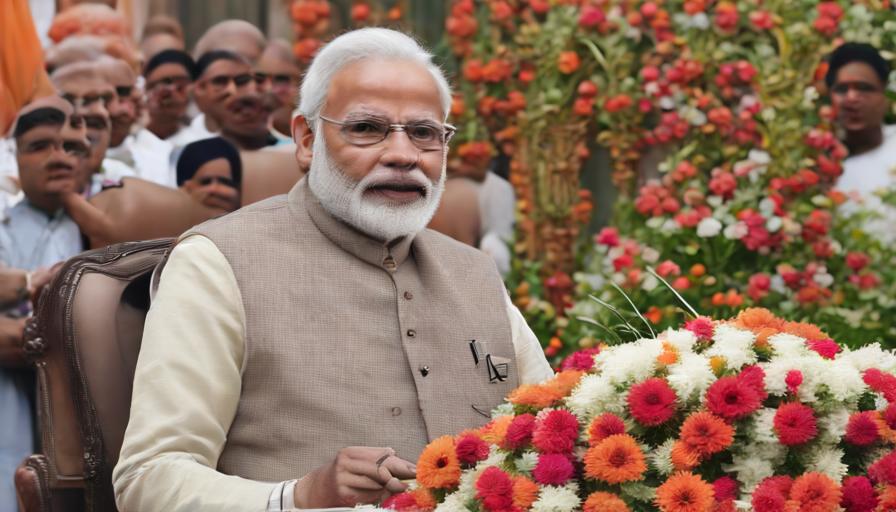
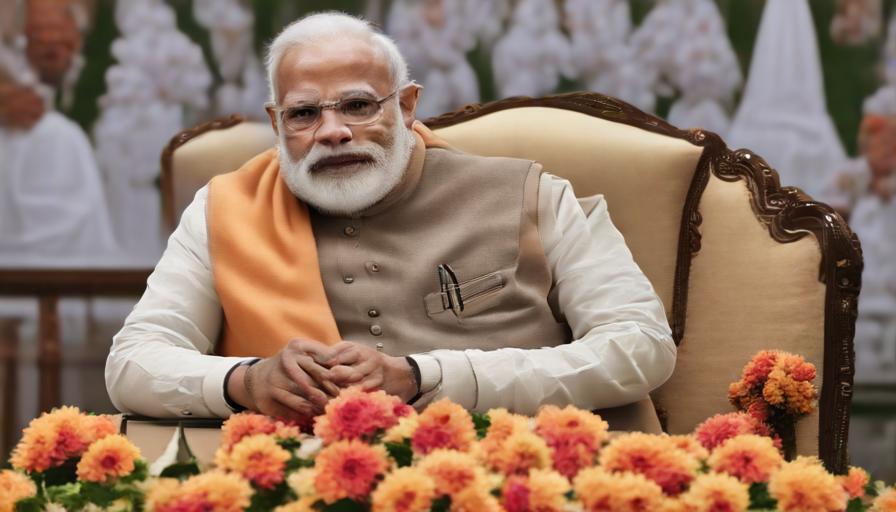
The convergence of politics, policy, and pioneering technology has never been more critical. As the global stage gears up for its next major tech summit, anticipation is building around the potential address, or participation, of Prime Minister Narendra Modi. Understanding the implications of Modi at VivaTech 2026 isn’t just about covering a celebrity appearance; it’s about charting the future trajectory of India’s role in the global digital economy. VivaTech, historically a nexus for groundbreaking startups and venture capital, is set to become a crucial barometer for geopolitical alignment in the tech sector. Given India’s meteoric rise as a global IT powerhouse, any involvement by PM Modi suggests a powerful, coordinated vision for the next decade of development.
The Significance of VivaTech as a Global Policy Platform
VivaTech stands apart from mere trade shows; it is a macro-level conversation ground. Here, global leaders, venture capitalists, and visionary technologists gather not just to showcase products, but to negotiate paradigms. For a developing, yet technologically advanced nation like India, participation at this level signals intent—an intent to move from being a massive consumer of technology to a primary global architect and exporter of innovative solutions. The discussions are rarely confined to circuit boards; they permeate governance, sustainability, and socioeconomic equity.
If the Indian government elevates its presence at VivaTech 2026, the focus will undoubtedly pivot toward ‘tech sovereignty’—ensuring that India dictates its digital future rather than merely adopting foreign blueprints. This represents a major policy evolution, signaling maturity in the nation’s digital governance structures.
Driving Pillars: India’s Techno-Economic Thesis
The narrative surrounding the Prime Minister’s potential engagement will weave through several critical pillars, each representing a multi-trillion-dollar opportunity for India and the world.
Artificial Intelligence and Ethical Governance
AI is the undeniable centerpiece of modern technological evolution. India’s massive demographic dividend, coupled with its deep talent pool in computer science, positions it perfectly to lead in ethical AI deployment. We can anticipate deep dives into responsible AI frameworks, addressing biases in algorithms, and establishing data governance standards that can be exported globally. The policy discussions will likely stress human-centric AI—systems that augment human capability rather than replacing it entirely.
Fintech and Inclusive Digital Economies
India has already set global benchmarks in digital payments and financial inclusion via initiatives like UPI. At VivaTech 2026, the emphasis will likely expand from mere payments infrastructure to comprehensive ’embedded finance’ solutions. The theme will shift to using AI and IoT to bring the last mile of financial services to underserved rural and semi-urban populations, demonstrating the potent combination of policy willpower and scalable technology.
Green Tech and Sustainability Integration
Addressing climate change is no longer a peripheral CSR initiative; it is a core economic mandate. India’s commitment to renewable energy is unparalleled. Therefore, we expect substantial discussions around green technology integration—smart grids powered by AI, sustainable supply chain tracking using blockchain, and building smart, carbon-neutral cities. This intersection proves that technological progress and environmental stewardship can, and must, coexist.
The Global Partnership Calculus: Beyond Bilateral Agreements
One of the most watched components of Modi at VivaTech 2026 will be the articulation of India’s foreign policy through a technological lens. The agenda will not be about receiving aid or technology; it will be about forging partnerships built on mutual capacity building and joint market creation.
Strengthening Global Value Chains Through Digital Backbone
The volatility exposed by recent global disruptions has forced nations to reassess supply chain resilience. India aims to be the reliable, digitized alternative hub. Policy speeches are expected to detail plans to build robust digital backbones—connecting ports, manufacturing units, and agricultural hinterlands—making the country a magnet for global manufacturing that demands ‘Industry 4.0’ standards from day one.
Startup Ecosystems and Talent Mobility
The final, yet crucial, segment will involve the nurturing of the startup ecosystem. This goes beyond funding rounds; it involves policy levers to ease regulation, streamline visa processes for global talent, and encourage multinational corporations to establish deep R&D centers within India. The message to the global tech community will be clear: India offers not just markets, but an entire operational ecosystem ready for scaling innovation.
Conclusion: A Blueprint for Emerging Economies
Ultimately, any high-profile engagement, such as Modi at VivaTech 2026, frames India not merely as a recipient of global tech best practices, but as a critical contributor to the next generation of global standards. It signals a pivot from incremental digital growth to structural transformation—using policy, capital, and humanity to solve the world’s grand challenges simultaneously. For investors, policymakers, and technologists alike, the event promises to be a comprehensive blueprint for how emerging economies can leapfrog developmental stages using digital public goods and strategic governmental focus.
Deep Dive: The Digital Public Infrastructure (DPI) Playbook
If the Prime Minister addresses the necessity of ‘tech sovereignty,’ the concept of Digital Public Infrastructure (DPI) will be the most powerful evidentiary pillar. DPI—exemplified by India Stack (Aadhaar, UPI, DigiLocker)—represents a unique model for delivering foundational digital services at scale, bypassing traditional physical bottlenecks. At VivaTech 2026, the presentation won’t be on the *existence* of these tools, but on their *replicability*. The strategic message will be: India has engineered a modular, open-source digital backbone that can be adopted by any nation, irrespective of its existing regulatory framework or budgetary constraints.
This shift in discourse—from ‘what India has built’ to ‘how other nations can build it’—elevates India from a success story to a global intellectual property resource. It positions Indian policy not as domestic governance, but as a framework for global digital development.
India Leading the Global South Tech Dialogue
A critical, yet under-emphasized, aspect of this tech summit participation is India’s role as a beacon for the Global South. Tech adoption in emerging economies often faces a dual hurdle: capital scarcity and governance gap. Unlike developed economies that can afford bespoke, proprietary solutions, nations across Africa, Southeast Asia, and Latin America require affordable, adaptable, and rapid-deployment technologies.
The discourse will therefore pivot towards ‘South-South Cooperation in Technology.’ PM Modi’s platform would likely feature commitments to knowledge transfer agreements, facilitating the deployment of Indian tech stacks in partner countries. This mitigates dependency on Western technological models, offering an alternative development paradigm that prioritizes local resource utilization and immediate utility over bleeding-edge, capital-intensive infrastructure. It is a declaration of technological partnership equality.
Preparing for the Diplomatic Tech Showcase
Success at VivaTech 2026 requires more than just policy pronouncements; it demands a highly curated diplomatic showcase. Expect ministerial and envoy participation from IT, Finance, and Commerce sectors to work in tandem. This signals that the digital economy is no longer isolated within one ministry; it is the transversal operational core of the entire national growth strategy. The visible synergy between regulators, private industry leaders, and government bodies will be key to selling the narrative of a predictable, pro-tech investment environment.
For global investors, the collective signal is robust: policy headwinds are being actively mitigated by proactive digital legislation, making the Indian market exceptionally attractive for scaled, long-term capital investment.
Conclusion: A Blueprint for Emerging Economies (Revised Takeaway)
Ultimately, any high-profile engagement, such as Modi at VivaTech 2026, frames India not merely as a recipient of global tech best practices, but as a critical architect and model contributor to the next generation of global standards. It signals a pivotal shift from incremental digital growth to structural transformation—using policy, capital, and proven digital public goods to solve the world’s most complex socioeconomic challenges simultaneously. For investors, policymakers, and technologists alike, the event promises to be a comprehensive, actionable blueprint for how emerging economies can successfully leapfrog developmental stages, building a digitally sovereign and globally relevant future.