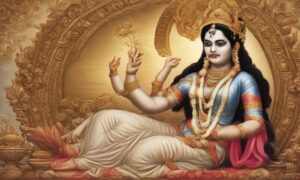

Understanding Sanatan Dharma: The Eternal Way of Life
Sanatan Dharma, often referred to as the eternal law or righteous path, is not merely a religion but a comprehensive way of life, a bedrock of culture, philosophy, and spiritual understanding originating from the Indian subcontinent. Unlike religions that often center around a single founder or scripture, Sanatan Dharma is understood by its followers as a timeless, ever-evolving wisdom tradition that embraces cyclical time, duty, and the inherent divinity within every soul. To grasp its depth is to look into one of humanity’s oldest continuous spiritual lineages.
For the modern searcher, the concept can seem vast, encompassing diverse traditions, yet the core tenets remain remarkably consistent: duty (Dharma), cosmic law, and the journey back to ultimate reality (Brahman). This article aims to provide an accessible overview of what makes Sanatan Dharma unique and profoundly meaningful.
What Does ‘Sanatan’ Truly Mean?
The term itself is revealing. ‘Sanatan’ literally translates to ‘eternal,’ ‘ever-existing,’ or ‘that which has no beginning and no end.’ This concept of eternality is central. It posits that the principles taught by Sanatan Dharma—ethics, cosmic order, and the pursuit of truth—are not novel doctrines but perennial truths that have guided human consciousness for millennia.
The Concept of Dharma
At the heart of the philosophy is Dharma. While often translated as ‘duty’ or ‘religion,’ its meaning is far broader. Dharma represents one’s inherent moral law, one’s rightful conduct, one’s role in society, and the cosmic order that keeps the universe running smoothly. Living according to one’s Dharma is considered the most virtuous path, contributing both to individual liberation and societal harmony.
Core Philosophical Pillars of Sanatan Dharma
The philosophy is rich and diverse, drawing wisdom from texts like the Vedas, Upanishads, and Bhagavad Gita. Several key concepts underpin this worldview:
Karma: The Law of Action
The law of Karma is perhaps the most tangible concept for beginners. It is a universal principle stating that every action, thought, or word (Karma) creates a reaction that will eventually return to the doer. It is not a system of reward or punishment dictated by a deity, but rather a self-regulating cosmic mechanism. Good actions lead to positive experiences, and negative actions lead to suffering—a perfect principle of cause and effect.
Atman and Brahman: The Self and the Absolute
The relationship between the individual soul (Atman) and the ultimate reality (Brahman) forms the bedrock of Vedanta philosophy. The core realization taught is that the individual Atman is ultimately identical with the universal Brahman. The goal of spiritual life is to realize this oneness—to overcome the illusion (Maya) that separates the self from the infinite.
Moksha: Liberation
The ultimate aim in Sanatan Dharma is Moksha, or liberation. This is not merely going to heaven; it is the realization of one’s true, eternal nature—freedom from the cycle of birth, death, and rebirth (Samsara). It is a state of perfect realization, enlightenment, and union with the Divine.
Diverse Paths to Spiritual Realization
Sanatan Dharma acknowledges that the path to truth is highly individualized. It does not prescribe a single doctrine, recognizing that different temperaments require different approaches. These varied paths are often summarized through the concept of *Yogas*:
- Bhakti Yoga (The Path of Devotion): This involves intense emotional love and devotion toward a personal aspect of the Divine (Ishta Devata). Singing hymns, rituals, and devotion are central here.
- Karma Yoga (The Path of Action): This teaches selfless action—performing one’s duties without attachment to the results. Action becomes worship.
- Jnana Yoga (The Path of Knowledge): This is the path of philosophical inquiry, self-study, meditation, and discriminating between the transient (Maya) and the permanent (Atman).
A complete practitioner is often believed to integrate these paths, using devotion to inspire action, and action to deepen knowledge.
Sanatan Dharma in Modern Life
In today’s globalized world, the influence of Sanatan Dharma is more visible than ever. It provides a robust ethical framework that encourages mindfulness, accountability, and ecological balance. From the meticulous rituals surrounding Diwali to the deep meditative practices found in ashrams, the practices continue to evolve while adhering to timeless principles. It encourages a holistic view of life where spirituality is interwoven with daily responsibilities, career, and relationships.
To study Sanatan Dharma is to embark on a journey of introspection. It challenges the assumption of separation and insists that the divine essence resides within every breath, every action, and every heartbeat. It offers a timeless map for navigating the complexities of the human condition.
The Ethical and Ecological Dimensions: Dharma in Action
One of the most striking aspects of Sanatan Dharma, especially for a modern audience, is its profound ethical dimension. Dharma is not confined to temple rituals; it permeates the relationship between humanity and the natural world. This concept often overlaps with the idea of *Prakriti* (Nature) being sacred, recognizing that all life forms are interconnected components of a single cosmic web. Therefore, ethical living extends beyond human-to-human interaction to encompass stewardship of the environment.
Ahimsa: Non-Violence as the Cornerstone
At the apex of ethical conduct is Ahimsa, or non-violence in thought, word, and deed. This is often misunderstood as merely physical non-injury. In the deepest sense, Ahimsa requires a compassionate recognition of the inherent life force in all beings. It demands mental restraint against hatred, jealousy, and malice. For a practitioner, upholding Ahimsa is a constant, internal discipline that shapes one’s entire worldview toward compassion and forbearance.
Seva: The Practice of Selfless Service
Complementing Ahimsa is the concept of Seva, or selfless service. Seva emphasizes that true spiritual growth is fostered not in isolation, but through active, unattached contribution to the community and society. Whether it is feeding the hungry, cleaning a local temple, or simply mentoring a junior colleague, Seva grounds abstract philosophy into tangible, compassionate action. It dissolves the ego by making the self secondary to the needs of others.
Sanatan Dharma in a Global Context
When compared to other world traditions, Sanatan Dharma’s strength lies in its syncretism—its ability to absorb and integrate wisdom from diverse sources without compromising its core ethos. While it honors the lineage of the Vedas, it has continuously engaged with the wisdom of Buddhism, Jainism, and various Tantric traditions, fostering an intellectual environment of continual refinement rather than doctrinal rigidity. This receptiveness makes it a living philosophy, constantly adapting its understanding to the evolving questions of humanity.
For the contemporary seeker, understanding Sanatan Dharma is an exercise in intellectual humility. It teaches that truth is multi-faceted, and wisdom can be accessed through varied avenues—be it rigorous academic study, intense physical discipline (like Yoga), or deep emotional surrender (Bhakti). It is not a destination marked by a single grand revelation, but rather a continuous, rhythmic journey of self-discovery, always returning to the recognition of the eternal, infinite Self.