- The United Kingdom comprises England, Scotland, Wales and Northern Ireland under a constitutional monarchy.
- As of 2023 the UK population is about 67.1 million and its economy ranks sixth worldwide with a $3.2 trillion GDP.
- The UK Parliament consists of the elected House of Commons (650 MPs) and the appointed House of Lords.
- The National Health Service is funded by taxation with a 2022‑23 budget of £224 billion.
- The Channel Tunnel links the UK to France, carrying over 20 million passengers each year.
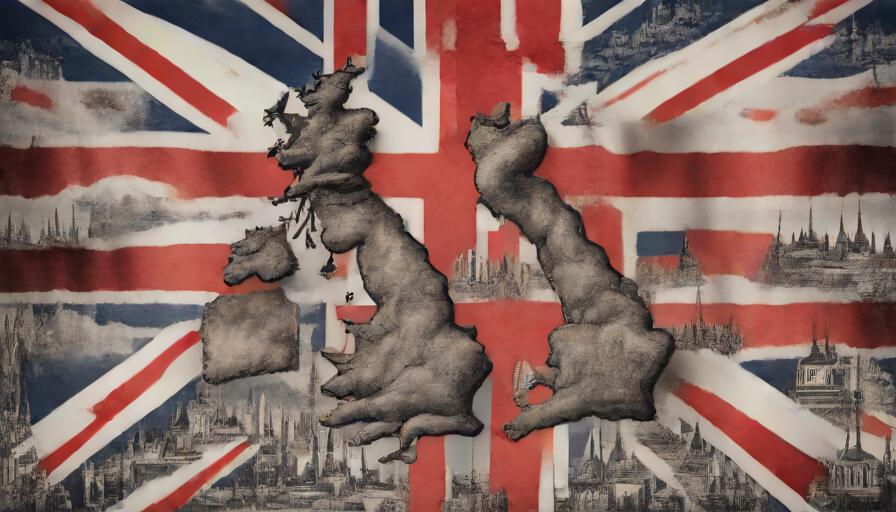
The United Kingdom (UK) is a sovereign nation located off the north‑west coast of mainland Europe, comprising England, Scotland, Wales, and Northern Ireland. It operates under a constitutional monarchy and a parliamentary democracy, with London as its capital.
What countries make up the United Kingdom?
The United Kingdom consists of four distinct countries: England, Scotland, Wales, and Northern Ireland. Each retains its own legal system and education policy, while sharing defense, foreign affairs, and monetary policy under the UK government.
How large is the UK in terms of land and population?
The UK’s total land area is approximately 242,500 km² (93,600 sq mi). As of mid‑2023, the resident population was estimated at 67.1 million people, making it the 21st most‑populous nation worldwide.
When was the United Kingdom formed?
The political union began in 1707 when the Kingdom of Great Britain merged England and Scotland. In 1801, Great Britain united with Ireland, creating the United Kingdom of Great Britain and Ireland. After most of Ireland left in 1922, the name changed to the United Kingdom of Great Britain and Northern Ireland, which remains today.
What type of government does the UK have?
The UK is a constitutional monarchy with a parliamentary system. The monarch—currently King Charles III—serves as ceremonial head of state, while executive power resides with the Prime Minister and the Cabinet, who are drawn from the elected House of Commons.
How is the UK Parliament structured?
The Parliament has two houses:
| House | Members | Key Role |
|---|---|---|
| House of Commons | 650 MPs | Legislation, budget approval |
| House of Lords | ~800 peers | Review and suggest amendments |
Members of the Commons are elected in single‑member constituencies using first‑past‑the‑post voting. Lords are appointed, inherit titles, or hold senior ecclesiastical positions.
What are the major political parties?
- Conservative Party – centre‑right, currently the governing party.
- Labour Party – centre‑left, the main opposition.
- Liberal Democrats – centrist, focus on electoral reform.
- Scottish National Party (SNP) – advocates Scottish independence.
- Other regional parties – Plaid Cymru (Wales), Democratic Unionist Party (Northern Ireland).
What is the UK’s economy like?
As of 2023, the United Kingdom ranks as the sixth‑largest economy by nominal GDP, valued at roughly $3.2 trillion USD. Service industries dominate, contributing about 80 % of GDP, with finance, legal services, and creative sectors concentrated in London.
Key economic indicators (2023)
- Unemployment rate: 4.1 %
- Inflation: 6.8 % (CPI)
- Public debt: 101 % of GDP
- Currency: British pound sterling (GBP)
How does the UK’s education system work?
Education is a devolved matter; each country sets its own curriculum. Generally, children attend primary school (ages 4‑11) then secondary school (ages 11‑16). After GCSE exams, students may continue to sixth form or college for A‑levels or vocational qualifications.
What are the world‑renowned universities?
Notable institutions include the University of Oxford (est. 1096) and the University of Cambridge (est. 1209), both consistently ranking in the global top ten. Other leading universities are Imperial College London, the London School of Economics, and the University of Edinburgh.
What cultural landmarks attract visitors?
The UK draws over 40 million tourists each year. Iconic sites include:
- Stonehenge – prehistoric stone circle, dated to around 2500 BC.
- Edinburgh Castle – historic fortress perched on Castle Rock.
- Hadrian’s Wall – Roman frontier spanning 73 miles across northern England.
- Big Ben and the Houses of Parliament – symbols of British governance.
- National museums – the British Museum, the National Gallery, and the Tate Modern.
How easy is it to travel within the UK?
The railway network covers 20,000 km of track, with high‑speed services such as Eurostar linking London to Paris and Brussels. Domestic airlines, coach services, and extensive motorway systems provide additional connectivity.
What are current challenges facing the UK?
Key issues include Brexit‑related trade adjustments, regional independence movements (particularly in Scotland), and pressures on public services like the National Health Service (NHS). Climate‑change commitments also require substantial investment in renewable energy and infrastructure.
How is the UK addressing climate goals?
In 2021 the UK passed the Net‑Zero by 2050 law, committing to reduce greenhouse‑gas emissions to 100 % of 1990 levels by mid‑century. Policies include expanding offshore wind capacity (target 40 GW by 2030) and phasing out unabated coal power by 2024.
What is the National Health Service (NHS) and how is it funded?
The NHS provides publicly funded healthcare to all UK residents, financed primarily through general taxation and a national insurance levy. In 2022‑23 the NHS budget reached £224 billion, supporting hospitals, primary‑care practices, and community services across the four nations.
Healthcare statistics (2023)
| Metric | Value |
|---|---|
| Total hospital beds | 141,000 |
| Doctors (full‑time equivalent) | 310,000 |
| Life expectancy at birth | 81.2 years (men), 83.5 years (women) |
Which sports are most popular in the UK?
Football (soccer) leads in participation and viewership, with the Premier League attracting a global audience of over 3 billion TV households. Rugby union, cricket, tennis (Wimbledon), and golf (The Open) also enjoy strong followings and generate significant economic activity.
Major sporting events
- Premier League – annual football league with 20 clubs.
- Wimbledon – oldest tennis Grand Slam, held each July.
- The Open Championship – golf’s oldest major, rotating venues.
- Six Nations – annual rugby union tournament featuring England, Scotland, Wales, and Ireland.
What are the main ethnic groups in the UK?
According to the 2021 Census, 84 % of residents identified as White British or other White backgrounds. The largest minority groups are Asian (7 %), Black (3 %), and Mixed ethnicity (2 %). London is the most ethnically diverse city, with over 40 % of its population belonging to a minority group.
Religious affiliation (2021)
- Christian – 46 %
- No religion – 37 %
- Muslim – 6 %
- Hindu – 2 %
- Other – 9 %
What transport infrastructure connects the UK to Europe?
The Channel Tunnel, opened in 1994, provides a 50‑km rail link between Folkestone and Calais, handling over 20 million passengers annually. Ferries operate from Dover, Hull, and other ports, while numerous airports such as Heathrow and Manchester support international travel.
Frequently Asked Questions
When did the United Kingdom adopt its current name?
The name United Kingdom of Great Britain and Northern Ireland was adopted in 1927 after most of Ireland left the union in 1922, formalising the current political structure.
What currency is used throughout the UK?
The United Kingdom uses the British pound sterling (GBP) as its official currency, issued by the Bank of England and accepted across England, Scotland, Wales and Northern Ireland.
What is the average life expectancy in the UK?
In 2023 the average life expectancy at birth was 81.2 years for men and 83.5 years for women, reflecting the UK's advanced healthcare system and relatively high standard of living.
Is the United Kingdom a member of the European Union?
No. The United Kingdom left the European Union on 31 January 2020 following a 2016 referendum, entering a transition period that ended on 31 December 2020.
How many passengers travel through the Channel Tunnel each year?
The Channel Tunnel transports over 20 million passengers annually, providing a fast rail connection between Folkestone in the UK and Calais in France.