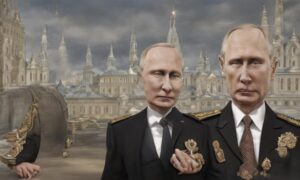
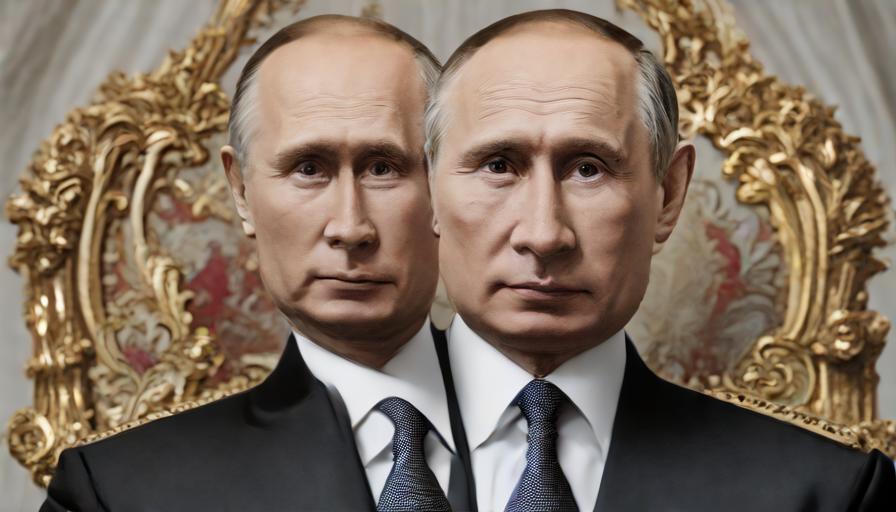
- Vladimir Putin has been Russia’s dominant leader as president or prime minister since 1999.
- Under Putin, state control of oil and gas rose above 60 %, driving GDP growth of 7 % annually (2000‑2008).
- Major foreign actions include the 2014 Crimea annexation and the 2022 invasion of Ukraine, triggering extensive Western sanctions.
- Russia’s defence budget grew to $80 billion by 2023, funding new weapons such as the Su‑57 fighter and Kinzhal missile.
Vladimir Putin is the President of Russia, having served as either president or prime minister since 1999. He was born on 7 October 1952 in Leningrad (now Saint Petersburg) and rose from a KGB officer to the country’s most powerful leader.
Who is Vladimir Putin and how did he become Russia’s leader?
Vladimir Putin is a former KGB intelligence officer who entered politics in the early 1990s, first as an adviser to Saint Petersburg mayor Anatoly Sobchak. In August 1999, President Boris Yeltsin appointed him prime minister, and when Yeltsin resigned on 31 December 1999, Putin became acting president. He won his first presidential election in March 2000 with 53 % of the vote.
Early life and KGB career
Putin was born to a factory worker and a conscript’s daughter. He graduated from Leningrad State University in 1975 with a law degree and immediately joined the KGB, serving in foreign intelligence until 1991. His overseas posting in Dresden, East Germany, lasted from 1985 to 1990, where he monitored political dissent.
Rise to political power (1999‑2008)
From 1999 to 2008, Putin held the two highest offices in Russia. Key milestones include:
- 1999 – Appointed Prime Minister by Yeltsin.
- 31 Dec 1999 – Becomes Acting President.
- Mar 2000 – Elected President (53 % vote).
- 2004 – Re‑elected with 71 % of the vote.
- 2008 – Steps down due to constitutional term limits; becomes Prime Minister under Dmitry Medvedev.
What are the major policies of Putin’s presidency?
Putin’s agenda combines economic centralisation, state control of strategic sectors, and an assertive foreign policy. He has overseen three distinct periods: 2000‑2008, 2012‑2020, and the ongoing term beginning in 2024.
Economic reforms and oil revenues
During his first two terms, Putin increased the state’s share of the oil and gas industry from 30 % to over 60 % through the creation of state giants such as Gazprom and Rosneft. Between 2000 and 2008, Russia’s GDP grew an average of 7 % per year, fueled by rising oil prices that peaked at $147 per barrel in July 2008.
Foreign policy milestones
Putin’s foreign actions have reshaped Eurasian geopolitics. Notable events include:
- 2008 – Short war with Georgia over South Ossetia and Abkhazia.
- 2014 – Annexation of Crimea after a disputed referendum; international sanctions followed.
- 2015 – Military intervention in the Syrian civil war supporting Bashar al‑Assad.
- 2022 – Full‑scale invasion of Ukraine, leading to the largest Western sanctions regime since the Cold War.
How has Putin’s leadership affected Russia’s global standing?
Putin has restored a perception of Russian strength, but at the cost of strained relations with many Western nations. He has leveraged energy exports, military partnerships, and information campaigns to maintain influence.
Military modernization
Since 2008, Russia’s defence budget has risen from $55 billion to $80 billion (2023). The country introduced new platforms such as the Su‑57 stealth fighter, the Borei‑class nuclear submarine, and hypersonic weapons like the Kinzhal missile.
Relations with the West
Key trends include:
| Period | Relation |
|---|---|
| 2000‑2008 | Co‑operation on counter‑terrorism, but growing tension over NATO expansion. |
| 2014‑2021 | Sanctions after Crimea; diplomatic expulsions; limited dialogue. |
| 2022‑present | Comprehensive sanctions, diplomatic isolation, and NATO’s increased presence in Eastern Europe. |
What controversies and criticisms surround Vladimir Putin?
Human‑rights groups cite widespread suppression of dissent, including the 2012 “foreign agents” law that requires NGOs receiving over 10 % foreign funding to register. Elections under Putin have been described by OSCE observers as “not fully free.” The 2022 Ukraine war has resulted in over 8 million refugees and an estimated 40 million Russian citizens facing economic hardship due to sanctions.
Despite the criticism, Putin maintains a personal approval rating of roughly 60 % in state‑run polls as of early 2024, reflecting a blend of nationalist sentiment and state‑controlled media narratives.
What is known about Vladimir Putin’s personal life and interests?
Putin was married to Lyudmila Shkrebneva from 1983 until their announced divorce in 2013; the couple has two adult daughters who largely stay out of public view. He holds a black belt in judo, having earned the title of “Honoured Master of Sports” in 1999, and regularly participates in sparring sessions at the Kremlin. Putin is also an avid outdoorsman, often photographed fishing in the Arctic or riding horses on his “Putin’s Farm” estate in the Tver region.
How have international sanctions affected Russia’s economy under Putin?
Since the 2014 annexation of Crimea, Western countries have imposed more than 30 rounds of sanctions targeting banks, energy firms, and technology imports. The cumulative impact includes:
- Foreign direct investment fell from $30 billion in 2013 to $9 billion in 2022.
- The Russian ruble lost about 40 % of its value against the US dollar between 2014 and 2023.
- Access to advanced semiconductor equipment dropped by an estimated 70 %, slowing domestic chip production.
Despite these pressures, the Russian economy contracted by only 2.5 % in 2022, rebounding to a modest 1.1 % growth in 2023 due to high oil prices and state subsidies.
What are the possible future scenarios for Russia after Putin?
Analysts outline three broad pathways: (1) a smooth succession to a chosen heir, likely a senior figure such as Defense Minister Sergei Shoigu, maintaining current policies; (2) a power struggle among elites that could trigger policy volatility and potential liberalisation; or (3) increased isolation leading to economic decline and internal unrest. Demographic trends show Russia’s population fell below 146 million in 2023, adding long‑term pressure on the labour market.
Overall, Vladimir Putin’s tenure illustrates how a single leader can steer a nation’s economic, military, and diplomatic trajectories while simultaneously provoking internal repression and external conflict.
Frequently Asked Questions
What positions has Vladimir Putin held in Russia?
Vladimir Putin served as prime minister in 1999, became acting president on 31 December 1999, and was elected president in 2000. He was re‑elected in 2004 and 2012, and served a second prime‑ministerial term from 2008 to 2012 under Dmitry Medvedev before returning to the presidency in 2012 and again in 2018.
How did the 2014 annexation of Crimea affect Russia's international relations?
The annexation led Western nations to impose coordinated sanctions targeting banks, energy firms, and individuals. Diplomatic ties were strained, with many countries expelling Russian diplomats. NATO increased its presence in Eastern Europe, and Russia faced isolation from the G7, while its relationship with China and other non‑Western states strengthened.
What are the main components of the sanctions imposed on Russia?
Sanctions include bans on major Russian banks from the SWIFT system, export controls on high‑tech equipment, asset freezes for oligarchs and officials, and restrictions on oil and gas projects. They also limit access to foreign financing, reduce foreign direct investment, and prohibit travel for selected individuals.
Who is considered Putin’s likely successor?
Analysts point to Defence Minister Sergei Shoigu as a leading candidate due to his long tenure and close ties to Putin. Other possibilities include former Prime Minister Mikhail Mishustin or senior security officials, but Shoigu is most frequently mentioned as the probable heir to maintain policy continuity.