- The Ultimate Fighting Championship (UFC) was founded on November 12, 1993, and is the world's largest mixed martial arts (MMA) promotion organization.
- UFC events are governed by the Unified Rules of Mixed Martial Arts, featuring 12 weight divisions (8 male, 4 female) ranging from 115 lbs to 265 lbs.
- Matches are scored by three ringside judges using the 10-Point Must System, prioritizing effective striking and grappling damage over control time.
- Owned by TKO Group Holdings (NYSE: TKO), the UFC hosts pay-per-view events and Fight Nights globally inside an eight-sided enclosure called the Octagon.
What is the UFC and how does it work?
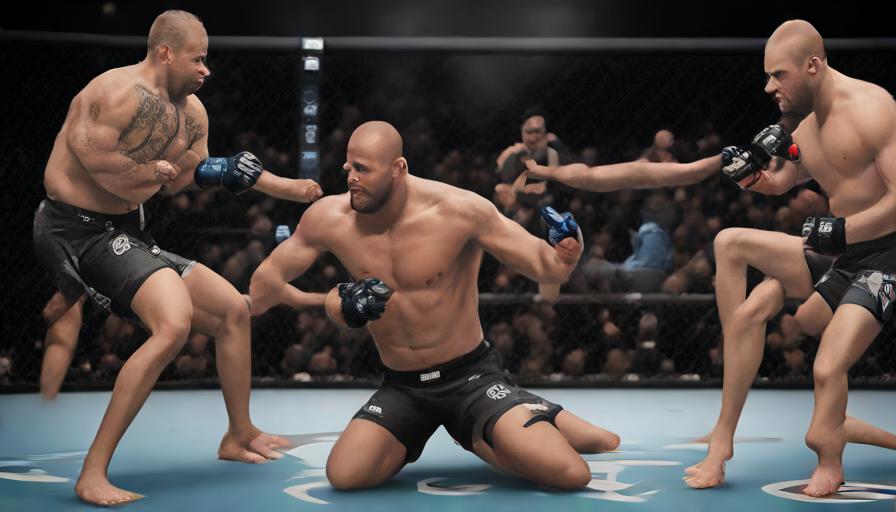
The Ultimate Fighting Championship (UFC) is the world’s premier mixed martial arts (MMA) promotion organization, featuring top-ranked combat sports athletes competing across twelve distinct weight divisions. Founded in 1993, the UFC produces live events globally that showcase disciplines such as Brazilian jiu-jitsu, wrestling, boxing, Muay Thai, and judo inside an eight-sided enclosure known as the Octagon. Today, as a corporate subsidiary of TKO Group Holdings, the UFC is recognized as the largest and most commercially successful MMA promotion in history.
The organization structures its schedule into two primary event formats: flagship pay-per-view (PPV) numbered events (such as UFC 300), which feature high-profile title fights and major stars, and UFC Fight Night events, which air on television networks and streaming platforms like ESPN+ to showcase top contenders and emerging prospects.
Brief history of the UFC: From 1993 to TKO Group Holdings
The UFC was created by executive Art Davie and Brazilian jiu-jitsu master Rorion Gracie. The inaugural event, UFC 1, took place on November 12, 1993, at the McNichols Sports Arena in Denver, Colorado. Originally conceived as a single-elimination tournament to test which martial arts style was superior in real combat, early events featured no weight classes, no mandatory gloves, and minimal safety regulations.
In January 2001, casino executives Lorenzo and Frank Fertitta, alongside former boxing manager Dana White, purchased the struggling UFC organization for $2 million under their parent company, Zuffa LLC. Under Zuffa’s management, the UFC adopted the Unified Rules of Mixed Martial Arts, introduced weight divisions, secured state athletic commission sanctioning, and gained widespread mainstream popularity following the 2005 launch of the reality television series The Ultimate Fighter.
In July 2016, global talent agency WME-IMG (now Endeavor) purchased the UFC for $4 billion. In September 2023, Endeavor merged the UFC with World Wrestling Entertainment (WWE) to form TKO Group Holdings (NYSE: TKO), a publicly traded sports entertainment corporation valued at over $21 billion.
What are the official UFC weight classes?
The UFC operates twelve official weight divisions—eight for male competitors and four for female competitors—to ensure safety and competitive integrity. Non-title fights permit a one-pound weight allowance, whereas official championship bouts require fighters to hit the exact maximum weight limit for the division.
| Division Name | Eligible Gender | Maximum Weight Limit |
|---|---|---|
| Women’s Strawweight | Women | 115 lbs (52.2 kg) |
| Flyweight | Men & Women | 125 lbs (56.7 kg) |
| Bantamweight | Men & Women | 135 lbs (61.2 kg) |
| Featherweight | Men & Women | 145 lbs (65.8 kg) |
| Lightweight | Men | 155 lbs (70.3 kg) |
| Welterweight | Men | 170 lbs (77.1 kg) |
| Middleweight | Men | 185 lbs (83.9 kg) |
| Light Heavyweight | Men | 205 lbs (93.0 kg) |
| Heavyweight | Men | 265 lbs (120.2 kg) |
What are the core rules and regulations in the UFC?
All UFC bouts are regulated by independent athletic commissions utilizing the Unified Rules of Mixed Martial Arts. Fights take place within the Octagon, a canvas-floored, eight-sided padded fence measuring 30 feet across. Standard non-title matches consist of three five-minute rounds, while main event bouts and championship fights consist of five five-minute rounds. Every round is separated by a one-minute rest period.
Fighters must wear approved 4-ounce fingerless gloves, mouthguards, and athletic trunks. Male fighters wear groin protectors, and female fighters wear chest protection. Striking techniques include punches, kicks, knees, and elbow strikes, while grappling encompasses takedowns, throws, positions, and submission holds.
To ensure fighter safety, the Unified Rules classify several actions as illegal fouls:
- Headbutting, eye-gouging, biting, spitting, hair pulling, and fish-hooking
- Groin attacks, throat strikes, and direct strikes to the spine or back of the head
- Kicking or kneeing the head of an opponent who is grounded on the mat
- Grabbing the Octagon fence, shorts, or opponent’s gloves
- Intentional small joint manipulation (such as bending fingers or toes)
How are UFC matches judged and scored?
UFC bouts are evaluated by three neutral ringside judges appointed by the local athletic commission using the 10-Point Must System. The winner of a round receives 10 points, while the loser receives 9 points or fewer depending on dominance and damage.
Judges score each round according to three prioritized criteria:
- Effective Striking and Grappling: The primary scoring metric. It evaluates legal strikes that produce immediate or cumulative damage, alongside successful takedowns and submission attempts that place an opponent in grave danger.
- Effective Aggressiveness: Assessed only if effective striking and grappling are completely equal; measures proactive attempts to finish the bout.
- Fighting Area Control: Assessed only if all prior criteria are equal; evaluates which fighter dictates the pace and physical positioning inside the Octagon.
Fights end through Knockout (KO), Technical Knockout (TKO), Submission, Referee Stop, Corner Stoppage, Decision (Unanimous, Split, or Majority), Disqualification, or No Contest.
How does the UFC ranking and title system work?
The UFC maintains official contender rankings for each weight division alongside an overarching pound-for-pound (P4P) ranking list. Rankings are generated through votes submitted by a panel of independent sports journalists. Each weight division features one active world champion and 15 ranked contenders (numbered 1 through 15).
Champions are required to defend their titles against top contenders chosen by UFC matchmakers. If an active champion is injured, suspended, or unable to compete for an extended timeframe, the promotion may institute an interim championship fight. The interim champion must eventually fight the undisputed champion in a title unification bout to determine a single champion.
Frequently Asked Questions
How long are UFC fights?
Standard UFC non-title bouts consist of three 5-minute rounds, lasting up to 15 minutes of total fighting time. Main events and championship matches consist of five 5-minute rounds, lasting up to 25 minutes. All bouts feature a 1-minute rest interval between rounds.
What is the difference between a UFC Fight Night and a Pay-Per-View event?
UFC Pay-Per-View (PPV) events are major monthly numbered cards featuring championship title fights and high-profile stars, requiring a separate broadcast purchase. UFC Fight Night events occur more frequently, broadcast on regular network television or streaming services like ESPN+, and focus on ranked contenders and rising prospects.
Who owns the UFC today?
The UFC is owned by TKO Group Holdings (NYSE: TKO), a publicly traded sports and entertainment entity. TKO was created in September 2023 when parent company Endeavor merged the UFC with World Wrestling Entertainment (WWE). Endeavor holds the majority controlling interest in TKO Group.
What happens if a UFC fighter misses weight before a fight?
If a fighter misses the weight limit during official weigh-ins, the bout may proceed as a catchweight fight if the opponent agrees. The fighter who missed weight forfeits 20% to 30% of their fight purse to their opponent and becomes ineligible for performance bonuses or winning a championship title.