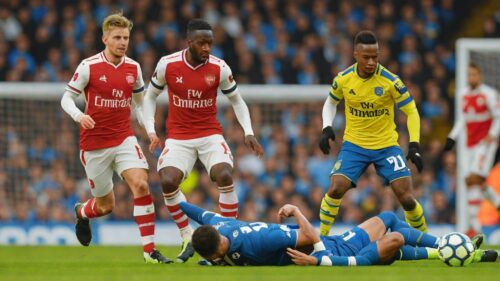
William Saliba: The Pillars of Modern Arsenal Defense

The Ascendance of a World-Class Defender: William Saliba
Few things are as exciting to watch as a defensive stalwart reaching the peak of their powers, and when it comes to modern English football, William Saliba has quickly established himself as one of the most compelling and vital figures. Since joining Arsenal, the French center-back has transformed from a highly touted prospect into an indispensable rock at the heart of the Gunners’ defense. His combination of raw athleticism, exceptional tactical intelligence, and unwavering composure in high-stakes matches has captured the attention of pundits and admirers alike, cementing his status as a cornerstone of Arsenal’s ambitions.
It is rare to see a defender combine the physical presence of a seasoned veteran with the attacking fluidity of a modern athletic player. William Saliba embodies this blend perfectly. His integration into Arsenal’s squad hasn’t just filled a gap; it has elevated the entire defensive unit, allowing Mikel Arteta’s tactical plans to flourish with greater security and confidence.
Unpacking the Attributes: What Makes Saliba Elite?
Physicality and Aerial Dominance
At first glance, Saliba’s primary asset is his sheer physical profile. He possesses an imposing frame, allowing him to dominate aerial duels with relative ease. Whether clearing crosses from wide areas or winning headers during set-piece situations, his timing and leap are exceptional. However, mere physicality is not enough to sustain a top-level career. What elevates Saliba is his anticipation—the ability to read the game one step before his opponents realize they need to pass.
His tackling technique is notably clean and precise. Unlike some defenders who rely on brute force, William Saliba prefers positional discipline. He intercepts passes through impeccable timing, often shutting down danger without needing to commit to a high-risk, sliding tackle. This sophisticated approach minimizes fouls while maximizing defensive disruption, which is the hallmark of elite, modern defending.
Tactical Intelligence and Positional Play
Perhaps the most underrated element of his game is his football IQ. Modern center-backs are increasingly expected to act as extra playmakers, initiating attacks from the back line. Saliba excels in this area. He is comfortable receiving the ball under pressure, showing composure when distributing passes, and executing incisive vertical passes that bypass the initial midfield press. He doesn’t just defend; he participates in the build-up play, turning defensive solidity into offensive momentum.
His passing range suggests a player capable of dictating the tempo of the game from the back, making him a true ball-playing defender.
Saliba’s Impact on Arsenal’s Defensive Structure
Under the tactical blueprint Arteta has established, the partnership featuring William Saliba has been crucial. When paired effectively, he provides stability that allows Arsenal’s more attacking full-backs the freedom to overlap and get forward. This frees up the midfield to operate with greater risk, knowing that Saliba is disciplined enough to cover potential gaps created by the advanced full-backs.
Leadership and Mental Fortitude
Defending against top-tier opposition demands more than technical skill; it requires immense mental fortitude. William Saliba has demonstrated a maturity beyond his years. In the high-pressure cauldron of the Premier League, his calmness under fire is palpable. He does not get rattled by the opposition’s best attacking players. This steely mentality, combined with a vocal leadership presence, helps organize the back four, ensuring that the team maintains shape even when the opposition initiates rapid, sustained attacks.
This consistent performance, game after game, has allowed him to cement a reputation not just as a talented player, but as a leader who raises the standard for everyone around him. He embodies the commitment that top clubs demand.
The Comparison to Defensive Legends
When evaluating players of his caliber, William Saliba is inevitably measured against defensive giants of the past. He exhibits traits reminiscent of classical center-backs—the reading of space, the authority, and the sheer determination. However, he adapts these timeless attributes to the speed and passing demands of the 21st-century game. Coaches and pundits often point to his versatility, suggesting he has the potential to thrive at the highest levels of European football, challenging established stars in leagues across the continent.
Future Outlook and Legacy at Highbury
Looking ahead, the expectations placed upon William Saliba are astronomical. The club’s investment and faith in him point toward a sustained period of excellence. For Arsenal, his continued evolution—improving his defensive duel wins, increasing his composure in the final third passes—will be key to challenging for sustained league dominance. If he continues his trajectory, he is not just a squad player; he is destined to be remembered as one of the defining defenders of Arsenal’s modern era.
To conclude, William Saliba is far more than just another defender wearing the Arsenal colors. He is a multifaceted defensive asset whose blend of physicality, tactical acumen, and unwavering composure makes him a centerpiece for any successful modern backline. He is the quiet powerhouse whose consistent, elite performance elevates the entire team structure.
Saliba and the Modern Ball-Playing Defender Paradigm
In the current epoch of football, the role of the center-back has undergone a profound metamorphosis. Where defensive roles were once synonymous with physical stopping power and aerial might, the modern game demands defenders who are equally proficient in initiating offensive sequences. William Saliba is not merely a stopper; he is a facilitator. His comfort on the ball elevates the entire defensive unit from a collection of individuals into a coordinated passing machine.
Analyzing his build-up play reveals a sophisticated understanding of space. When Arsenal are under intense pressure, Saliba rarely panics. He employs controlled lateral passes, drawing opposition midfielders out of position, or opts for the crucial diagonal ball that switches play instantly. This ability to switch play diagonally, under immense duress, is perhaps the most valuable commodity in top-tier football today, as it instantly disrupts structured opposition formations.
Defensive Dueling Under Pressure: The Mental Aspect
While his passing is notable, his effectiveness in high-stakes defensive duels speaks volumes about his temperament. Against elite forwards who thrive on exploiting split-second gaps, Saliba exhibits exceptional anticipation. This is where true world-class defending lies: not in reacting to the pass, but in predicting the passing lane that *will* be used. This mental pre-cognition allows him to occupy the correct space before the ball even arrives, creating an aura of defensive inevitability around him.
Furthermore, his recovery speed, particularly when forced into transition moments, is best-in-class. If the defensive line is breached or a midfielder is caught out of position, Saliba possesses the necessary explosive acceleration to cover ground and shepherd the attacking threat away from danger. This combination of intelligence, composure, and athleticism makes him exceptionally difficult for opposing coaches to game-plan against.
Arteta’s Squad Integration and Future Trajectory
The symbiotic relationship between Saliba and Mikel Arteta has been instrumental in unlocking his full potential. Arteta’s system demands players who are tactically versatile and willing to execute complex positional rotations. Saliba has adapted seamlessly, transitioning between a traditional pairing and operating as a more advanced, deep-lying midfielder when necessary. This tactical flexibility is the hallmark of a player who can thrive across multiple managerial systems.
Looking toward the future, maximizing his influence will require continued development in decision-making speed in the final third. As he accumulates more minutes alongside the club’s most demanding attackers, the bar for his required offensive contribution will rise. If he continues to improve his risk assessment—knowing when a risky pass is worth the reward versus when a simple, safe clearance is strategically superior—he will not only solidify his place as Arsenal’s captain material, but he will redefine the physical and intellectual standards for center-backs in English football for the next decade.
About The Author