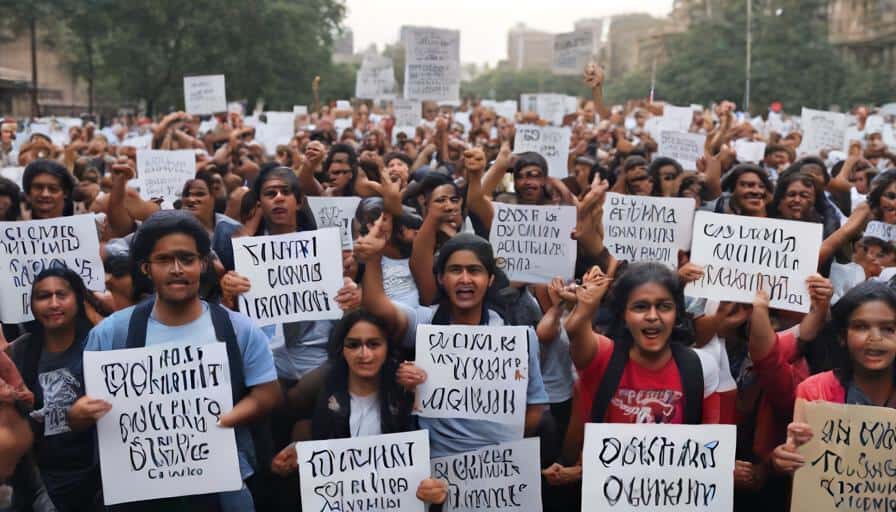
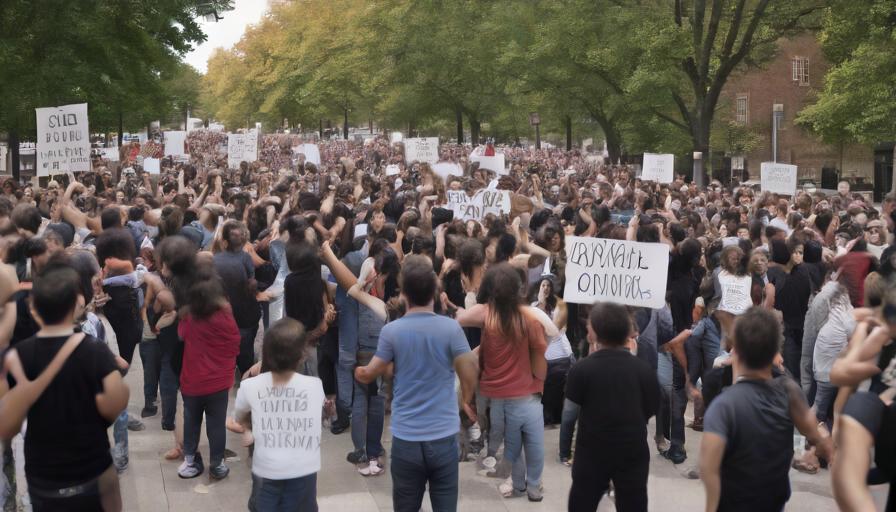
- #JusticeForDUSUstudent is a digital and ground movement demanding campus safety, accountability, and justice following violence against Delhi University students.
- Protesters demand strict enforcement of the Lyngdoh Committee guidelines, mandatory ID checks, and fast-track police investigations into campus assaults.
- Delhi University administration and Delhi Police responded with increased campus patrolling, strict entry regulations, and institutional inquiry committees.
The hashtag #JusticeForDUSUstudent is a public digital campaign and student-led protest movement demanding campus safety, police accountability, and swift administrative action following violent attacks on Delhi University students. The movement arose to address recurring campus violence, political clashes during student union activities, and perceived delays in institutional justice across Delhi University (DU). By organizing online drives and physical rallies, students and youth organizations advocate for safer educational environments, strict punishment for offenders, and comprehensive security reforms.
What led to the #JusticeForDUSUstudent movement?
The #JusticeForDUSUstudent campaign stems from a pattern of safety breaches, physical violence, and political altercations across Delhi University campuses during peak academic and electoral cycles. Delhi University, which enrolls over 100,000 undergraduate and postgraduate students across more than 50 constituent colleges, has frequently witnessed political friction during the Delhi University Students’ Union (DUSU) elections. Incidents such as student clashes, physical assaults outside college gates, and high-profile acts of violence—including the fatal stabbing of a 19-year-old student outside Aryabhatta College in June 2023—have highlighted ongoing security vulnerabilities.
The situation escalated during recent election seasons, where rival student political groups, including the Akhil Bharatiya Vidyarthi Parishad (ABVP), National Students’ Union of India (NSUI), and All India Students’ Association (AISA), engaged in fierce campaigning. Accusations of intimidation, physical brawls, and institutional inaction prompted students to unite under the banner of #JusticeForDUSUstudent to demand systemic reform and institutional transparency.
What are the primary demands of Delhi University students?
Students participating in the movement have outlined specific safety and administrative grievances. Rather than viewing campus safety through a purely political lens, the movement emphasizes human safety, judicial fairness, and institutional accountability.
The major student demands are summarized below:
| Category | Key Issue | Student Demand |
|---|---|---|
| Campus Security | Inadequate CCTV coverage and open access for non-students | Installation of high-definition CCTVs and strict ID enforcement at all DU college gates |
| Legal Action | Delayed police investigations and delayed FIR filings | Time-bound police probes and immediate filing of First Information Reports (FIRs) |
| Institutional Oversight | Lack of support for assault victims from university administration | Establishment of dedicated, fast-track grievance redressal committees in all colleges |
| Electoral Reform | Use of muscle power and non-student outsiders in DUSU elections | Strict adherence to the Lyngdoh Committee guidelines and ban on political outsiders |
How have university administration and Delhi Police responded?
In response to growing public pressure and social media outreach under #JusticeForDUSUstudent, the Delhi University administration and Delhi Police initiated several measures to mitigate safety risks and address specific grievances.
- Security Upgrades: DU officials mandated strict identification checks at all North and South Campus entrances, restricting unauthorized entry during campaign periods and high-density events.
- Police Deployment: Delhi Police increased heavy police presence and PCR (Police Control Room) van patrolling around sensitive college zones, including Hudson Lane, Vishwavidyalaya Metro Station, and South Campus corridors.
- Disciplinary Action: University authorities formed special inquiry panels to investigate reports of student violence, resulting in suspension orders and show-cause notices for students found guilty of code-of-conduct violations.
- Code of Conduct Enforcement: The DUSU Chief Election Officer reinforced electoral rules to curb vandalism, defacement of property, and unapproved political rallies near educational institutes.
Why is student safety during DUSU elections a recurring issue?
Student safety during Delhi University Students’ Union elections remains a complex challenge due to the political scale of the elections. DUSU is widely considered a major stepping stone into mainstream Indian national politics. Consequently, external political figures, political party funding, and non-student operatives often influence campus dynamics.
The vast geographical spread of Delhi University—divided across North Campus, South Campus, and scattered off-campus colleges—makes uniform security enforcement difficult. Off-campus colleges frequently lack the centralized security apparatus found in main campus clusters, leaving students vulnerable to intimidation during high-stakes political rivalries.
How did social media amplify the #JusticeForDUSUstudent movement?
Digital platforms played a central role in converting localized campus disputes into national headlines. Through platforms such as X (formerly Twitter), Instagram, and YouTube, students shared video evidence of campus brawls, medical reports of injured students, and documented security lapses in real time.
By using the unified hashtag #JusticeForDUSUstudent, activists succeeded in trending the issue, drawing coverage from national news outlets and prompting intervention from parliamentarians and civil rights organizations. This digital mobilization allowed ordinary students, who were otherwise unaffiliated with mainstream political unions, to participate directly in campus governance discourse and demand measurable accountability.
What long-term changes are required to ensure safety on DU campuses?
Ensuring long-term safety across Delhi University requires institutional reform, preventive policy measures, and judicial follow-through. Education experts and student representatives advocate for permanent security upgrades rather than temporary measures deployed solely during election periods.
Key proposed long-term solutions include:
- Establishing 24/7 student safety helpdesks managed jointly by campus security officers and student representatives.
- Implementing mandatory gender-sensitization and anti-ragging programs at the start of every academic session.
- Restricting campaign spending and enforcing zero-tolerance policies against physical intimidation during student elections.
- Enhancing street lighting, emergency call boxes, and municipal CCTV surveillance along popular routes connecting DU campuses to public transport hubs.
Through persistent advocacy, the #JusticeForDUSUstudent campaign serves as an important reminder that academic excellence requires an environment built on safety, lawfulness, and mutual respect.
Frequently Asked Questions
What caused the #JusticeForDUSUstudent protest movement?
The movement was triggered by recurring violent incidents, political clashes, and physical assaults involving Delhi University students during DUSU election campaigns and campus disputes. Students organized protests online and on campus to demand improved security measures, police accountability, and punishment for perpetrators.
What measures has Delhi University taken to protect student safety?
Delhi University implemented mandatory student ID checks at college gates, increased police patrolling across North and South campuses, enforced strict election codes of conduct, and formed institutional inquiry committees to investigate reports of violence and hold offenders accountable.
How do Lyngdoh Committee guidelines relate to the #JusticeForDUSUstudent demands?
The Lyngdoh Committee guidelines regulate student union elections in India by setting age limits, capping campaign budgets, and prohibiting muscle power or outsider intervention. Students cite these guidelines under #JusticeForDUSUstudent to eliminate electoral violence and restore safety on campus.