Veto Power Explained: Why the UN’s Five Key Powers Are Blocking a New Secretary-General
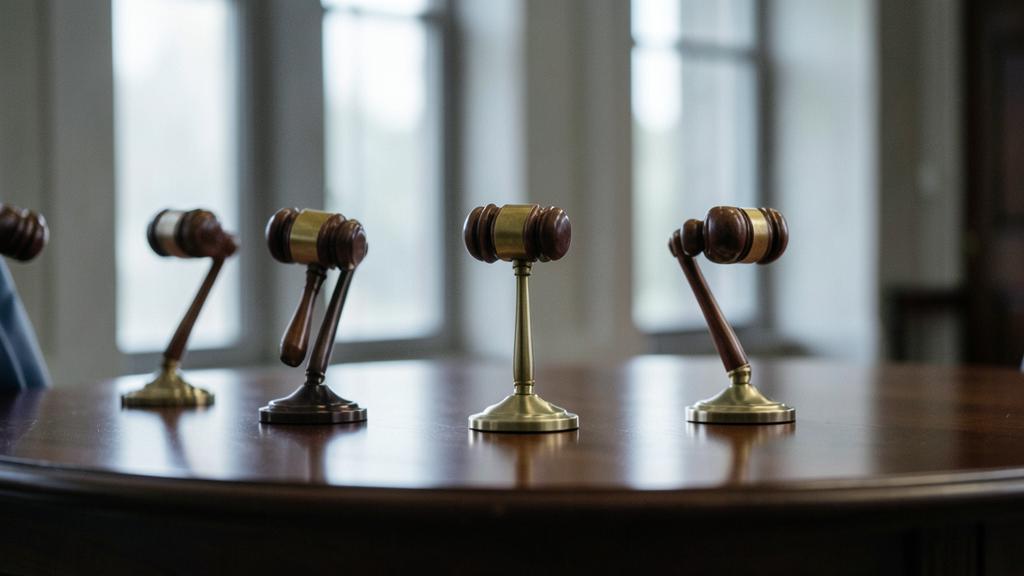
- A veto lets one permanent member of the UN Security Council block action alone, no matter how the other members vote.
- The UN's five key powers — China, France, Russia, the United Kingdom and the United States — hold that veto, and the latest Secretary-General vote shows no candidate has all five powers' support, per AP.
- Rebeca Grynspan, described by Reuters as the frontrunner for UN chief, says the organization has "become too risk-averse."
- Africa has just one representative left in the UN top job race after a former Senegalese president dropped out, per Business Insider Africa.
- Removing or limiting the veto would require amending the UN Charter with the consent of the permanent members themselves, so it has never been reformed.
A veto is the power to block a decision on your own. At the United Nations, that power sits with five countries — China, France, Russia, the United Kingdom and the United States — whose Security Council votes can each stop action by themselves. The veto is shaping the current race for the next UN Secretary-General right now: the latest vote shows no candidate has the required support of all five key powers.
What Is a Veto, in Plain Terms?
The word comes from Latin and means “I forbid.” In any voting body, a veto lets one member defeat a proposal no matter how many others back it. Most decisions pass or fail by majority; a veto carves out an exception in which a single country — not even a bloc — can override everyone else. That is what makes it the strongest single vote any organization can hand out, and why rules that include one are often described as requiring consensus by design.
Vetoes are also nothing new. The idea — protecting powerful members so they stay inside a club rather than walking out of it — runs straight through the founding of the United Nations, when the victorious Allied powers of World War II insisted on a guarantee that none of them could be outvoted on questions of peace and security. The mechanism they demanded is the one still in use today.
Who Holds the Veto — and Where Does It Apply?
The veto is a feature of the UN Security Council, the 15-member body responsible for international peace and security. Ten of those seats rotate among elected members and carry no blocking power. Five permanent seats come with the right to veto substantive action.
| Permanent member | Status |
|---|---|
| China | Permanent; veto since 1945 |
| France | Permanent; veto since 1945 |
| Russia | Permanent; veto inherited from the USSR’s seat |
| United Kingdom | Permanent; veto since 1945 |
| United States | Permanent; veto since 1945 |
Two limits matter. First, the veto applies only to substantive matters — the Security Council can adopt procedural decisions even if a permanent member votes no. Second, the veto is triggered by an outright negative vote, not by abstention: a permanent member that wants to avoid blocking action has historically been able to abstain without stopping it.
The five permanent members are, not coincidentally, the same powers whose combined consent the Secretary-General selection now requires — which is why the current race keeps turning into a veto story. It cannot be won against the will of even one of them.
How Does the Veto Shape the Secretary-General Selection?
The Secretary-General is formally appointed by the UN General Assembly, but only after the Security Council recommends a candidate — and a name cannot reach that stage unless the five permanent members allow it. As the Associated Press describes the current bar, a candidate needs “the required support of all five key powers.” In the latest vote, no one has it.
Where Does the Race Stand Right Now?
- No candidate has full backing. The most recent vote shows no candidate for UN chief has the required support of all five key powers, according to AP News. Which candidates took which positions on the ballot was not stated in the available headlines.
- Rebeca Grynspan is the frontrunner. An exclusive Reuters interview describes the veteran diplomat as a frontrunner for the UN’s top job and quotes her saying the organization has “become too risk-averse.”
- Africa’s field has narrowed. After a former Senegalese president dropped out, Africa has just one representative left in the race for the UN’s top job, Business Insider Africa reports.
How Is a UN Secretary-General Chosen, Step by Step?
- Candidates are fielded by member states and prominent figures, and informal campaigns open.
- The Security Council holds a series of confidential straw polls in which members signal support, opposition or neutrality.
- A candidate advances only if no permanent member registers opposition — a negative P5 vote functions as a veto in practice.
- The Council votes to recommend one candidate to the General Assembly.
- The General Assembly appoints the recommended candidate, normally to a renewable term.
Why Would a Leading Candidate Call the UN “Too Risk-Averse”?
Rebeca Grynspan’s remark, reported exclusively by Reuters, links the organization’s caution to its decision-making machinery. A body in which any one of five members can stop an initiative has strong structural reasons to play safe: proposals likely to split the permanent members simply do not get voted. Her comment is notable because it comes from someone seeking to run that institution — it reads as a warning about the culture she may soon inherit, not a throwaway line.
Could the Veto Power Itself Be Limited or Removed?
In principle, yes; in practice, no. Changing the veto would mean amending the UN Charter — a process that requires ratification by member states, including all five permanent members. Asking the veto holders to consent to their own disarmament has never succeeded, although reform talk resurfaces whenever deadlocks become public, as they arguably are during this selection. The rules, in other words, contain their own lockout.
What Happens Next in the Race?
Until a candidate secures clear, positive support from every permanent member — the bar AP says no one currently meets — the selection remains open. Expect more straw polls, more quiet negotiations among capitals, and more public commentary like Grynspan’s caution about risk aversion. The veto’s defining trait, one country holding everyone else back, is the same trait keeping the UN’s top job in suspense. For observers, the pattern is simple: polls come and go, but until the vetoes line up, the nomination does not move.
Sources
- EXCLUSIVE: UN chief frontrunner Rebeca Grynspan says UN has 'become too risk-averse' — Reuters
- Africa has just one representative in UN top job race after ex-Senegalese president drops out — Business Insider Africa
- Latest vote shows no candidate for UN chief has the required support of all five key powers — AP News
Frequently Asked Questions
Can one country really stop a UN Security Council resolution alone?
Yes. That is exactly what a veto means. Any of the five permanent members — China, France, Russia, the United Kingdom and the United States — can defeat a substantive Security Council resolution by voting no, no matter how the other 14 members vote. The main exception is procedural decisions, which cannot be vetoed, and abstentions by permanent members do not count as vetoes.
Why has a new UN Secretary-General not been chosen yet?
Because no candidate has cleared the decisive bar. AP reports the latest vote shows no candidate for UN chief has the required support of all five key powers — the permanent members who hold vetoes. Until at least one candidate emerges whom all five are willing to back, the Security Council cannot make its recommendation and the General Assembly has no one to appoint.
Who is Rebeca Grynspan?
Reuters describes Rebeca Grynspan as the frontrunner in the current race for UN chief. In an exclusive interview she said the UN has "become too risk-averse." The headlines do not state whether she holds support from all five permanent members; the latest AP-reported vote shows that no candidate has achieved it.
Can the veto be reformed or removed?
Only with the veto holders' own consent. Amending the UN Charter to limit or remove the veto requires ratification that includes all five permanent members. No such reform has ever been adopted, even though calls for change tend to resurface during public deadlocks like the current Secretary-General selection standoff.
How many African candidates remain in the UN chief race?
One. Business Insider Africa reports that Africa has just one representative left in the UN top job race after a former Senegalese president dropped out. The headlines reviewed do not name that remaining African candidate, nor do they break down the other candidates by region.
About The Author