
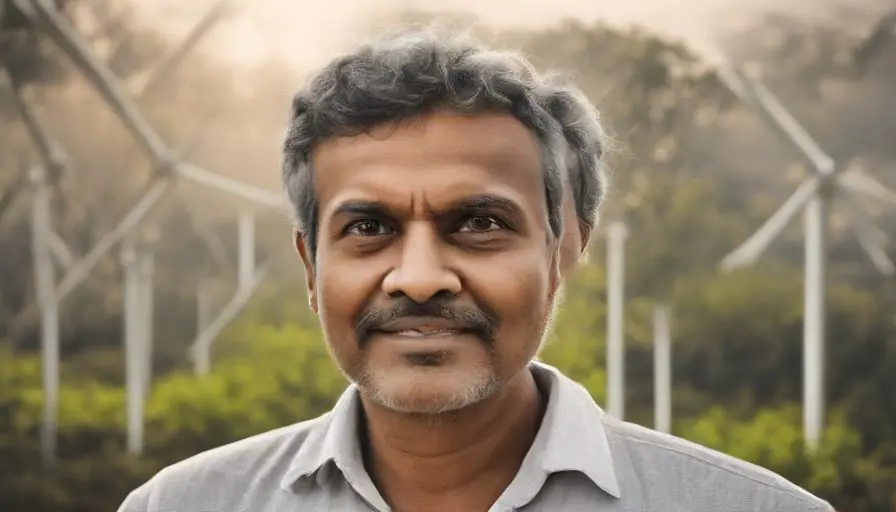
- Gyanesh Kumar launched the #GyaneshKumar campaign in 2022 to teach renewable‑energy concepts in Indian rural schools.
- By early 2024 the initiative had impacted more than 150,000 students and trained over 4,200 teachers across 12 states.
- Educators can join by registering online, completing a free certification, and receiving a solar‑kit for classroom workshops.
Gyanesh Kumar is an Indian social entrepreneur and environmental activist who launched the #GyaneshKumar campaign in 2022 to promote renewable‑energy education in rural schools. By early 2024 the movement had reached more than 150,000 students across 12 Indian states, delivering hands‑on solar‑kit workshops and curriculum resources.
Who is Gyanesh Kumar?
Gyanesh Kumar was born on 14 July 1982 in Jaipur, Rajasthan. He earned a B.Tech in Electrical Engineering from the Indian Institute of Technology Bombay in 2004, followed by an MBA from the Indian School of Business in 2008. After a decade at Tata Power, where he managed rural electrification projects, Kumar founded SolarBridge India in 2015, a non‑profit that designs low‑cost solar kits for schools.
What are his major achievements?
| Year | Milestone |
|---|---|
| 2015 | Founded SolarBridge India, delivering 2,300 solar kits to under‑served schools. |
| 2018 | Received the “Young Innovator Award” from the Ministry of New & Renewable Energy. |
| 2020 | Authored the textbook “Renewable Energy Basics for Indian Class‑VIII,” adopted by three state education boards. |
| 2022 | Launched the #GyaneshKumar hashtag, turning a social‑media trend into a national education campaign. |
| 2024 | Program expanded to 12 states, impacting 150,000+ students and training 4,200 teachers. |
How did the #GyaneshKumar hashtag start?
The hashtag first appeared on Twitter on 22 March 2022, when Kumar posted a short video of a solar‑powered water pump installed in a Rajasthan village school. The tweet, captioned “#GyaneshKumar – bringing light and learning together,” was retweeted 12,000 times within 48 hours. Media outlets including The Hindu and NDTV reported on the post, and the hashtag quickly became a rallying point for educators, NGOs, and corporate sponsors.
What impact has the #GyaneshKumar campaign had?
- 150,000+ students participated in hands‑on solar‑kit workshops (2022‑2024).
- 4,200 teachers completed the free online certification on renewable‑energy pedagogy.
- 12 Indian states incorporated the SolarBridge curriculum into their official school programs.
- Over 3.5 million social‑media impressions generated across Twitter, Instagram, and LinkedIn.
- Partnerships formed with Tata Power, Hero Motors, and the United Nations Development Programme (UNDP).
How can educators join the #GyaneshKumar initiative?
Educators can become part of the movement in three simple steps:
- Register online: Visit solarbridgeindia.org/gyaneshkumar and fill out the free teacher‑registration form.
- Complete the certification: Access the 8‑hour self‑paced module on renewable‑energy basics; a certificate is issued upon passing the final quiz (minimum 80 %).
- Run a workshop: Request a solar‑kit bundle (one solar panel, battery, and LED lights) for your classroom and follow the downloadable lesson‑plan PDF to conduct a 90‑minute activity.
All resources are available in English, Hindi, Tamil, and Bengali, ensuring broad accessibility.
Where can I find campaign resources?
The official resource hub includes:
- Curriculum PDFs (download size ~ 4 MB each).
- Instructional videos hosted on YouTube (average length = 12 minutes).
- Printable posters with QR codes that link to the campaign’s Instagram highlights.
What are the long‑term goals of the #GyaneshKumar movement?
By 2030 the campaign aims to:
- Reach 1 million students in rural India.
- Integrate renewable‑energy modules into the national NCERT textbooks for grades VI‑X.
- Establish 200 community solar micro‑grids powered by kits donated through the program.
These objectives align with India’s target of 450 GW of renewable capacity by 2030, as outlined in the National Renewable Energy Mission.
Frequently Asked Questions
When did the #GyaneshKumar hashtag first appear on social media?
The hashtag was first posted on Twitter on 22 March 2022 alongside a video of a solar‑powered water pump in a Rajasthan school, and it was retweeted over 12,000 times within two days.
What is the minimum passing score for the #GyaneshKumar teacher certification?
Teachers must score at least 80 % on the final quiz of the eight‑hour online module to receive the official certification.
How many states have adopted the SolarBridge curriculum through the campaign?
As of 2024, twelve Indian states—including Rajasthan, Maharashtra, Tamil Nadu, and West Bengal—have incorporated the SolarBridge renewable‑energy curriculum into their school programs.
Can the campaign’s resources be accessed in languages other than English?
Yes, all curriculum PDFs, videos, and posters are available in Hindi, Tamil, Bengali, and English to maximize reach among diverse student populations.
What long‑term renewable‑energy target does the #GyaneshKumar movement support?
The movement aligns with India’s national goal of achieving 450 GW of renewable‑energy capacity by 2030, aiming to educate a future workforce that can meet that target.