
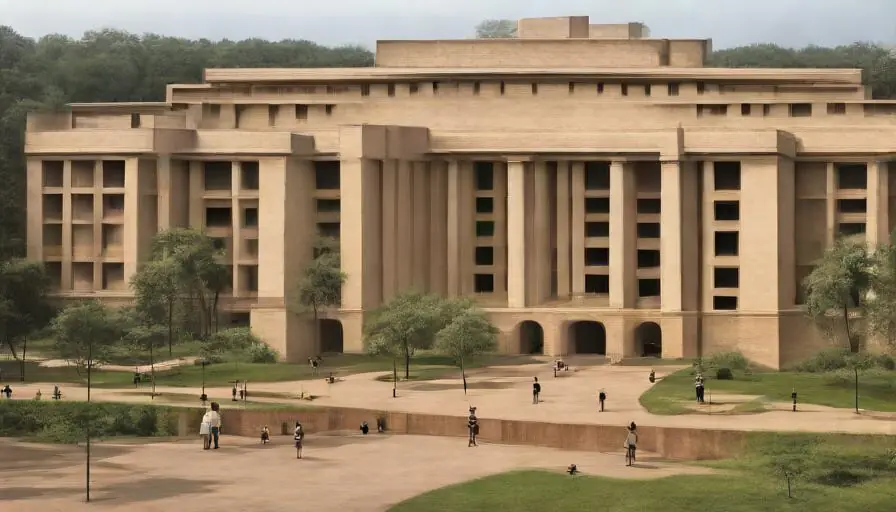
- The IIT system comprises 23 autonomous institutes, the first founded in 1951.
- Admission to IIT B.Tech programmes is through JEE Advanced; only the top ~2.5 lakh candidates qualify.
- In 2022‑23, the average graduate salary across IITs was INR 22 lakh per annum, with top offers exceeding INR 2.2 crore.
- IITs collectively received over INR 1,200 crore in research funding in FY 2022‑23 and have launched more than 5,000 start‑ups.
- IIT alumni hold over 30 % of CEO positions in India’s top‑50 companies.
What are the Indian Institutes of Technology (IITs)?
The Indian Institutes of Technology (IITs) are a system of autonomous public technical universities funded by the Government of India. Each institute operates under the Institutes of Technology Act, 1961, which grants them the authority to award degrees in engineering, technology, sciences, and management.
History and expansion
The first IIT was founded in Kharagpur in 1951 with assistance from the Soviet Union. Over the next two decades, IIT Bombay (1958), IIT Madras (1959), IIT Kanpur (1959), and IIT Delhi (1961) were added. Since 2001, the network has grown to 23 institutes, the latest being IIT Tirupati (2015) and IIT Jammu (2017).
How many IITs exist and where are they located?
As of 2024, there are 23 IITs spread across India, from the north‑east to the southern tip. The table below lists each institute, its year of establishment, and its host city.
| IIT | Year Established | Location |
|---|---|---|
| IIT Kharagpur | 1951 | Kharagpur, West Bengal |
| IIT Bombay | 1958 | Mumbai, Maharashtra |
| IIT Madras | 1959 | Chennai, Tamil Nadu |
| IIT Kanpur | 1959 | Kanpur, Uttar Pradesh |
| IIT Delhi | 1961 | New Delhi |
| IIT Guwahati | 1994 | Guwahati, Assam |
| IIT Roorkee | 1847 (as Roorkee College) | Roorkee, Uttarakhand |
| IIT Bhubaneswar | 2008 | Bhubaneswar, Odisha |
| IIT Gandhinagar | 2008 | Gandhinagar, Gujarat |
| IIT Hyderabad | 2008 | Hyderabad, Telangana |
| IIT Jodhpur | 2008 | Jodhpur, Rajasthan |
| IIT Patna | 2008 | Patna, Bihar |
| IIT Ropar | 2008 | Ropar, Punjab |
| IIT Indore | 2009 | Indore, Madhya Pradesh |
| IIT (BHU) Varanasi | 1919 (as Banaras Engineering College) | Varanasi, Uttar Pradesh |
| IIT Mandi | 2009 | Mandi, Himachal Pradesh |
| IIT Palakkad | 2015 | Palakkad, Kerala |
| IIT Tirupati | 2015 | Tirupati, Andhra Pradesh |
| IIT Dhanbad | 1960 (as Coal & Steel) | Dhanbad, Jharkhand |
| IIT Bhilai | 2016 | Bhilai, Chhattisgarh |
| IIT Goa | 2016 | Goa |
| IIT Jammu | 2017 | Jammu, Jammu & Kashmir |
| IIT Dharwad | 2016 | Dharwad, Karnataka |
What is the admission process for IITs?
Admission to undergraduate programmes (B.Tech) is solely through the Joint Entrance Examination (JEE) system, which consists of two stages: JEE Main and JEE Advanced.
JEE Advanced eligibility and cutoff scores
- Only the top 2.5 lakh candidates (approximately 2.2 % of JEE Main takers) qualify for JEE Advanced.
- Each IIT publishes a branch‑wise opening and closing rank; for example, in 2023, the opening rank for Computer Science at IIT Bombay was 66, while the closing rank was 1,274.
- International students may apply through the Direct Admission of Students Abroad (DASA) scheme, which also uses JEE Advanced scores.
After clearing JEE Advanced, candidates participate in a centralized counselling process called JoSAA, where they rank their preferred IITs and branches.
What are the placement outcomes for IIT graduates?
Placement statistics are published annually by each institute. Across the 23 IITs, the average salary for the 2022‑23 graduating batch was INR 22 lakh per annum (≈ US $27,000), with a median of INR 15 lakh.
- IIT Bombay reported a highest salary of INR 2.2 crore (≈ US $270,000) per annum, offered by a global tech giant.
- IIT Madras placed 94 % of its 2022 graduates, with 1,100 students receiving offers before the campus recruitment window closed.
- Over 40 % of placed students accepted roles in software development, 18 % in core engineering, and 12 % in consulting or finance.
How does IIT research contribute to industry and society?
IITs receive substantial research funding from the Indian government, industry partners, and international agencies. In fiscal year 2022‑23, the combined research budget exceeded INR 1,200 crore (≈ US $150 million).
- Breakthroughs include the development of the first Indian‑made supercomputer (PARAM series) at IIT Madras.
- IIT Kharagpur’s “Mitra” project delivered low‑cost, solar‑powered water purification units to rural villages.
- Start‑up incubation cells across IITs have nurtured more than 5,000 spin‑off companies, collectively raising over INR 30,000 crore in venture funding.
Can I study at an IIT without engineering?
Yes. In addition to B.Tech, IITs offer postgraduate programmes (M.Sc., M.Tech, MBA, Ph.D.) in sciences, design, humanities, and management. Notable examples are the Master of Design at IIT Bombay and the MBA at IIT Kharagpur’s Vinod Gupta School of Management.
What is the alumni impact of IITs?
Collectively, IIT alumni have founded or led more than 2,000 technology firms, including global leaders such as Infosys, Flipkart, and NIO. As of 2023, IIT alumni hold over 30 % of CEO positions in India’s top‑50 companies.
Future plans for the IIT network
The Ministry of Education announced a “New IIT” initiative in 2024, targeting the creation of five additional institutes by 2030, with a focus on emerging fields like artificial intelligence, renewable energy, and quantum computing.
How do IITs rank globally?
In the 2024 QS World University Rankings, IIT Bombay and IIT Delhi are placed in the 200‑250 band, while IIT Madras appears in the 250‑300 range. Among engineering‑specific rankings, IIT Kanpur ranks 52nd worldwide for Electrical Engineering and 61st for Computer Science.
What scholarships and financial aid are available for IIT students?
All IITs provide merit‑based fee waivers for top JEE Advanced rankers. Additionally, the Ministry of Education runs the Central Sector Scheme of Scholarships (CSSE) covering tuition, hostel, and living expenses for students from economically weaker sections. Corporate fellowships—such as the Google India Women in Engineering Scholarship—support under‑represented groups.
- Merit fee waiver: up to 100 % tuition for top 10 % of JEE Advanced qualifiers.
- CSSE scholarship: INR 2,000 per month stipend plus full tuition for 8‑year undergraduate+postgraduate track.
- Corporate fellowships: typically INR 50,000‑100,000 per annum, renewable based on academic performance.
What is student life like at an IIT?
Each campus hosts a vibrant mix of technical clubs, cultural societies, and entrepreneurship cells. Annual festivals such as “Mood Indigo” (IIT Bombay) and “Saarang” (IIT Madras) attract thousands of participants. Sports facilities include cricket grounds, indoor arenas, and gymnasiums, while hostels provide self‑catering meals and 24‑hour internet.
Frequently Asked Questions
What is the minimum JEE Advanced rank to get into Computer Science at IIT Bombay?
In the 2023 round, the opening rank for Computer Science at IIT Bombay was 66 and the closing rank was 1,274. A rank below 1,300 typically secures a seat, though exact cut‑offs vary each year.
Can international students study at IITs?
Yes. International applicants can join IITs through the Direct Admission of Students Abroad (DASA) scheme, which uses JEE Advanced scores and offers the same courses and scholarships as Indian students.
How many IITs offer MBA programmes?
Four IITs currently run full‑time MBA programmes: IIT Kharagpur (Vinod Gupta School of Management), IIT Delhi (Department of Management Studies), IIT Bombay (Shailesh J. Mehta School of Management), and IIT Roorkee (Department of Management Studies).
What are the major research achievements of IITs?
Key achievements include the PARAM series supercomputers from IIT Madras, the low‑cost solar water‑purification ‘Mitra’ project by IIT Kharagpur, and pioneering work in graphene, quantum computing, and renewable energy that have been patented and commercialised.