ISRO Gaganyaan: Crew Module-Service Module Separation Tests Completed Before First Uncrewed Mission
- ISRO has successfully completed the Crew Module-Service Module Separation Tests for the Gaganyaan programme, which The Hindu describes as a key test ahead of Gaganyaan's first uncrewed mission.
- The completed test proves the crew module can detach cleanly from the service module so the crew cabin can follow its own re-entry path, a mechanism that must work even on the uncrewed test flight.
- ISRO's upcoming missions, as reported, include Gaganyaan, Chandrayaan-4, and BAS, but the published headlines state no launch dates or detailed mission profiles.
- ISRO is India's space agency, founded in 1969 and headquartered in Bengaluru; Gaganyaan is its first human spaceflight programme.
The Indian Space Research Organisation (ISRO) has successfully completed the Crew Module-Service Module Separation Tests for its Gaganyaan programme, with The Hindu describing the achievement as a key test cleared ahead of the programme’s first uncrewed mission. Alongside Gaganyaan, ISRO’s pipeline of upcoming missions reported in recent headlines includes Chandrayaan-4 and BAS, though the published reports do not give exact launch dates or a firm sequence for these flights.
What is ISRO, and why is the Gaganyaan test in the news right now?
ISRO, the Indian Space Research Organisation, is the space agency of the Government of India, headquartered in Bengaluru and operating under the Department of Space. Founded in 1969, the agency has built a reputation for delivering complex missions at comparatively low cost, from the Polar Satellite Launch Vehicle (PSLV) workhorse to the Mars Orbiter Mission, or Mangalyaan, in 2013, which made India the first Asian nation to reach Mars and the first in the world to do so on its maiden attempt.
The agency is now in the headlines because of the Gaganyaan human spaceflight programme. The name means “sky craft” in Sanskrit, and it is India’s first crewed orbital mission programme. The latest milestone is ISRO’s own confirmation that the Crew Module-Service Module Separation Tests for Gaganyaan have been successfully completed; The Hindu’s coverage frames the test explicitly as a key step taken ahead of the programme’s first uncrewed mission.
What did the Crew Module-Service Module Separation Test actually check?
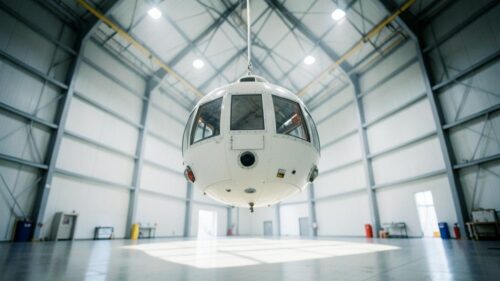
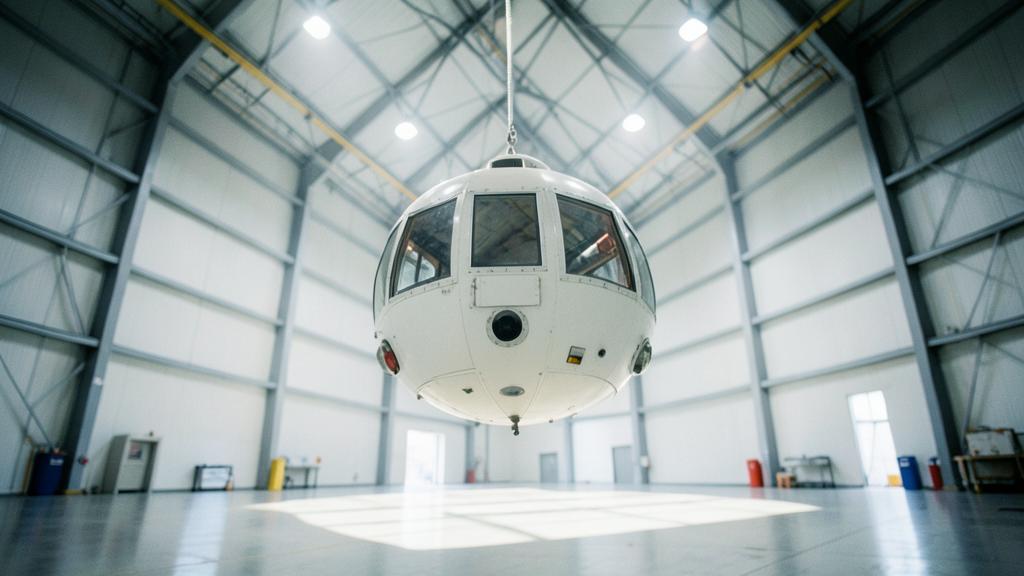
A human-rated spacecraft for Gaganyaan is built around two principal sections. The crew module is the habitable segment that will carry Indian astronauts, while the service module carries the systems that keep the stack operational during flight, including propulsion and support equipment. At a defined point before the crew module’s return to Earth, the two sections must part company cleanly so that the crew cabin can follow its own re-entry path.
The separation test therefore exercises one of the most sequence-critical manoeuvres in the mission design: proving that the crew module detaches from the service module reliably and on command. ISRO’s announcement confirms the tests were completed successfully, but the reports do not detail the test configuration, the number of qualification runs performed, or the facility where they took place. Those specifics have not been stated in the published headlines.
Why does the coverage call this a key test ahead of the first uncrewed mission?
Even an uncrewed flight carries the full crew-capable spacecraft, so every separation mechanism must be proven before astronauts board. If the crew module failed to detach from the service module, the re-entry phase of the mission would be compromised. Completing the separation tests is therefore a necessary gate on the road to Gaganyaan’s first uncrewed flight, which is precisely how the recent news coverage frames the milestone. What the reports do not yet provide is the launch date for that flight; no date appears in the headlines summarising the test.
Which launch vehicle is expected to carry Gaganyaan?
ISRO’s public programme materials identify the Launch Vehicle Mark-3, also known as LVM3 and earlier called the GSLV Mk III, as the rocket intended to launch Gaganyaan missions, including the first uncrewed flight. The headlines about the separation tests do not themselves name a launch vehicle, so that association comes from the agency’s broader programme description rather than from the test reports.
Which missions are coming next for ISRO?
Beyond Gaganyaan, ISRO’s reported slate of upcoming missions includes Chandrayaan-4 and BAS. The current headlines do not state the objectives, payloads, or launch windows for either mission beyond their names, so detailed mission profiles for Chandrayaan-4 and BAS have not been confirmed in the available coverage.
| Mission | Role in ISRO’s plans | Status in recent headlines |
|---|---|---|
| Gaganyaan | India’s first human spaceflight programme; an uncrewed flight precedes the crewed missions | Crew Module-Service Module Separation Tests successfully completed, a key test ahead of the first uncrewed mission |
| Chandrayaan-4 | Lunar exploration follow-on in the Chandrayaan series | Listed as an upcoming ISRO mission; details not stated in the headlines |
| BAS | Not described in the published reports | Listed as an upcoming ISRO mission; details not stated in the headlines |
How does Gaganyaan fit into ISRO’s broader mission history?
Gaganyaan is best understood against the agency’s run of milestones. Chandrayaan-1 in 2008 found evidence of water molecules on the Moon; the Mars Orbiter Mission reached Mars in 2013; Chandrayaan-2 followed in 2019; and Chandrayaan-3 in 2023 soft-landed near the lunar south pole, making India one of the few countries to touch down on the Moon. ISRO has also flown Aditya-L1, a solar observatory placed in a halo orbit around the Sun-Earth Lagrange point L1. Human spaceflight is the next chapter in that sequence, and the completed separation tests move Gaganyaan closer to its first uncrewed flight.
Why does the Gaganyaan programme matter for India?
If it succeeds, Gaganyaan would make India only the fourth entity to send its own astronauts into orbit, after the United States, Russia, and China. For ISRO, which has so far concentrated on robotic exploration with missions such as Chandrayaan and Mangalyaan, human spaceflight represents a deliberate step into crewed operations. The completed separation tests are therefore more than an engineering checkbox; they are visible progress toward a national capability that India has long treated as a priority.
What remains unknown about the Gaganyaan schedule?
It is worth stating plainly what the current reporting does not cover. None of the published headlines gives a launch date for Gaganyaan’s first uncrewed mission, a date for the crewed flight that follows, the number of astronauts to be flown, or the astronaut selection process for early missions. Likewise, no dates, budgets, or specifications for Chandrayaan-4 and BAS appear in the recent coverage. Readers following the programme should treat those specifics as unconfirmed until ISRO issues official statements.
Sources
Frequently Asked Questions
What is Gaganyaan?
Gaganyaan is ISRO's first human spaceflight programme; the name means "sky craft" in Sanskrit. The programme will fly Indian astronauts into orbit, and before the crewed mission an uncrewed flight is planned. The milestone ISRO recently cleared is the Crew Module-Service Module Separation Test, described as a key step toward that flight.
What did ISRO's Crew Module-Service Module Separation Test involve?
The test verified that Gaganyaan's crew module can separate cleanly from the service module, which carries propulsion and support systems, so the crew cabin can follow its own re-entry path. ISRO reports the tests were completed successfully; the published headlines do not give further technical detail.
When will Gaganyaan's first uncrewed mission launch?
The recent headlines do not provide a launch date for Gaganyaan's first uncrewed mission. The reports confirm that the Crew Module-Service Module Separation Tests were completed successfully, but no dates for the uncrewed or crewed flights appear in the available coverage.
What other missions does ISRO have coming after Gaganyaan?
Recent ISRO coverage lists Chandrayaan-4 and BAS alongside Gaganyaan as upcoming missions. The published headlines do not state objectives, payloads, or launch windows for Chandrayaan-4 or BAS, so those details remain unconfirmed.
Why is the separation test important for India's space programme?
The crew module must detach from the service module reliably so the crew cabin can re-enter safely, and even the uncrewed Gaganyaan flight carries the crew-capable spacecraft. Success brings India closer to joining the United States, Russia, and China as the fourth entity to send its own astronauts into orbit.
About The Author