
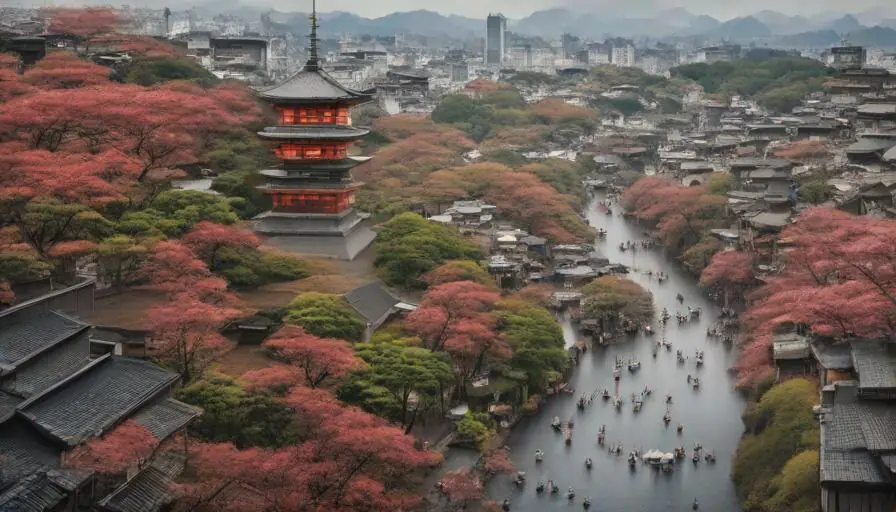
- Japan is an island nation in East Asia composed of 6,852 islands, anchored by Honshu, Hokkaido, Kyushu, and Shikoku.
- With a nominal GDP of approximately $4.2 trillion, Japan has the world's fourth-largest economy and leads in robotics and automotive manufacturing.
- The Greater Tokyo Area is the most populous metropolitan region in the world, holding over 37.4 million residents.
- Japan introduced high-speed rail in 1964 with the Shinkansen, which operates at commercial speeds up to 320 km/h (200 mph).
Japan is an island nation located in East Asia in the northwest Pacific Ocean, composed of 6,852 islands anchored by four main landmasses: Honshu, Hokkaido, Kyushu, and Shikoku. Known globally for its integration of ancient cultural traditions and cutting-edge technology, Japan covers 377,975 square kilometers and maintains a population of approximately 124.5 million people as of 2024. The country features Tokyo as its national capital, operates as the world’s fourth-largest economy by nominal gross domestic product (GDP), and serves as a major global center for automotive manufacturing, robotics, and international trade.
What Is the Geography and Population of Japan?
Japan stretches along the geologically active Pacific Rim of Fire, resulting in a predominantly mountainous terrain where over 73% of the land is forested and unsuitable for agricultural or residential development. The highest elevation in Japan is Mount Fuji, an active stratovolcano located on Honshu island that reaches 3,776 meters (12,389 feet) above sea level. Climate zones vary across the archipelago, ranging from subarctic in northern Hokkaido to subtropical in southern Okinawa. Due to this mountainous topography, the majority of the population resides in dense urban areas along coastal plains.
With a population of approximately 124.5 million, Japan is divided administratively into 47 prefectures across eight geographic regions. The Greater Tokyo Area—encompassing Tokyo and surrounding prefectures like Kanagawa and Saitama—is the world’s most populous metropolitan area, containing over 37.4 million residents. The nation faces a significant demographic shift characterized by an aging society, where over 29% of citizens are aged 65 or older.
| Main Island | Land Area (sq km) | Major Cities |
|---|---|---|
| Honshu | 227,960 | Tokyo, Yokohama, Osaka, Kyoto |
| Hokkaido | 77,981 | Sapporo, Hakodate |
| Kyushu | 36,782 | Fukuoka, Nagasaki |
| Shikoku | 18,800 | Matsuyama, Takamatsu |
How Does Japan’s Economy and Technology Sector Work?
Japan possesses the fourth-largest national economy globally by nominal GDP, valued at approximately $4.2 trillion. The country is a prominent member of the G7 and G20, with an economic model centered around advanced manufacturing, automotive engineering, precision machinery, robotics, and financial services. Market leaders headquartered in Japan include Toyota, Honda, Sony, Panasonic, and SoftBank. Lacking abundant domestic natural resources, Japan relies heavily on imported raw materials and energy products.
Infrastructure innovation remains a key driver of economic efficiency in Japan. In 1964, Japan inaugurated the world’s first high-speed rail line, the Shinkansen (bullet train), connecting Tokyo and Osaka. Modern Shinkansen trains travel at operational speeds up to 320 km/h (200 mph) while maintaining an unprecedented safety record with zero passenger fatalities due to derailments or collisions. Additionally, Japan is a global leader in industrial automation, manufacturing over 45% of the worldwide supply of industrial robots.
What Are Key Cultural Traditions and Landmarks in Japan?
Japanese culture represents a synthesis of indigenous Shinto animist beliefs and imported Mahayana Buddhist philosophy, heavily influenced by historical isolation during the Tokugawa shogunate (1603–1867) and rapid Westernization during the Meiji Restoration in 1868. Contemporary Japan preserves classical artistic traditions—such as Kabuki theater and the traditional tea ceremony—alongside globally influential pop culture exports including anime, manga, and video games.
- Historic Monuments of Ancient Kyoto: A UNESCO World Heritage site comprising 17 historical locations, including Kinkaku-ji (The Golden Pavilion) and Kiyomizu-dera, originally established in 778 AD.
- Mount Fuji: Designated a UNESCO Cultural Site in 2013 for its spiritual significance in Shintoism and historical role in Japanese ukiyo-e art.
- Hiroshima Peace Memorial: The preserved Genbaku Dome structure that survived the atomic bombing on August 6, 1945, standing as an international symbol for peace.
- Washoku Culinary Tradition: Traditional Japanese cuisine was inscribed as UNESCO Intangible Cultural Heritage in 2013 due to its emphasis on seasonal ingredients and nutritional balance.
When Is the Best Time to Visit Japan?
Japan experiences four distinct seasons, each offering unique climatic conditions and activities:
- Spring (March to May): Offers mild temperatures averaging 10°C to 20°C (50°F–68°F). This is peak travel season driven by the blooming of cherry blossoms (sakura), which peaks between late March and early April.
- Summer (June to August): Brings warm conditions between 25°C and 35°C (77°F–95°F). June features the rainy season (tsuyu), followed by traditional summer street festivals (matsuri) in July and August.
- Autumn (September to November): Delivers comfortable weather with temperatures ranging from 12°C to 22°C (54°F–72°F). Visitors travel during this period to view vivid autumn foliage (koyo).
- Winter (December to February): Cold weather prevails, with heavy snowfall in northern regions like Hokkaido, creating prime conditions for skiing in resorts like Niseko.
What Should Travelers Know Before Visiting Japan?
Travelers preparing for a trip to Japan should consider several practical social and logistical standards:
- Currency and Payments: The Japanese Yen (JPY) is the legal currency. While payment cards and contactless IC cards (Suica/Pasmo) are widely used in urban areas, cash remains necessary for small shops, temple entry fees, and rural transit.
- Public Transport Efficiency: Japan’s transit network is exceptionally punctual. Rail passes and IC cards streamline urban subway and regional train travel.
- Social Etiquette: Tipping is not customary in Japan and is polite to avoid. Mobile phones should be set to silent on public transit, and individuals generally carry their personal trash home due to limited public waste bins.
Frequently Asked Questions
What is the capital of Japan and how large is its population?
Tokyo is the capital of Japan. The Greater Tokyo Area is the world's most populous metropolitan region with over 37.4 million residents, while Tokyo Proper contains approximately 14 million people within its municipal city boundaries.
What currency is used in Japan and are credit cards accepted?
The official currency of Japan is the Japanese Yen (JPY). Major urban hotels, stores, and restaurants accept credit cards and contactless IC cards, but cash remains necessary for small eateries, rural transport, and traditional temples.
When is the best time to see cherry blossoms in Japan?
The peak cherry blossom (sakura) season in major destinations like Tokyo, Kyoto, and Osaka generally occurs between late March and early April, moving from south to north across the country depending on annual climate conditions.
Is tipping customary in Japan?
No, tipping is not customary anywhere in Japan. Excellent customer service is considered standard in restaurants, taxis, and hotels. Leaving a tip can cause confusion and the extra money will usually be politely returned.