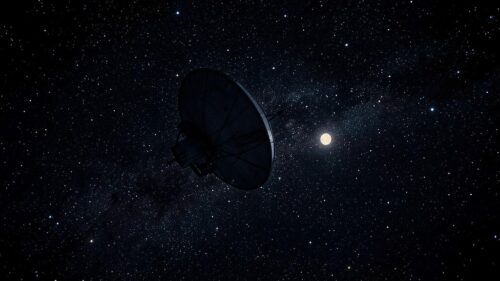
NASA’s Voyager 1 crosses one light-day from Earth, 48 years after 1977 launch
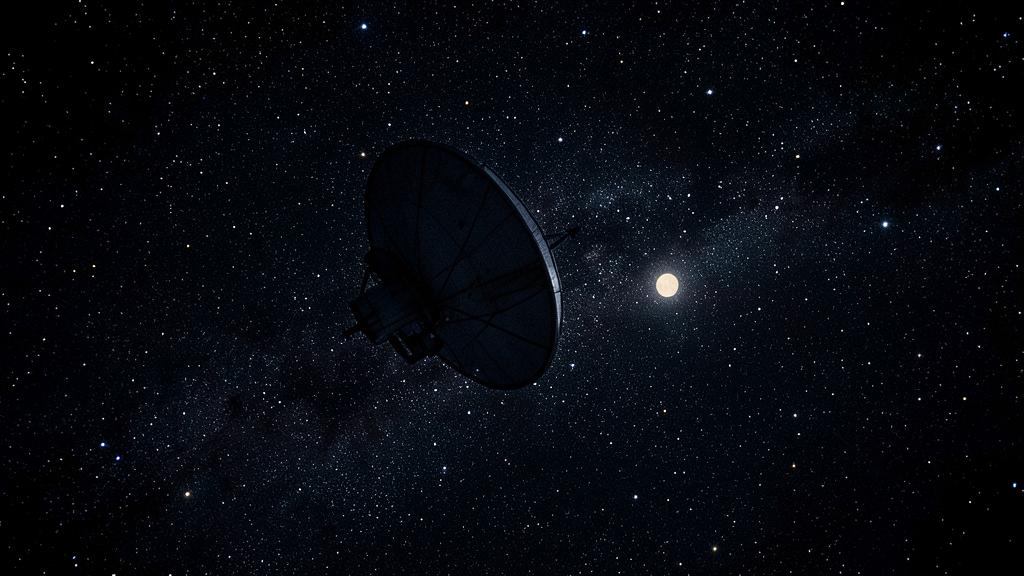
NASA’s Voyager 1 is now one light-day from Earth. That is roughly 16 billion miles out, and it makes the 48-year-old spacecraft the farthest human-made object in space.
The milestone was expected to be crossed on November 18, reports said. At that distance, a radio signal sent from Earth takes a full day to reach the spacecraft, and another day to return. A simple two-way exchange takes two full days. The Economic Times put the one-way travel time at 24 hours, which matches what Live Science reported about the light-day mark.
What the probe is running on
Voyager 1 was launched in 1977 to study the outer planets. It has been flying for nearly half a century and still communicates with NASA’s engineers. The Hindu noted that the 24-hour signal delay is now the defining feature of the mission.
The power source is fading plutonium. The Hindustan Times reported that engineers still manage to operate the probe and even revived spare thrusters once believed dead. Commands from Earth now travel roughly 26 billion km one way, and engineers wait two days for every reply.
The spacecraft carries 1970s-era technology. It operates a small set of science instruments, and NASA continues to manage the aging systems from the surface.
Milestone no Earth craft has reached before
According to the Hindustan Times, Voyager 1 is believed to be the first human-made object to reach one light-day from Earth. Al Jazeera called it a historic milestone happening nearly 50 years after the 1977 launch. USA Today said the probe was expected to reach the mark on November 18.
India Today described Voyager 1 as humanity’s farthest traveller, noting that its 1970s technology, nuclear power source and ageing systems keep it going. The Live Science report offered a photo retrospective of the spacecraft’s 50 years of discoveries.
The distance works out to about 16.09 billion miles, per Outlook India’s report. That is a number that had no meaning for any earlier mission. No other spacecraft from Earth has come this far, and signals now take a full day to cross the gap in a single direction.
NASA has not announced that the probe will turn back or fall silent. The team on the ground continues to send commands and wait for replies. Each command takes a day to arrive and its reply takes another. That slow rhythm, not any breakdown, is now the cost of running the most distant object ever built.
Sources
About The Author