The Enduring Craft: A Deep Dive into the World of Clocks

The Universal Measure: Understanding the Clock
Since the dawn of civilization, humanity has been obsessed with measuring time. At the heart of this obsession lies the clock—a device far more complex than its simple face and hands suggest. More than mere timekeepers, clocks are cultural artifacts, scientific marvels, and works of exquisite art. They dictate our schedules, govern global economies, and have fundamentally shaped how we experience the passage of moments. A truly masterful clock marries intricate engineering with elegant design, offering a tangible connection to the relentless flow of time.
But what makes a clock so compelling? It’s the intersection of art and applied physics. Depending on whether it ticks with the steady rhythm of pendulums, whispers the whir of quartz crystals, or glows with digital precision, every timepiece tells a story of human ingenuity. This exploration will take you through the history, mechanics, and sheer artistry behind the marvelous invention that is the clock.
A Journey Through Timekeeping History
The need for standardized timekeeping predates written history. Early methods were rudimentary, relying on natural phenomena. Sundials were our first great clock—a shadow cast by the sun, providing local, time-of-day measurements. As societies grew and commerce flourished, the limitations of solar power became apparent, leading to innovations that required more consistency.
From Water to Pendulum: Early Advancements
Water clocks (clepsydra) provided a steady, measurable flow, while sandglasses measured fixed intervals. However, the revolution truly began with the perfection of escapement mechanisms. The most monumental leap was credited to Christiaan Huygens, who successfully applied the pendulum to timekeeping in the late 17th century. The pendulum introduced a new, predictable rhythm—a swing governed by physics—that dramatically increased the accuracy of the clock beyond anything previously conceived. This moment marked the transition from measurement guesswork to mechanical science.
The Anatomy of Time: How Clocks Work
Beneath the polished face lies a miniature mechanical universe. Understanding the core components helps demystify the magic of timekeeping. While modern quartz movements are wonderfully simple, traditional mechanical clocks boast incredible complexity.
Understanding Movement Types
The movement refers to the mechanism that powers the hands. Generally, we categorize these movements into three major groups:
Mechanical Clocks (The Traditional Masterpiece)
These are the workhorses of historical horology. They are powered by a wound mainspring or weights. Key components include the gear train (which transmits power), the escape wheel (which regulates the power release), and the escapement (the physical device that controls the timing, often the most delicate part of the entire mechanism). A mechanical clock requires regular winding and careful maintenance by a skilled watchmaker.
Quartz Clocks (The Modern Standard)
Quartz clocks use the consistent vibration of a precisely cut quartz crystal, powered by a battery. This technology is incredibly accurate and reliable, which is why digital and household clocks overwhelmingly use it. While less complex mechanically than an antique, its precision is staggering.
Digital Clocks (The Purely Electronic Approach)
These rely on printed circuit boards and electronic oscillators. They provide instant readability but lack the tactile, rhythmic appeal that defines older timepieces.
The Artistry of the Clock Face
It is crucial to remember that a clock is rarely just about time; it is about aesthetics. The materials, the craftsmanship, and the visual design imbue the object with character. Antique clocks often feature intricate carvings, rich mahogany casings, and elaborate dials that reflect the wealth and taste of their original owners. Modern designers treat the clock face as a piece of kinetic art, making the mechanism itself part of the display.
Choosing the Right Clock for Your Space
When selecting a timepiece, consider its function, style, and maintenance level. Do you need a reliable digital clock for a kitchen? A classic grandfather clock might be perfect for an entryway, lending gravitas and historical charm. For portability and personal style, a wristwatch—the most intimate form of clock—is unmatched. Always weigh your desire for mechanical artistry against the need for flawless, hassle-free accuracy.
The Enduring Appeal of Time
Ultimately, the clock serves as a constant, inescapable reminder of ephemerality. It measures our lives, our business cycles, and our fleeting moments of quiet contemplation. From the monumental church tower clock marking the hours for entire communities to the tiny wrist device coordinating our personal appointments, the clock remains one of humanity’s greatest achievements. It is a beautiful, mechanical testament to our endless quest to understand and manage the one resource that can never be reclaimed: time.
Beyond Telling Time: The Clock as a Scientific and Cultural Marvel
While most people view a clock as a mere indicator of minutes and hours, history reveals that some of the most complex timepieces served functions far beyond simple scheduling. Certain clocks were instruments of astronomy, navigation, and theology, making them miniature models of the known universe.
The Astronomical Clock: Mapping the Cosmos
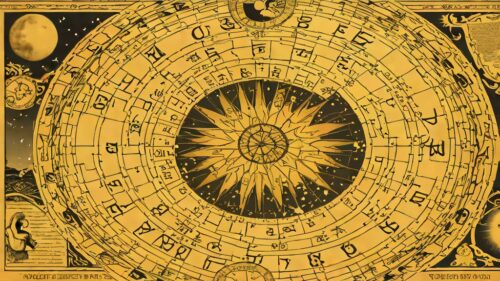
The astronomical clock represents the apex of horological art. These monumental devices, often housed in grand town halls or university museums, do not just track the Earth’s rotation. They are designed to track the celestial movements visible to the naked eye. They feature dials that illustrate not only the local time but also the positions of the Moon relative to the Earth, the phases of the Moon, and sometimes even the predicted transits of outer planets. Before reliable calculations of celestial mechanics, these clocks were vital tools for scholars, aligning earthly timekeeping with the immutable, predictable rhythms of the cosmos. Their creation demanded mastery not just of gears, but of Ptolemaic and Copernican models of the solar system.
Regional Artistry: The Cuckoo Clock Phenomenon
Different regions have fostered unique traditions in clockmaking. The Swiss Jura region, for example, is renowned for its precision mechanisms, while Germanic traditions gave rise to the highly decorative Cuckoo clock. These aren’t just decorative; they are miniature performances. The act of the cuckoo emerging from the housing, timed perfectly with the hour strike, adds a layer of playful, narrative timing that mechanical perfection alone cannot achieve. These clocks merge engineering with folk art, proving that the function of the clock can be deeply tied to regional cultural storytelling.
The Future of Timekeeping: Smart Clocks and Bio-Rhythms
Today, the definition of the “clock” continues to evolve. The convergence of technology and biology has given rise to ‘smart’ timepieces. These modern wearables move beyond mere time indication; they become personal bio-monitors. They track heart rate variability, sleep cycles, GPS location, and even estimate physical exertion. In this sense, the wrist-worn device is no longer just a measure of objective, standardized time, but a measure of *subjective, lived time*—the biological rhythm of the wearer.
This evolution signals a shift in the perceived value of time. While the pendulum once conquered human error with consistent physics, the smart clock attempts to quantify the human body’s own rhythms. The challenge, and the frontier of horology, is merging the pure, elegant mechanics of the past with the vast, personal data streams of the digital future.
Conclusion: Time as a Measure of Humanity
From the simple shadow on the ground to the micro-processors ticking on our wrists, the clock remains humanity’s most persistent, beautiful invention. It is a profound dialogue between science and spirituality—a constant acknowledgment that time is not a substance we possess, but a dimension we must perpetually measure, manage, and ultimately, live within. Every tick, whir, and electronic pulse is a monument to human curiosity, a testament to our unending quest to bring order and understanding to the one force that governs everything, and controls us all.
About The Author