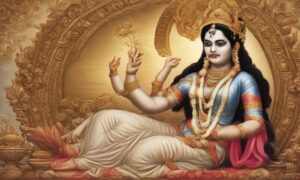

Discovering the Majesty of Sree Vishnu: The Cosmic Preserver
Within the vast and intricate tapestry of Hindu theology, few deities command the reverence and philosophical depth of Sree Vishnu. Recognized as the supreme preserver in the Trimurti triad—alongside Brahma the creator and Shiva the destroyer—Vishnu embodies the principle of maintenance, order, and the continuous cyclical existence of the cosmos. Understanding Sree Vishnu is not merely studying a god; it is delving into the very essence of cosmic sustenance, the unwavering commitment to dharma (righteous conduct).
His omnipresence is symbolized by his benevolent nature, ensuring that life, consciousness, and balance continue across countless cycles of time. Whether through grand cosmic interventions or subtle guidance in daily life, the principles embodied by Sree Vishnu remain foundational to spiritual understanding for millions.
Who is Sree Vishnu? Divine Role and Manifestations
The concept of Vishnu transcends a single physical form. He is the ultimate reality that sustains all manifest forms. In philosophical terms, he represents the dynamic force that prevents chaos and decay from overtaking existence. His divine energy ensures that moral law prevails and that life continues its eternal cycle.
The Pillars of Preservation
As the Preserver, Vishnu’s primary function is maintaining sthiti—the state of being. He does this by ensuring that the ethical guidelines, or *dharma*, established by the cosmic order remain intact. This role requires immense power, discipline, and boundless compassion. When imbalance threatens the world—when adharma reigns supreme—it is Vishnu’s intervention that restores equilibrium.
Emblems of Divine Authority
Vishnu is consistently depicted with four arms, symbolizing his ability to act simultaneously in four directions and manage multiple dimensions of existence. These arms typically hold sacred emblems, each carrying profound meaning:
- The Shankha (Conch Shell): Symbolizes the primordial sound of creation (Om) and the purity of consciousness.
- The Chakra (Discus): Represents the cosmic wheel of time and the sharp intellect needed to cut through illusion (maya).
- The Gada (Mace): Symbolizes physical and mental strength, enforcing righteous governance.
- The Padma (Lotus): Symbolizes purity, transcendence, and the potential of life arising untainted from the muck of existence.
These symbols are not mere decorations; they are actionable metaphors for the tools required for spiritual realization and maintaining societal balance.
The Grand Play: Avatars and Divine Incarnations
One of the most fascinating aspects of Sree Vishnu is his doctrine of Avatar—descent or incarnation. This theory posits that when humanity strays too far from righteousness, Vishnu incarnates on Earth in various forms to re-establish dharma. These incarnations are tailored precisely to the era’s greatest needs.
The Dashavatara System
The concept of the Dashavatara (Ten Primary Avatars) provides a framework for understanding Vishnu’s historical and mythological presence. While listing all ten is exhaustive, certain avatars stand out for their immense impact on spiritual thought and world history:
Matsya (The Fish)
The first avatar appeared to save humanity and the sacred knowledge from a great deluge, symbolizing the preservation of nascent life.
Kurma (The Tortoise)
He supported the cosmic mountain Mandara, providing the stable foundation necessary for creation to proceed.
Narasimha (Man-Lion)
This fierce incarnation appeared to destroy evil when conventional means failed, symbolizing necessary justice.
Rama (The Ideal King)
Associated with the epic Ramayana, Lord Rama embodies the ideal man—the perfect king, son, and husband. He represents adherence to duty (Maryada Purushottam). His life serves as a blueprint for ethical living.
Krishna (The Supreme Personality)
Arguably the most beloved avatar, Krishna’s life, detailed in the Mahabharata and the Bhagavad Gita, is central to devotional worship. Here, he embodies divine playfulness, profound wisdom, and the direct realization of universal truth. The Bhagavad Gita, spoken by Krishna to Arjuna, remains one of the most influential philosophical texts globally, teaching the path of selfless action (Karma Yoga).
The Philosophy of Devotion (Bhakti)
For the devotee, engaging with Sree Vishnu often centers on Bhakti—unconditional love and devotion. The goal is not simply to appease a deity but to align one’s will, actions, and heart with the divine cosmic rhythm he represents. Devotion teaches surrender, the understanding that while we are responsible for our actions, the ultimate management of karma belongs to the divine.
This philosophy encourages introspection. By meditating on Vishnu’s forms, devotees seek to cultivate qualities such as unwavering resolve, compassion, patience, and duty-bound action, believing that by embodying these virtues, they move closer to the divine state.
In essence, Sree Vishnu is the cosmic promise: the promise that order will eventually return, that virtue will triumph over vice, and that through devotion and adherence to one’s path, peace is always attainable. His story is an eternal reassurance woven into the fabric of existence, a guiding light across the vast ocean of time.
The Nine Sacred Places: Vishnu’s Sacred Geography
The reverence for Sree Vishnu is geographically manifested through countless sacred sites, many of which are believed to be direct points of divine connection or the location of his repose. These places, often marked by opulent temples, are not merely architectural marvels; they are considered conduits through which the divine energy can be channeled to the devotee. Understanding these sites deepens the personal connection to the deity’s narrative.
Vrindavan and Mathura: The Luminous Lila (Divine Play) Grounds
These towns, central to the life of Krishna, are considered the heartland of Vishnu’s divine play (*Lila*). Mathura is often seen as the place of Vishnu’s earthly birth, while Vrindavan represents the idyllic pastoral setting where Krishna spent his youth, characterized by divine love and joyous spiritual exuberance. Pilgrims visit these areas to immerse themselves in the palpable atmosphere of devotion, participating in festivals that recreate the divine stories.
Tirupati: The Apex of Devotion
The temple complex of Tirumala Venkateswara Temple, dedicated to Srinivasa (a form of Vishnu), stands as one of the most visited pilgrimage sites globally. It is renowned for its sheer scale of devotion and the abundance of divine grace (*prasada*). The pilgrimage here is often seen as a symbolic journey toward overcoming worldly attachments and receiving divine benediction for material well-being and spiritual progress alike.
Rituals and Practices: Connecting with the Preserver
Connecting with Vishnu’s energy can be achieved through structured practices rooted in tradition. These rituals help devotees internalize the principles of preservation and dharma.
Japa and Mantras
Chanting specific mantras, particularly the sacred names of Vishnu, is a cornerstone of devotional practice. The recitation of “Om Namo Bhagavate Vasudevaya” or simply chanting “Hare Krishna” (which incorporates Krishna, a form of Vishnu) helps quiet the restless mind. The repetitive nature of *Japa* acts as a meditative anchor, drawing the consciousness away from fleeting thoughts and towards the eternal reality represented by Vishnu.
The Importance of Deity Worship (Murti Puja)
In the temple setting, *Murti Puja* involves the elaborate worship of the deity’s idol. This practice is highly ritualistic, involving offerings of flowers, incense, milk, sandalwood paste, and sacred water (*abhisheka*). The act of offering—the surrender of one’s best—is a tangible way of enacting *bhakti*, acknowledging the supreme reality that transcends the mundane. It reinforces the belief that the divine presence is accessible and responsive.
Modern Relevance: Vishnu and Contemporary Ethics
In a world grappling with rapid change, ethical dilemmas, and existential uncertainty, the teachings associated with Sree Vishnu offer enduring philosophical anchors. His embodiment of *Dharma* serves as a universal guidepost.
When faced with choices—career decisions, moral quandaries, or societal conflicts—the core question posed by Vaishnava philosophy is: “What action aligns with *dharma*?” This shifts the focus from self-interest to cosmic balance. Understanding Vishnu teaches that true preservation is not about resisting change, but about guiding change toward a state of greater righteousness and harmony.
By recognizing Vishnu as the ultimate sustaining force, the modern practitioner finds a sense of cosmic perspective. Personal struggles are framed not as endpoints, but as temporary dips in the great, eternal river of cosmic time, reassured by the inherent promise of preservation and renewal.