What a 4.1-Billion-Year-Old Saharan Meteorite Reveals About Early Martian Water
The true scientific value of ancient space rocks lies not merely in confirming that Mars was once wet, but in proving that fluid systems were actively altering its deep crust over 4.1 billion years ago.
- Teghaza 001 was found in the Sahara Desert in 2022 and dated to over 4.1 billion years old by NASA-funded scientists.
- The meteorite contains minerals showing water interacted with rocks deep beneath Mars' surface while liquid water flowed above.
- Its composition matches orbital readings taken in the cratered southern highlands by NASA's Mars Reconnaissance Orbiter.
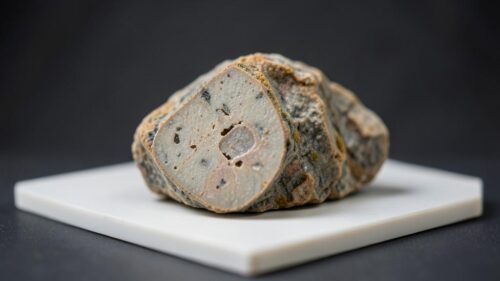
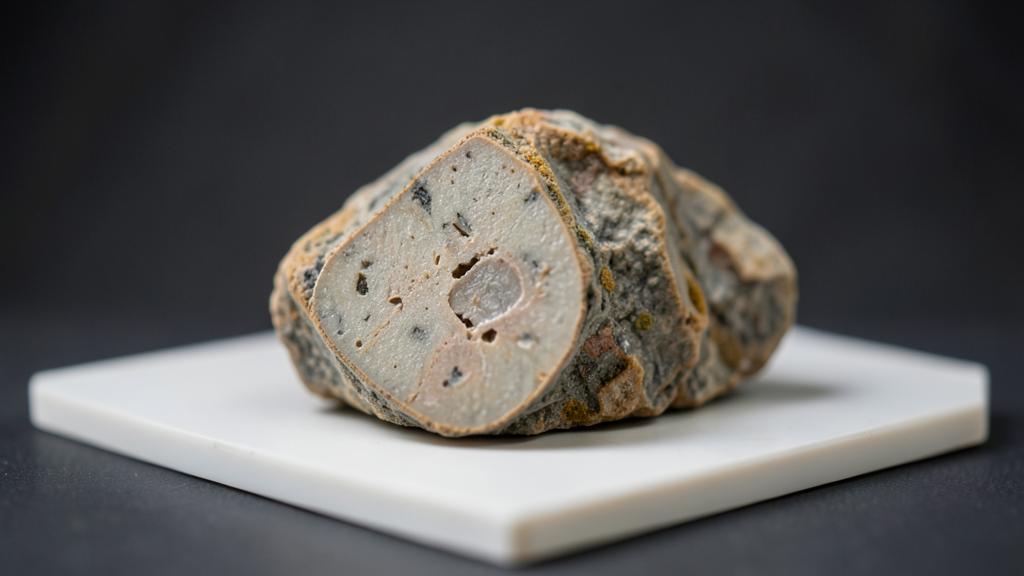
Scientists funded by NASA have completed their workings to date and analyze Teghaza 001, a rosy stone spotted in the middle of the Sahara Desert in 2022. Their findings establish that the space rock formed over 4.1 billion years ago, positioning it among the oldest Martian meteorites ever identified on Earth. This 4.1-billion-year-old Mars meteorite was sitting on the surface during the Red Planet’s youth, an era when liquid water was actively flowing across its exterior and interacting with rocks deep beneath the surface.
Most Martian samples available to researchers today represent much younger volcanic rocks formed during later stages of the planet’s geological history. In contrast, Teghaza 001 preserves a rare look into Mars’ wetter past, holding 4.1-billion-year-old clues to magma and fluid chemistry that reveal an ancient crust and mantle unlike those found in most available space rock samples.
Teghaza 001 moves the timeline of Martian water deep underground
The physical slice of Teghaza 001 offers direct evidence that water was not just an occasional surface phenomenon, but a major factor in deep crustal chemistry. Minerals locked inside the space rock detail how liquid water interacted with rocks deep beneath the surface of Mars, permanently changing the mineral composition of the planet’s primordial crust.
This dual presence of surface liquid and subsurface fluids over 4.1 billion years ago demonstrates that the Red Planet maintained active geochemical cycles early in its existence. Because the sample preserves both magma signatures and water-altered minerals, it gives NASA scientists a detailed view of how the Martian crust and mantle evolved together during the planet’s early history, when conditions may have been suitable for life.
Matching orbital imagery with physical rock in the southern highlands
Beyond its age, the mineral composition of Teghaza 001 matches specific geological features observed from space. NASA’s Mars Reconnaissance Orbiter has mapped the cratered southern highlands of Mars, recording distinct mineral signatures across the ancient, heavily impacted terrain.
The laboratory analysis of the Sahara specimen directly matches those features observed in the cratered southern highlands by the Mars Reconnaissance Orbiter. Having an actual physical rock sample on Earth that mirrors the data collected from orbit allows laboratory instruments to test and confirm what space agency orbiters mapped from miles above the planet. The match indicates that Teghaza 001 originated in the cratered southern highlands before an ancient impact blasted it into space.
Single surface finds cannot yet prove planet-wide habitability
There is a fair counter-argument regarding how much a single sample can reveal about overall planetary habitability. Cautious researchers note that an isolated rock, even one ejected as a Mars meteorite, may reflect localized volcanic or hydrothermal activity rather than a consistent, planet-wide water system.
A single piece of crust ejected from Mars could represent a specific underground pocket where magma and groundwater met, rather than proof that the entire planet maintained stable oceans or long-term habitable surface conditions. While the stone hints that our celestial neighbor was once a watery world capable of hosting life, interpreting global climate history from one meteorite leaves open questions that require further physical exploration.
Even with those caveats, this ancient rock found in the Sahara Desert offers a direct physical link to the period when Mars had flowing water. Because geological processes destroyed most of Earth’s rock record from 4.1 billion years ago, studying pristine Martian samples like Teghaza 001 remains one of the primary ways scientists hope to solve mysteries about the early conditions that allowed life to emerge. NASA-funded teams continue to analyze the mineral grains inside the slice to detail the exact temperatures and chemical reactions that formed it.
Reporting from
- A Meteorite Found in the Sahara Is a 4.1-Billion-Year-Old Piece of Mars — The New York Times
- Slice of Martian Meteorite Teghaza 001 — NASA Science (.gov)
- The oldest known piece of Mars may help solve mysteries of life on Earth — Scientific American
- Martian meteorite found in the Sahara is 4.1 billion years old — Reuters
- NASA-funded Study Details One of Oldest Mars Meteorites Ever Found — NASA (.gov)
About The Author